
Federal agents say a tiny Los Angeles party store turned food stamps into a million‑dollar cash machine, exposing how easily a safety‑net program can be twisted into a taxpayer scam.
Story Snapshot
- Federal agents raided Escamex Party Supplies in Los Angeles after spotting over $1 million in suspected food stamp fraud.
- Undercover stings allegedly caught cashier Jesse Cervantes‑Gomez trading fake food purchases for about half the value in cash.
- The same sweep led to federal violation notices for 33 nearby stores accused of trafficking or selling banned items to SNAP users.
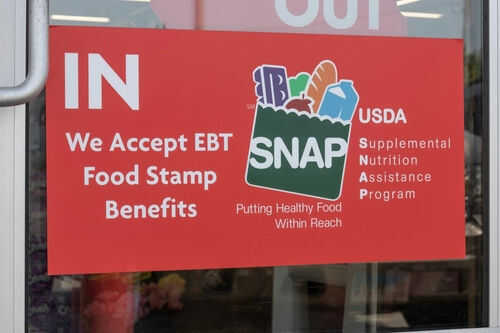
- The case highlights deeper problems in the Supplemental Nutrition Assistance Program (SNAP) that federal watchdogs say total over $1 billion a year in trafficking alone.
How a Skid Row Party Store Landed at the Center of a Federal Fraud Case
Federal agents from the United States Department of Agriculture Office of Inspector General and Homeland Security Investigations, backed by Los Angeles Police Department officers, swarmed Escamex Party Supplies on Skid Row after months of quiet digging. Investigators had flagged the small shop because it somehow processed $732,608.26 in food stamp purchases in just one year, nearly double the nearest competitor, with much larger average transactions than similar stores. Court papers say that pattern was the first red flag, pointing to purchases that did not match real food leaving the shelves.
According to federal filings described in news reports, investigators say Escamex was not just busy, it was running a simple but powerful kickback racket. On May 18, an undercover agent walked in posing as someone who wanted to turn benefits into cash. Prosecutors say cashier Jesse Cervantes‑Gomez led the agent to the back, had a clerk ring up about $2,900 in fake food sales, then handed over $1,450 in cash and his cell phone number to set up future deals, a straight fifty‑percent cash‑for‑benefits swap.
Inside the Alleged Cash‑for‑Benefits Kickback Scheme
Agents say that first sting was not a one‑off mistake but the way business was done. About a month later, the same undercover officer returned for another “deal.” This time, court documents say Cervantes‑Gomez approved $3,240 in phony purchases, then passed back $1,740 in cash, again keeping about half the value in the store while taxpayers were billed for groceries that never reached a family table. Investigators planned a third meet‑up on July 2 for $2,400 in bogus purchases and a $1,200 kickback, but showed up instead with handcuffs.
Prosecutors have charged Cervantes‑Gomez with food stamp fraud under the federal Food and Nutrition Act, a felony that can mean up to 20 years in prison and a $250,000 fine if convicted. Officials say the total suspected fraud at Escamex tops $1 million when all questionable transactions are counted. Federal data show this type of trafficking—trading benefits for cash—is exactly what the law labels as fraud and is one of the main abuses the program has struggled with for decades. At this point, there is no public court filing from the defense that refutes the sting details or the transaction totals.
What the Raids Revealed About SNAP Weak Spots in California
The Escamex takedown was not the only action that day. The United States Department of Agriculture issued violation notices to 33 stores in the Los Angeles area that accept food benefits. Six are accused of the same kind of cash‑for‑benefits trafficking, while 27 allegedly let people use cards for banned items like alcohol, tobacco, and vaping products. Those moves show that the federal government under President Trump’s second term is pushing hard on program integrity, even as some state leaders play down fraud concerns.
National studies by the United States Department of Agriculture put food stamp trafficking at about 1 to 2 percent of total benefits, which still equals roughly $1 to $1.3 billion a year, involving about 12 to 14 percent of authorized retailers. Think‑tank reviews note that overall error and overpayment rates in the program have climbed into the low double digits in recent years, especially after pandemic rule changes, even if not all of that is proven fraud. That means honest taxpayers, including working families who never go near a welfare office, are effectively forced to cover the tab when bad actors game the system.
Why This Case Matters for Taxpayers, States, and Honest Families
History shows this pattern is not new. Past federal efforts in the 1970s and early 1980s found very high fraud in some cities, then reforms pushed the national rate down to about one cent on the dollar by the mid‑2000s. Yet a Mercatus Center review and United States Department of Agriculture snapshots show identified fraud has climbed again in dollar terms, with one analysis noting a 61 percent jump in detected fraud between 2012 and 2016. Each new scheme, like the one alleged at Escamex or a recent $7 million Boston case where a small store outpaced full supermarkets on monthly redemptions, proves criminals still see food stamps as easy money.
Federal food officials stress that most families on benefits play by the rules, but they warn that both recipients and stores who break them can lose benefits, get kicked out of the program, and face criminal charges. Conservative lawmakers in Congress argue that strong enforcement protects both taxpayers and truly needy families by making sure dollars go to real food, not back‑room cash deals. At the same time, left‑leaning advocacy groups, like those writing “program integrity” briefs, often claim fraud rules are racist or “criminalize hunger,” and some blue‑state governors insist fraud is rare and raids are political. That clash over facts and priorities leaves honest Americans caught between rising costs, growing welfare rolls, and a system that still leaks billions.
Sources:
redstate.com, californiaglobe.com, nypost.com, instagram.com, x.com, facebook.com, youtube.com, oversight.house.gov, time.com, cato.org, mercatus.org, clasp.org