A top Trump ally now warns that a **woke AI giant** could secretly shape the 2028 vote, raising hard questions about who really controls our elections.
Story Snapshot
- Peter Thiel says woke AI firm Anthropic is “winning the AI race” and could rig the 2028 election for Democrats.
- Thiel warns Anthropic’s models could flood social media with influence campaigns that outsmart platform defenses.
- There is, so far, **no public technical proof** that Anthropic plans or is able to rig an election.
- Trump-era officials and experts are already pushing export controls and new laws to stop AI-driven election interference.
Thiel’s Warning: Woke AI And The 2028 Election
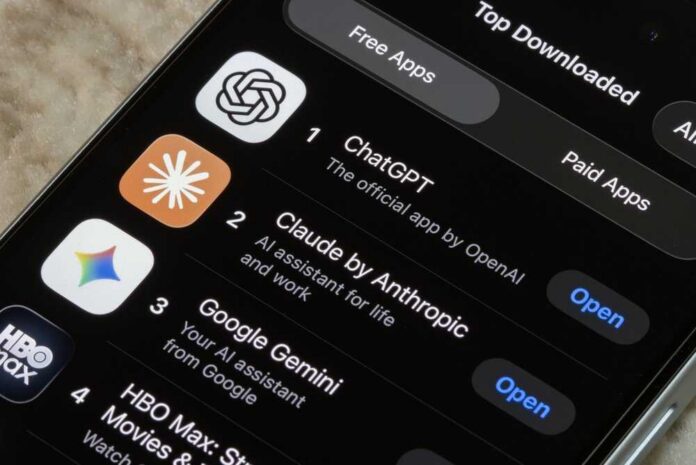
Billionaire tech investor Peter Thiel told the Aspen Ideas Festival that Anthropic, a leading artificial intelligence company, is “winning the AI race” and could use its advanced models to “rig the elections in 2028” in favor of Democrats. He described Anthropic as a “woke liberal company” and claimed its systems could generate and target political messages at scale while dodging content filters on platforms like X. His remarks came during a closed-door debate with political scientist Francis Fukuyama, where he framed AI as a direct threat to democratic choice.
Thiel is not a random critic shouting from the sidelines. He has a long record of backing Donald Trump and other populist conservatives, including donating about $1.25 million to Trump’s 2016 campaign and speaking at the Republican National Convention as Silicon Valley’s rare pro-Trump voice. Under Trump’s first term, his protégé Michael Kratsios became White House chief technology officer, and other allies gained key posts shaping technology policy. With Trump back in the White House, Thiel’s warnings now reach an administration already focused on cleaning up the mess from years of left-wing tech influence.
What Anthropic Is Accused Of – And What We Actually Know
Thiel’s core claim is simple and alarming: a politically biased AI company could quietly tilt online information so much that it changes how millions vote. Experts already warn that generative AI can create deepfake audio and video, fake robocalls, and targeted misinformation that confuses voters about where and when to vote or what candidates really stand for. In 2024, an AI-generated robocall pretending to be Joe Biden tried to keep Democrats from voting in a primary, proving the technology can be weaponized for real election interference. That broader risk makes Thiel’s focus on Anthropic feel plausible to many worried about tech power.
But there is an important gap conservatives must note: there is **no public technical evidence** that Anthropic itself intends to rig elections or has secretly tested such tools. Reports covering Thiel’s comments rely on his statements, not leaked code, internal emails, or audits of Anthropic’s models. Anthropic has declined to respond directly to Thiel, instead pointing reporters to a blog post on election integrity and political bias, leaving his accusations unconfirmed and unanswered. Mainstream outlets like CNN mention his election-rigging line only briefly, treating it as part of his broader political rhetoric rather than a proven threat.
AI Election Threats: Real Dangers Beyond One Company
Even if Anthropic’s role is unclear, the danger from AI in elections is very real. Legal and policy groups warn that AI can generate realistic fake content that shows candidates saying things they never said, or invents events that never happened, tricking voters and sowing chaos. Research on past elections shows that automated bot networks and propaganda campaigns already distort online debate, with AI now making these operations cheaper and more convincing. A bipartisan report notes that bad actors could use AI to spread fake messages about polling locations or violent scenes at voting sites to scare people away from casting ballots.
Americans across party lines see the threat. One national survey found that about 85 percent of voters, including large majorities of Republicans, Democrats, and independents, believe AI-generated political content is likely to spread misinformation in elections. In response, several states and Congress have started drafting bills to require AI disclaimers on political ads, ban deceptive deepfakes, and make it a crime to use AI to trick people out of their right to vote. Twenty major tech companies, including Google and X, signed an accord promising to detect and fight deceptive AI election content, at least on paper. The Trump administration now has to decide how strongly to enforce and expand these protections.
Trump’s Second Term: Clamping Down On Foreign And Woke AI Power
Thiel’s network is already shaping AI policy in Trump’s second term, with protégés like David Sacks and Michael Kratsios involved in setting the rules for advanced models and their use in national security. Reports indicate that the Trump administration has imposed export controls on top Anthropic systems, such as Fable 5 and Mythos 5, because of fears they could boost foreign surveillance or cyber operations against the United States. Anthropic’s own public statements claim the firm will not support mass domestic surveillance or autonomous killing systems without human oversight, trying to paint itself as a responsible actor.
To many conservatives, the bigger concern is not only how foreign regimes or rogue campaigns might use AI, but how politically biased companies could shape information inside America. Most high-profile fights about AI and elections since 2022 have blamed “political bias” in tech firms more than pure technical flaws or outside hackers, fitting Thiel’s framing of Anthropic as a woke threat. Yet without hard proof, his warning stands as a call for tough oversight, not a conviction. The Trump administration and Congress now face a clear task: demand audits, subpoena internal discussions if needed, and ensure that no AI company—woke or otherwise—gets the power to quietly rewrite the will of the American voter.
Sources:
thegatewaypundit.com, letsdatascience.com, youtube.com, time.com, facebook.com, benton.org, wsj.com, instagram.com, campaignlegal.org, documents.ncsl.org, pmc.ncbi.nlm.nih.gov, brookings.edu