
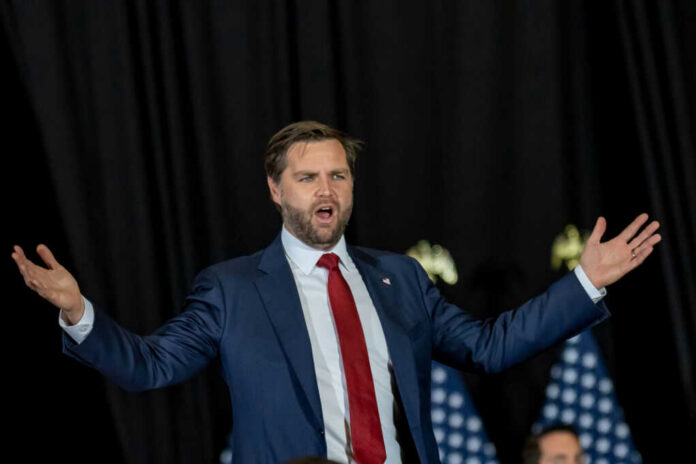
As free‑market icons cry “socialism,” Vice President J.D. Vance is quietly building a tougher, worker‑first capitalism that could reshape the Republican Party for a generation.
Story Snapshot
- J.D. Vance openly rejects Milton Friedman’s pure free‑market model and backs a more hands‑on economic approach.
- He pushes tariffs, antitrust crackdowns, and higher minimum wages to protect American workers and industry.
- Free‑market conservatives warn his “working‑class capitalism” looks like state‑run economics that helps the socialist left.
- For Trump‑era conservatives, the fight over Vance’s ideas is really a battle over what capitalism should look like in America.
Vance’s Break With Milton Friedman’s Free‑Market Orthodoxy
In a widely discussed Daily Wire interview, J.D. Vance said the future of Republican economics should be “much more Alexander Hamilton than Milton Friedman,” signaling a clean break from the party’s Reagan‑era free‑market playbook. Commentators at The Hill reported that Vance even talked about the party “spitting on” Friedman’s legacy and choosing more centralized, government‑guided policy instead. These remarks alarmed traditional conservatives, who credit Friedman‑style limited government and free markets with past American growth and low inflation. They argue that tossing out that legacy risks drifting toward the kind of state control the left has long wanted.
Free‑market economists at the Cato Institute say Vance’s comments show “economic confusion” about capitalism’s core rules and warn that calling for government control over key sectors opens the door to soft socialism over time. They note that Friedman’s ideas of free trade, low regulation, and market prices helped America beat stagflation and the big‑government failures of the 1970s. From their view, once Republicans embrace central planning logic, it becomes harder to oppose the left when it demands more taxes, more welfare, and more control in the name of fairness. That is why some warn that abandoning Friedman is a “gift to the socialist left,” even if Vance insists he is still pro‑market.
Economic Populism: Tariffs, Antitrust, and “Working‑Class Capitalism”
NPR and Marketplace describe Vance’s program as economic populism that uses government power to tilt markets toward American workers, especially in manufacturing. He backs broad tariffs to shield U.S. industry from foreign imports and has championed steel tariffs to protect Midwestern jobs, a sharp turn from Friedman’s strong support for free trade. Reporting shows he supports raising the minimum wage for legal workers, is comfortable with unions, and even walked a United Auto Workers picket line, putting labor strength over corporate flexibility. That mix has led Forbes to label his agenda “working‑class capitalism,” where markets still exist but government plays a bigger role in setting guardrails and outcomes.
Vance also favors tough antitrust enforcement, especially against Big Tech platforms he sees as hostile to conservatives and harmful to children. He has praised Federal Trade Commission Chair Lina Khan, known for aggressive antitrust actions, and supported breaking up dominant tech firms when they abuse power. He has backed clawbacks of pay from failed bank executives and criticized corporate offshoring, calling for higher taxes on companies that ship jobs overseas. Supporters say this is not socialism but targeted intervention to stop “woke” and globalist corporations from gaming the system at the expense of families and communities. Critics answer that once politicians start picking winners and losers, capitalism becomes more about political favors than free choice.
Capitalism vs. Socialism: What’s Really at Stake for Conservatives?
Wikipedia and Axios note that Vance’s views are often described as economic nationalism or state‑leaning capitalism, not full socialism. He still talks about markets, profit, and private business, but wants tariffs, industrial policy, and sometimes a weaker dollar to favor U.S. producers over global finance. For many conservative readers, the key question is whether this kind of “Hamiltonian” program protects liberty or quietly grows government power. Cato warns that both major parties are drifting toward heavy intervention, with Republicans and Democrats now using tariffs, export controls, and tax schemes to steer private investment according to political goals. That kind of state‑directed capitalism can erode the discipline of markets and fuel bigger deficits, setting the stage for inflation and more control down the road.
The Washington Examiner argues Vance is “wiser than his libertarian friends” because he sees that capitalism must serve families, churches, and local communities, not just Wall Street and multinational corporations. Supporters say pure laissez‑faire policies let global elites ship jobs overseas, flood the country with cheap labor, and use woke corporate power to bully everyday Americans. They view Vance’s tariffs, union sympathy, and tech crackdowns as long‑overdue corrections, not steps toward socialism. At the same time, critics on the right caution that if conservatives embrace state power without tight limits, they risk copying the left’s central planning and undermining the very free‑market dynamism that funds strong defense, energy dominance, and family prosperity. The fight around “Vanceonomics” is thus a fight over what kind of capitalism will protect both American workers and American freedom.
Sources:
youtube.com, townhall.com, digg.com, legrandcontinent.eu, npr.org, cbsnews.com, cato.org, thehill.com, linkedin.com, libertynation.com, theamericantribune.com, washingtonexaminer.com, newyorker.com, axios.com