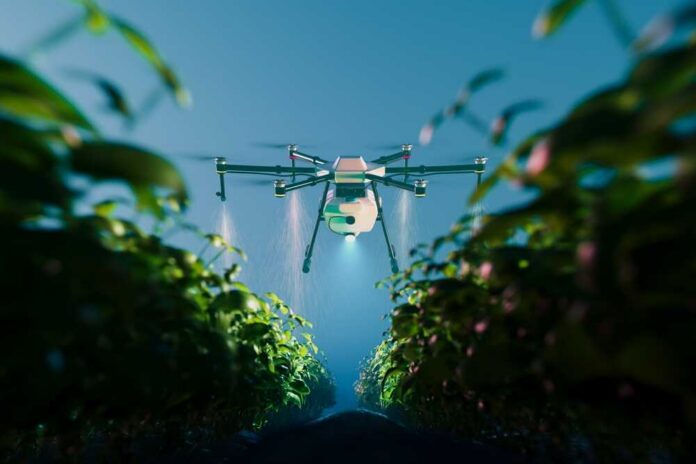
Dystopian drone videos from Napa Valley have people fearing a coming jobs bloodbath, but the real threat is who controls this technology and whether local families are left behind or trained to thrive with it.
Story Snapshot
- Spray drones and remote helicopters are now working Napa vineyards and can replace some manual spraying jobs.
- Media hype about a “jobs bloodbath” is not backed by hard Napa employment data or union statements.
- Research shows automation tends to shift farm work into new skilled roles, not wipe out all jobs.
- Without smart rules and training, AI farm tools can deepen inequality and harm local working families.
How Drones Landed in Napa’s Vineyards
Engineers from the University of California at Davis and Yamaha Motor brought a remote-controlled spray helicopter into the heart of Napa Valley, testing it over working vineyards with federal flight approval. The machine can reach steep hillsides and tight spots that challenge tractors, giving growers safer and more flexible ways to apply pesticides and herbicides. Local companies based in Napa now offer drone inspection services aimed at boosting crop yield and grape quality, making aerial technology part of everyday vineyard work rather than science fiction.
Winegrowers and tech firms are using drones not just to spray crops but also to take pictures and map vine health so they can target areas that need extra care or a better harvest plan. Industry reports show agriculture drone markets heading toward billions in value, pushed by rising labor costs and pressure to keep farms profitable. For conservative wine country families, that means powerful new tools are here, and the real question is whether they serve local workers and property owners, or only distant investors and corporate interests.
Will AI Sprayers Trigger a Jobs Bloodbath?
Experts warn that spray drones can displace workers who earn their living walking fields with backpack sprayers, since small farms no longer need to hire people for dangerous manual spraying once drones take over. Media outlets have turned that concern into talk of “dystopian” scenes and a looming jobs bloodbath, but no Napa County data has yet been produced that shows net job loss tied directly to drones. Labor groups and vineyard owner associations have also stayed mostly silent in public, leaving claims of mass layoffs unconfirmed and raising questions about who is checking the facts.
Broader studies on automation show a familiar pattern: certain tasks vanish, but new skilled work appears, and total employment often keeps growing even in jobs labeled “at risk.” Farm research from Cornell notes that automation will be part of the future of American agriculture, yet it is not a quick fix and does not fully replace farm labor any time soon. Instead, many workers shift into roles running equipment, fixing machines, and managing data, which can be good news only if local people get access to training rather than being pushed aside by outside hires or foreign tech contractors.
New Skilled Jobs, Safety Gains, and the Risk to Working Families
Reports on farm drones point out that they cut dangerous, tiring spray work and lower chemical exposure for growers and farmworkers, improving safety while still needing human pilots and supervisors. Extension experts explain that on many farms, workers move into higher-skill jobs as robot operators or automation technicians, with the number of workers staying similar or only somewhat smaller. That shift can raise incomes and dignity for some families, but it also demands digital skills and problem-solving ability, which many rural workers will only gain if leaders insist on training instead of letting tech companies pocket all the benefits.
A recent study put a price tag on the cost to Napa County winegrape growers of complying with government regulations, with growers saying the costs are pushing them to the brink.
The study, titled “Regulatory Cost of Production in Napa County Vineyards,” found that the cost of… pic.twitter.com/BDpjkiiO7Q
— California Farm Bureau (@CAFarmBureau) July 1, 2026
Researchers studying artificial intelligence and employment warn that automation can widen income gaps and fuel unemployment if adoption happens without responsible rules and worker support. They highlight the need for human oversight, retraining, and fair chances as AI spreads into sectors like agriculture, where California is among the states with sizable job-loss risk from automation. For Napa’s future, that means conservatives should push for local control, strong property rights, and pro-worker training programs so that AI tools become allies for family-owned vineyards rather than weapons that hollow out the middle class and hand even more power to corporate elites.
Sources:
nypost.com, daily.sevenfifty.com, ucdavis.edu, facebook.com, youtube.com, tiktok.com, agrispraydrones.com, nuwayag.com, instagram.com