U.S. officials say Chinese-linked satellite images helped Iran target a Jordan base where three American troops were killed — and Washington has now tied that imagery to the strike.
Story Highlights
- U.S. officials linked Chinese-provided satellite imagery to Iran’s July 17 strike in Jordan that killed three U.S. troops.
- The State Department sanctioned entities for supplying imagery that enabled attacks on American forces.
- Reporting says Iran obtained high-resolution images of Muwaffaq Salti Air Base before and after the attack.
- Beijing-based firms have been named in U.S. actions targeting Iran’s military procurement networks.
U.S. Officials Connect Chinese Imagery to Deadly Iran Strike
U.S. officials said Iran secured high-resolution satellite images of Muwaffaq Salti Air Base in Jordan from Chinese entities before a July 17 attack that killed three U.S. service members. They said the government has “connected” that imagery to how Tehran planned and executed the strike, according to reporting released September 12. The link marks the clearest public tie between Chinese commercial support and Iranian targeting in this phase of the conflict.
Reports state Iran obtained images of the Jordan base both before and after the strike, suggesting the data supported targeting and battle damage checks. The precision and timing of the imagery are central to why U.S. officials view it as an enabler rather than background data. The officials’ account, carried by major media, frames the satellite support as a direct factor in a lethal strike on American personnel.
Trump Administration Sanctions Network Behind Iran’s Targeting
The U.S. State Department announced sanctions against entities that provided satellite imagery enabling Iranian military strikes on American forces. The action is part of a wider effort to disrupt Iran’s overseas procurement networks that arm its missile, drone, and targeting chains. The announcement specifies that selling or supplying such imagery to Iran is not neutral commerce when it helps facilitate attacks on U.S. troops.
The May actions included penalties coordinated with the Department of the Treasury, which targeted additional firms and individuals supporting Iran’s war-making capacity. U.S. officials described these measures as a warning to companies that feed Iran’s targeting pipeline. The message is simple: if your product helps Tehran aim at Americans, you will face U.S. sanctions and be cut off from the American financial system.
Why Commercial Space Data Now Shapes the Battlefield
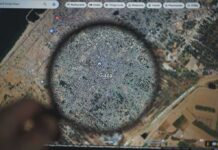
Commercial satellite imagery has become a key part of modern war. Companies can sell pictures sharp enough to show hangars, pads, and air defense sites. Iran has used such data to locate and assess U.S. positions across the region, which raises the stakes for how and where these products are sold. U.S. reporting and sanctions language now treat certain imagery sales as direct enablers of strikes rather than benign business.
This shift also explains why American providers restricted high-resolution images in parts of the theater earlier in the conflict, and why U.S. policy now targets non-U.S. firms that fill the gap. When imagery helps plan attacks on Americans, Washington views it as part of the weapons chain. That perspective underpins the latest sanctions and the clear public linkage officials drew between Chinese imagery and the Jordan strike.
Beijing’s Role and Washington’s Red Line
The reporting does not say China’s central government directed the imagery transfer. It does say U.S. officials traced Iran’s pre-strike pictures of the Jordan base to Chinese-linked entities and tied those images to the attack that killed American personnel. That distinction matters for diplomacy, but it does not blunt the policy response. The United States is moving against any company that aids Iran’s targeting, wherever it sits.
For American readers, the takeaway is direct. Our troops were killed, and U.S. officials say Chinese-linked imagery helped Iran aim. President Trump’s team is using sanctions to choke off that pipeline and warn others. This is about deterrence and accountability. If a business sells data that puts a crosshair on Americans, it will face consequences. That is how you defend our forces, uphold national strength, and draw a hard line that adversaries and profiteers can understand.