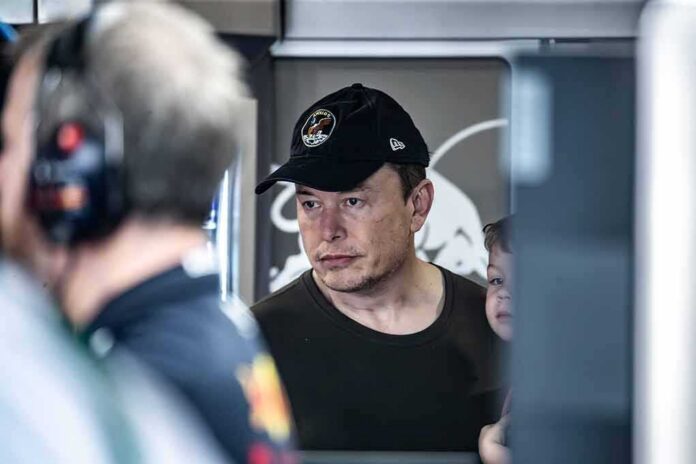
Elon Musk is racing to build powerful artificial intelligence even as he repeats that it could threaten humanity.
Story Highlights
- Musk warned for years that artificial intelligence could cause “civilization destruction.”
- He also said “we are summoning the demon,” urging government oversight in 2014.
- Musk now backs a system he calls “truth-seeking,” arguing that could be safer.
- The record shows a tension: public alarm and active building at the same time.
Musk’s Long Record of Stark Warnings About AI Risk
Elon Musk has issued blunt warnings about artificial intelligence for a decade. In 2014, he said “with artificial intelligence we are summoning the demon,” and called for regulatory oversight to prevent a disaster. That line stuck because it was vivid and direct. He described the technology as an “existential threat” that humans may not control once released. Those early remarks set a high bar for caution and helped shape today’s debate about guardrails.
In 2023, Musk repeated the alarm at the Bletchley Park summit, calling artificial intelligence “one of the biggest threats to humanity.” He said it is not clear humans can control such a system if it becomes far more capable than we are. That message matched what many Americans feel when they see automation replacing jobs and deepfake tools spreading lies online. Musk’s stance reinforced a shared concern: we should not gamble with civilizational risk.
Building While Warning: The Tension at the Center of xAI
Even as he warned of danger, Musk invested in artificial intelligence and launched new efforts. Coverage of his 2023 interview with Tucker Carlson noted he feared “civilization destruction,” yet he pursued new systems at the same time. That overlap fuels a charge of contradiction from critics. The available record shows the dual track clearly, but it does not prove reckless practice or ignored safeguards inside his teams. The public evidence remains mostly quotes and news summaries.
Musk’s answer is that building a safer model is itself a safety plan. He has pitched a “maximum truth-seeking” system to reduce deception and bias. He argued an artificial intelligence that seeks truth and understands the world would be less likely to harm people. Supporters frame this as steering the field away from harmful paths by leading from the inside. That claim is prominent, but the underlying safety tests and internal controls have not been disclosed.
What This Means for Policy, Markets, and Everyday Americans
Conservatives care about clear rules, limited government, and strong rights. Artificial intelligence now touches each area. Lawmakers face pressure to act without crushing innovation, which powers jobs and American strength. Musk himself called for a regulator to watch advanced systems. The balance is simple to state and hard to execute: protect the public from real risks while keeping the United States the best place to invent. That is the core policy challenge here.
Families want to know what comes next. Musk predicted a future where “no job is needed,” with machines doing most work. That vision sounds like abundance, but it could also upend purpose, paychecks, and privacy if leaders get it wrong. Prudent oversight should focus on misuse, critical infrastructure, and election integrity. It should demand transparency about model behavior and red-team tests. It should also punish fraud and abuse, fast, so bad actors do not set the rules.
How to Square the Circle: Transparency and Real Accountability
The path forward needs sunlight and simple benchmarks. Companies should publish clear safety reports before launching powerful systems. Independent testers should probe for deception, security holes, and manipulation. Policymakers should set targeted guardrails that defend speech, faith, family, and the right to work and create. Musk’s warnings helped raise the alarm. His building puts the spotlight on results. The next step is proof: show the safeguards, or slow the rollout until they are real.
Sources:
youtube.com, cnbc.com, theguardian.com, foxbusiness.com, apnews.com, washingtonpost.com