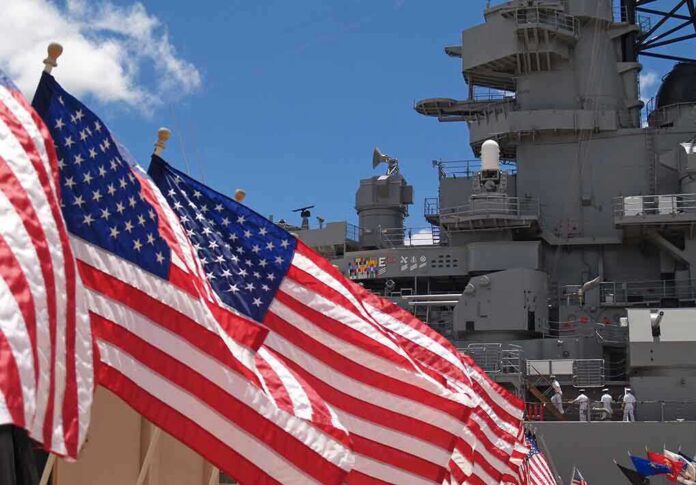
The Navy says the USS Abraham Lincoln “crushed” a nearly 300-day combat deployment as critics push investigations into crew strain and supply shortfalls.
Story Highlights
- Navy leaders hailed record operational output and a safe return after an extended mission.
- Reports confirmed eight suicide attempts across the carrier strike group during the deployment.
- Lawmakers demanded reviews into sailor welfare, logistics, and readiness impacts.
- The carrier steamed tens of thousands of miles across multiple hot zones and straits.
Navy Claims A High-Tempo Combat Success With Measured Output
Acting Secretary of the Navy Hung Cao praised the USS Abraham Lincoln’s mission as a clear success. He cited 266 days deployed, 200 days in a combat zone, over ten thousand sorties, and about 1.5 million pounds of ordnance employed, signaling heavy action and strong performance by the air wing. Military.com reported the carrier strike group operated across the South China Sea, the Indian Ocean, and the North Arabian Sea. The Navy said the ship steamed over 85,000 nautical miles and returned under a planned rotation.
Carrier Strike Group 3 leaders planned to brief the press on the return and answer questions about the deployment, routes, and missions. Rear Admiral Robert Loughran Jr. and Captain Daniel J. Keeler were slated to provide details on the operational picture and respond to public concern. This return marked the close of an extended cruise that the administration framed as necessary to meet real-world threats and to hold the line against hostile actors in key waterways.
Documented Human Strain Sparks Oversight Demands
Reuters reported that in a letter to Senator Kirsten Gillibrand, Acting Secretary Cao confirmed eight suicide attempts across the Abraham Lincoln strike group during the deployment, while noting there were no deaths. Congressional Democrats pressed for inspector general and Government Accountability Office reviews, citing reports of food, water, and mail challenges, plus long workdays and few port calls. The push aims to test whether the mission’s pace and logistics planning met standards for safety and morale while sustaining combat readiness.
The Navy acknowledged supply disruptions tied to combat operations but said meals were not missed and that reduced options were temporary. Critics argued that months at sea with limited relief hurt morale and family stability. Media coverage focused on the mental health risk signals, which shaped public debate around the crew’s lived conditions and whether the force-management plan protected sailors while meeting mission needs.
Strategic Demand Versus Fleet Limits: A Tough Balance
Military.com’s reporting placed the Lincoln’s mission within a larger pattern of long carrier deployments driven by global demand. The Navy’s message stressed results, mobility across contested straits, and a handoff on return. That framing reflects a classic tension: commanders need continuous presence to deter foes and strike when needed, but extended cruises pile pressure on crews and maintenance schedules. The facts show output and endurance were real, but so were the welfare concerns.
🧵"The Navy confirmed eight suicide attempts and temporary food, hygiene, and plumbing shortfalls on the USS Abraham Lincoln during its record length Iran war deployment. What did he chug before getting on here?" https://t.co/TWZ6Yzfcuy
— Robbie Wallin (@WallinRobbie) October 8, 2026
For conservative readers, two truths stand together. First, our sailors delivered for the nation under fire, and leadership measured that output in sorties, miles, and ordnance, not hashtags. Second, accountability is not weakness; it is how a strong military stays sharp. Legitimate oversight should secure better logistics, steadier rotations, and tougher mental health support without undercutting combat power. The target is simple: win the mission and take care of those who carry it.
What To Watch Next: Transparency, Logistics, And Force Readiness
Press briefings and potential document releases could clarify why the deployment stretched so long and how resupply worked under combat pressure. Lawmakers may seek internal orders, deck logs, and maintenance data to assess readiness and risk trade-offs. If the Navy shows clear planning and rapid fixes for shortfalls, confidence will rise. If gaps remain, pressure will grow to tighten rotation discipline, invest in logistics, and expand mental health capacity while keeping deterrence strong.
Sources:
gallego.senate.gov, reed.senate.gov, navy.mil, reuters.com