
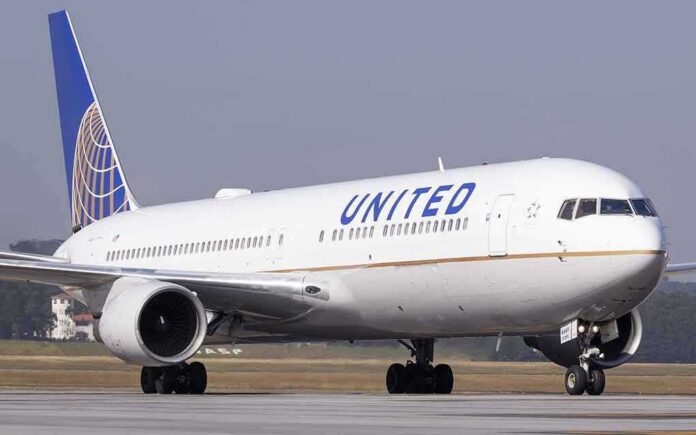
A United flight returned to Las Vegas after a flight attendant reported seeing a passenger text about “hijacking” and “crashing” the plane, triggering a swift law-enforcement response.
Story Highlights
- Pilot reported a passenger’s alleged hijack text; the flight turned back and landed safely.
- Police arrested 25-year-old Dante Milne on a terrorism-related threat charge.
- United called it a “potential security concern” as standard procedures kicked in.
- About 150 passengers and crew were safe; the flight later continued its trip.
Pilot Reports Text About Hijacking; Flight Turns Back
Air traffic control audio captured the pilot of United Flight 1681 stating that a flight attendant saw a passenger texting he was going to hijack the aircraft. The pilot relayed the concern and returned to Las Vegas about 10 minutes after takeoff. United described the diversion as a “potential security concern.” The aircraft landed safely, and the situation stayed calm in the cabin and cockpit. The airline followed procedures designed to protect passengers and crew during any suspected threat.
Media reports, citing a criminal complaint, said the message referenced both hijacking and “crash ur row only.” That wording suggested an intent to do harm, not simply a disruptive joke. The reference raised stakes for the crew, who must act quickly if they see language tied to a potential attack. The captain coordinated with air traffic control, and the airport prepared for a security response on landing to keep everyone safe during the evaluation.
Police Arrest 25-Year-Old; Charge Alleges Terrorism Threat
Local police met the aircraft at the gate and took 25-year-old Dante Milne into custody. Police identified him as the passenger accused of making a threat or providing false information about an act of terrorism. He was booked into the Clark County Detention Center. That charge signals how seriously authorities treat hijacking language in flight, even when no weapon or physical assault is alleged. A court process will determine the legal outcome of the case.
Officials and news reports said around 150 passengers and six crew members were aboard. No injuries were reported, and there was no loss of control of the aircraft. The quick turn and safe landing showed trained crews, hardened cockpit doors, and standard checklists working as designed. The flight later continued its journey after security steps and scheduling allowed. The point was simple: act fast, land safe, then sort facts with police and investigators as needed.
Why Crews Act Fast On Explicit Threats In Flight
Commercial crews are trained to treat explicit attack language as an immediate safety risk. History and policy demand caution when a message says “hijack” or “crash,” because delay can cost lives. Returning to the departure airport is a standard, prudent step when time and distance allow. The choice to divert does not decide guilt. It protects the cabin while law enforcement checks facts. That balance is the core of modern aviation security practice in the United States.
Americans expect safe skies and firm action against terror threats. This incident shows frontline workers doing their jobs: a watchful flight attendant, a decisive captain, and police ready at the jet bridge. That is how a free country protects travel and commerce. It also respects due process. Authorities will review device records, statements, and timelines to match the cockpit report with evidence. Safety first on the aircraft, facts first in court, and zero tolerance for threats that risk lives.
Sources:
cbsnews.com, 8newsnow.com, yahoo.com, balleralert.com, ground.news