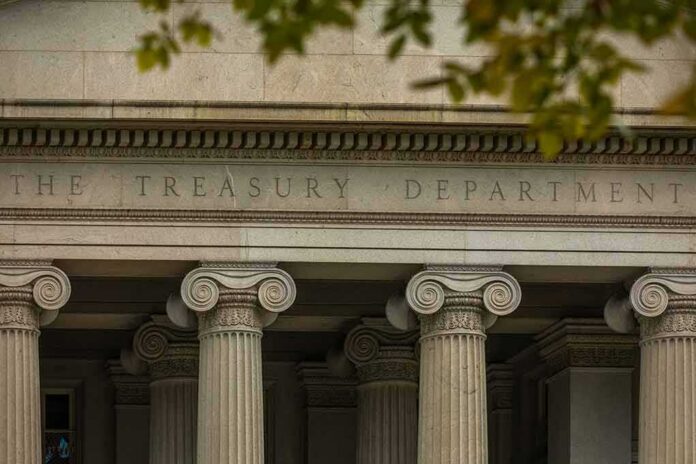
A rapid surge in the 10-year Treasury yield toward 6% is flashing a classic “something breaks” warning for markets, households, and small businesses.
Story Highlights
- Analyst John Roque says 16 past rapid yield spikes since 1970 were followed by disruptions.
- A move from 5% to 6% would reprice the $29 trillion Treasury market and global borrowing costs.
- Skeptics argue 5% is not a magic tripwire and stress depends on how long rates stay high.
- Higher yields tighten mortgages, car loans, and refinancing, squeezing families and credit markets.
Rapid Yield Spikes Have A History Of Breaking Things
John Roque of 22V Research reviewed five decades of data on the 10-year Treasury. He identified 16 past episodes where yields jumped this fast. He said each case was followed by some form of market or financial disruption. He warned, “Something always breaks,” when rates surge at this speed. His point centers on the pace, not only the level, as stress can emerge where leverage or weak funding already exists.
Reuters reported investors are now gaming out a path to 6% on the 10-year. That shift from 5% to 6% would be a major repricing across the $29 trillion Treasury market. Treasuries anchor mortgages, corporate bonds, and stock valuations. When that anchor jumps, the cost of capital rises almost everywhere. That squeeze can expose fragile balance sheets, especially in commercial real estate, private credit, and highly leveraged firms that must refinance soon.
What A 5%–6% World Means For Your Wallet
Higher long rates lift mortgage costs, car loans, and credit card interest. Families feel it when payments reset or when they shop for a new loan. Businesses face tougher math on expansions, hiring, and equipment. The longer rates stay high, the more deals must roll into higher coupons. That rollover risk often triggers the breakage Roque tracks. One strategist put it simply: the level may not crack things today, but it can twelve to eighteen months later.
Stocks also change under higher yields. Future profits are valued at a steeper discount rate. That hits high-valuation names first and can pull down indexes. Bond funds can face outflows, pushing yields even higher. Local governments may delay projects as borrowing costs jump. This is how a Treasury move becomes a Main Street issue fast. It tightens credit conditions and narrows options for savers, retirees, and small business owners who already feel inflation’s bite.
Counterpoints: Not A Magic Number, But A Real Stress Test
Some market voices push back on “automatic crisis” calls. A leading asset manager told Reuters there is no magic number for yields. The effect depends on growth, inflation, and time spent at high levels. The latest move above 5% did not last long at first, so the test is duration, not just the spike. A 6% yield would imply tougher inflation, fiscal strain, or a long stretch of higher rates, but not an instant calamity on its own.
Other commentators argue the move reflects a reset in supply and demand, not a collapse in confidence. They note that auctions, the United States dollar, and credit spreads have handled higher yields at times without broad panic. Still, even these calmer takes agree that sustained high rates raise debt service costs and can slowly pressure investment and hiring. That slow grind can be just as dangerous as a sudden shock if it persists.
Policy Choices, Fiscal Discipline, And Protecting Families
Rising yields punish overspending and waste. Big deficits, bloated programs, and runaway promises push borrowing needs higher. Bond buyers then demand better returns, and taxpayers pay the bill. That is why fiscal discipline matters. Leaders should cut red tape, rein in unnecessary spending, and stop policies that fuel inflation. Families deserve affordable energy, stable prices, and a government that lives within its means instead of passing the tab to their kids.
What should readers watch now? First, the speed of moves in the 10-year. Second, signs of stress in commercial real estate and private credit. Third, refinancing calendars for banks and mid-size companies. Finally, whether yields hold above 5% and march toward 6%. History says fast spikes expose weak links. Prudence says tighten budgets, keep cash buffers, and avoid over-leverage until the dust settles and Washington shows real spending restraint.
Sources:
feedpress.me, cnbc.com, fidelity.com