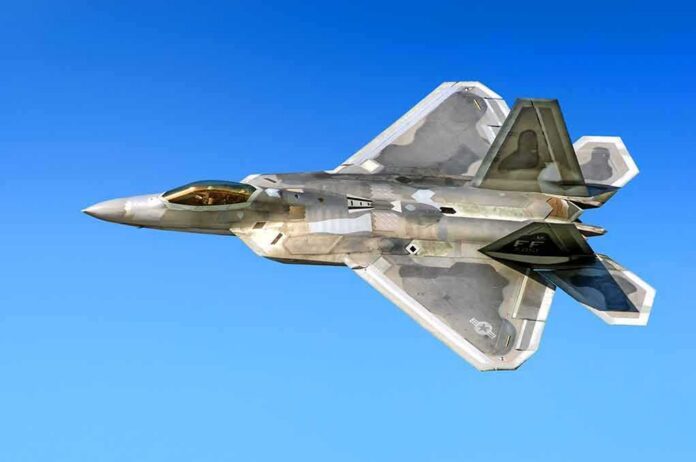
A new analysis claims the F-35’s radar signature drops hundreds of times when its stealth coating is applied, underscoring how precision finishes help keep American pilots alive.
Story Highlights
- An estimate says the F-35’s frontal radar cross-section falls from about 0.06 m² to 0.0001 m² with coating.
- Technical work shows stealth comes from both shaping and radar-absorbing materials together, not coating alone.
- Production literature says the finish must meet strict thickness and radar limits across the jet.
- Past reports note supersonic heat can damage coatings on some variants, a known operational limit.
What the new estimate says about the F-35’s radar signature
A 2026 write-up reports the F-35’s estimated radar cross-section from the front is about 0.06 square meters without its radar-absorbing coating, and roughly 0.0001 square meters with it. The piece frames the coating as doing “the rest” after shaping, and claims a major cut in detection risk when the finish is in good condition. These figures are estimates from secondary reporting, not released test data, but they mirror how stealth materials are meant to work in practice.
Public estimates for the F-35’s radar cross-section vary. That spread reflects different radar bands, angles, and modeling choices. Technical analyses show radar cross-section changes with aspect and frequency, so one number never tells the whole story. Still, the direction is clear: a well-kept finish reduces the radar return by converting energy to heat and smoothing reflections. That effect, paired with the jet’s shape, shrinks when and how enemy radars can spot it.
Why coating matters, but design still does the heavy lifting
Academic and engineering sources agree the F-35’s stealth rests on both geometry and materials. Designers align edges, shield the engine fan, and blend surfaces to bounce radar away. They also embed radar-absorbing structures and apply a tailored topcoat to soak up energy. Together, these cut the return across key radar bands. The point is simple: the coating is vital, but it works best as part of an integrated low-observable design from tip to tail.
Manufacturing literature backs up that view. An engineering paper on the F-35’s final finishes says the program demands strict radar and weight targets. Robotic tools apply coatings with tight thickness control to hit those targets across large, complex shapes. Precision matters because a coating that is too thick adds weight and cost, while a coating that is too thin leaves radar “hot spots.” This is why depot teams and field units guard finish quality on deployed aircraft.
Durability, limits, and what operators watch at the edge
Operational reports have flagged limits at very high speed. A 2019 article said the F-35B and F-35C could see coating blistering during certain supersonic sprints near Mach 1.3 to Mach 1.4, raising the risk of stealth loss until repairs. The Pentagon at that time accepted added risk instead of a full redesign for those cases. That history explains why crews track heat, salt, and wear so closely on carrier and expeditionary jets.
Other field reporting describes how sea exposure and corrosion repair can mark the finish. Maintenance teams plan inspections and touch-ups to keep the radar return within limits. The goal is straightforward: preserve the small signature that helps pilots get in, finish the job, and get home. While some photos spark online worry, engineering sources and structured checks focus on measured performance, not surface cosmetics, as the standard that matters for combat.
What this means for U.S. air power and taxpayers
For readers who care about strong defense and smart spending, the lesson is clear. Stealth is not magic paint, and it is not hype. It is a system that blends shape, embedded materials, and precision finishing to delay or deny detection. That buys time, surprise, and options in a fight. The estimated numbers circulating today are not official range data, but they align with how radar-absorbing layers are designed to work with the airframe.
Under President Trump, the mission is to give our pilots every edge and hold contractors to results. That means demanding tight quality on coatings, funding the right depot capacity, and enforcing accountability when known limits, like heat damage at supersonic dash, put readiness at risk. It also means cutting through noise that either oversells or undersells stealth. The job is simple: keep the signature small, keep the schedule on track, and keep America’s air power untouchable.
Sources:
19fortyfive.com, globalsecurity.org, wionews.com, linkedin.com