
Israel’s defense minister declared the Golan Heights will remain under Israeli sovereignty forever, drawing a hard red line as Syria demands a full withdrawal at the United Nations.
Story Highlights
- Israel says the Golan Heights are permanently Israeli, rejecting any return to past lines.
- President Trump recognized Israeli sovereignty over the Golan in 2019, a key U.S. policy shift.
- Syrian President Ahmed al-Sharaa told the United Nations the Golan “will remain Syrian” and cited a U.N. resolution.
- Most countries still do not recognize Israel’s annexation, but facts on the ground remain unchanged.
Israel’s Firm Stand on Sovereignty
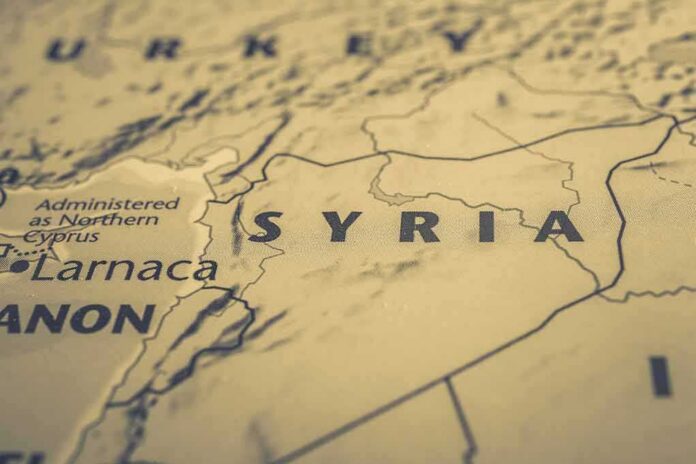
Israel’s Defense Minister Israel Katz stated that the Golan Heights are part of Israel forever. His message followed fresh Syrian claims at the United Nations that the territory must be returned. Katz’s statement underscored Israel’s view that prior security lines, including the 1974 disengagement line, are not coming back. Israeli leaders argue control of the high ground protects the north from rocket fire, terror bases, and hostile militias operating inside war-torn Syria.
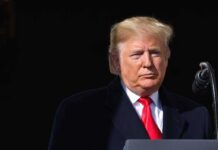
President Trump’s 2019 proclamation recognized the Golan Heights as part of the State of Israel. That action reversed decades of U.S. policy and aligned Washington with Israel’s security reality on the ground. Legal scholars and analysts widely described the move as a sharp break with past American positions, even as Israel had applied its law and administration to the Golan since 1981. For conservatives, this remains a clear example of U.S. leadership backing an ally against Iranian proxies and chaos in Syria.
Syrian Claims at the United Nations
Syrian President Ahmed al-Sharaa told the United Nations General Assembly that “the Golan will remain Syrian,” and he cited U.N. Security Council Resolution 497 to reject Israel’s annexation measures. He demanded Israeli withdrawal and framed any recognition of Israeli sovereignty as a breach of international law. His remarks track long-standing Syrian positions. They also try to rally countries that still follow the non-recognition policy that prevailed before President Trump’s proclamation.
Most governments have not recognized Israeli sovereignty and continue to call the Golan “occupied” under international law. Analysts note that the international legal baseline still favors non-recognition. Yet the political reality is that Israel controls the plateau and defends it as a vital shield for northern communities. Trump’s decision acknowledged that security reality, even as many diplomats objected on legal grounds and kept their old positions on paper.
Security Stakes for Israel and the United States
The Golan Heights overlook key Israeli towns, farming areas, and water sources. Since Syria’s civil war, Iranian forces and allied militias have used Syrian soil to move rockets and threaten Israel’s borders. Israeli control of the high ground helps deter attacks and disrupt hostile supply lines. Supporters of recognition argue that forcing Israel off the Golan would hand a vital fortress to Iran’s network, placing Israeli families and U.S. interests at greater risk.
Israeli Defense Minister Israel Katz on Wednesday said that the Golan Heights “under Israeli sovereignty is an inseparable part of the State of Israel forever”
His video statement came in response to Syrian President Ahmed al-Sharaa’s speech at the UN that the territory, which… pic.twitter.com/sILX8LYj0B
— The New Region (@thenewregion) September 23, 2026
The Trump-era recognition forms the backbone of current U.S. policy. By stating that the Golan is part of Israel, Washington signaled that security, not theory, guides decisions. That message resonates with Americans who prefer strength over appeasement. It also warns global bodies not to tie the hands of free nations defending their citizens. While debates over international law continue, the United States made clear that allies who hold the line against terror will not stand alone.
What Comes Next
Syrian appeals at the United Nations will likely continue, and many states will echo them. But Israel’s position is set, and it has U.S. backing on recognition. Any real change would require a sea shift in security conditions that does not exist today. For now, the facts are simple: Israel holds the high ground, the United States recognizes it, and the threats from Syria and Iran still drive policy more than speeches in New York.
Sources:
insiderpaper.com, trumpwhitehouse.archives.gov, congress.gov