
President Trump’s threat to “cut off all trade with Spain” has triggered a showdown over NATO, Iran, and who really calls the shots in America’s alliances.
Story Snapshot
- Trump vowed to end all trade with Spain after it refused to let US forces use key bases for strikes on Iran.
- The president blasted Spain’s left-wing government as a “terrible” NATO partner that dodges fair defense spending.
- Legal and trade hurdles mean the threat is not yet formal policy, but it sends a hard warning to Europe.
- Spain and European Union officials claim they are simply following “international law,” setting up a clash over U.S. sovereignty and security.
Trump Draws a Hard Line With Spain Over Iran and NATO
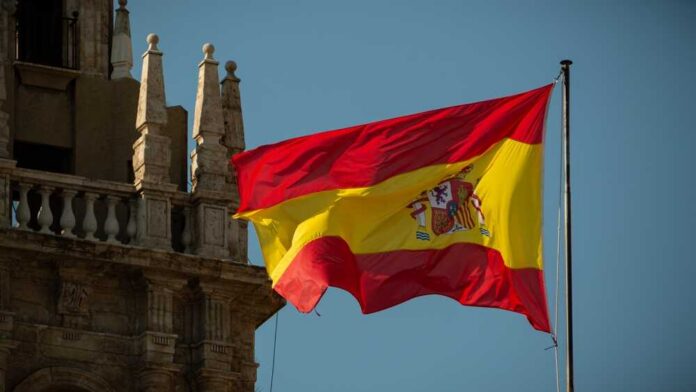
President Donald Trump told reporters in the Oval Office that the United States will “cut off all trade with Spain” after its government refused to let American forces use the shared Morón de la Frontera and Rota bases to strike Iran. He spoke while meeting German Chancellor Friedrich Merz and said bluntly, “We don’t want anything to do with Spain,” calling the country’s behavior “terrible.” The dispute centers on Madrid’s refusal to back U.S. and Israeli military action against Iran and its resistance to higher defense spending inside the North Atlantic Treaty Organization.
Trump has tied the trade threat directly to Spain’s NATO performance, blasting its failure to meet his demand that allies commit five percent of their national output to defense. He has long argued that American taxpayers should not subsidize European security while wealthy countries drag their feet. Spain’s left-wing government insists it is “meeting its obligations,” but has not offered clear numbers to answer that five percent benchmark. For many Americans, the fight looks simple: if Spain wants the shield of U.S. power, it should share the cost and stand with us against Iran.
Base Access Fight Shows Clash Over Sovereignty and “International Law”
The crisis was sparked when Spain barred U.S. forces from using the long-standing bases at Morón and Rota for any operations tied to strikes on Iran, saying they can only be used for missions that fit within the United Nations system and “international law.” Spain’s defense minister said “absolutely none” of the support for the Iran strikes came from those bases and stressed they remain under full Spanish sovereignty despite joint use by the United States. American aircraft have already been shifted out to Germany and France, proving that Madrid is willing to enforce its red lines even in the middle of an Iran war.
Spanish leaders have not only blocked base access but also criticized the United States and Israel for acting “unilaterally” without an international resolution. Their message is that global bodies and legal frameworks outrank U.S. decisions about its own security. In response, Trump and his supporters see a pattern: European governments enjoy U.S. protection and U.S. markets, yet hide behind lawyers and United Nations language when asked to take real risks. The fight over the bases is no longer just about Iran; it is about who commands Western strategy—American voters or distant bureaucrats and courts.
How Far Can a U.S. Trade Cutoff With Spain Really Go?
To turn his warning into reality, Trump would need to trigger formal tools for trade restrictions or an embargo, something his own advisers are now exploring. Treasury Secretary Scott Bessent backed the president in the Oval Office, saying the Supreme Court has confirmed his power to enforce an embargo, and promised that trade and commerce officials would “start investigations and go from there.” However, earlier court rulings have already knocked down a previous attempt to use emergency economic powers for broad tariffs, meaning any new move must be carefully tailored.
Trump Repeats Criticism of NATO Partners Regarding Iran Positions.
Trump Orders Complete Trade Stop With Spain, Calls Spain A Poor NATO Ally.#usa #donaldtrump
— Derek (@Tanishqkadvekar) July 8, 2026
There is another major obstacle: Spain is part of the European Union, which runs a single trade policy for all twenty-seven member countries. That means Washington cannot simply write a neat, clean rule that applies only to Spain and ignore the rest of Europe. Goods can move inside the European Union, and companies could try to route products through other European countries if only Spain is targeted. Still, Trump’s threat matters even as a warning shot. It tells European leaders that if they block American bases and duck defense spending, access to the world’s largest consumer market is no longer guaranteed.
Spain, Europe, and the Media Push Back
Spain’s government has tried to project calm, saying it has “the necessary resources” to soften the blow of a possible U.S. trade embargo and insisting that Washington must respect international law and existing European Union–United States trade agreements. European officials and many legal experts warn that any broad embargo on a single European Union member could trigger new fights at the World Trade Organization and inside existing trade deals. At the same time, mainstream outlets describe Trump’s statement as only a verbal threat for now, stressing that no formal order has yet been signed.
On social media, activists and commentators on all sides are spinning the story as a full-blown geopolitical crisis, even though the legal path ahead is still unclear. That noise can hide the key point for American readers: this clash did not start because Trump woke up angry at Europe. It began when a foreign government, led by a socialist prime minister, blocked American use of long-standing bases during a hot conflict with Iran—and then shrugged off calls to meet higher defense spending targets. Trump’s message, whatever the final legal shape, is aimed at resetting that pattern so U.S. power is no longer taken for granted.
Sources:
insiderpaper.com, apnews.com, aljazeera.com, youtube.com, bbc.com, reddit.com