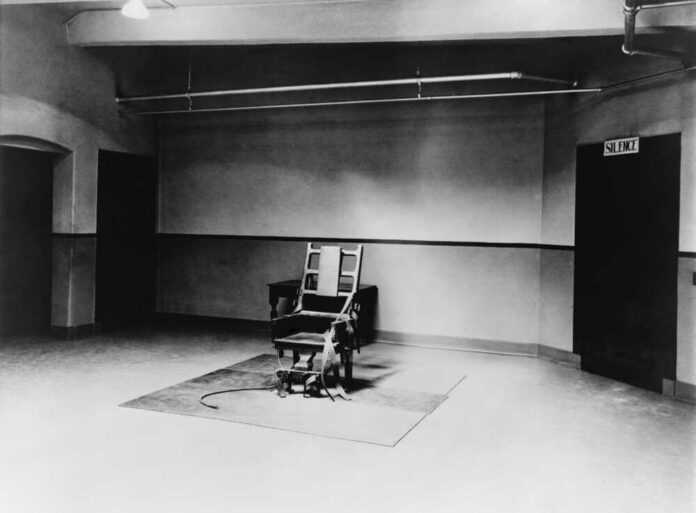
A Supreme Court that once rarely questioned execution methods just told Alabama it cannot use nitrogen gas to put a convicted double murderer to death — and that should make every constitutional conservative watch what comes next.
Story Snapshot
- The Supreme Court blocked Alabama from executing Jeffery Lee with nitrogen gas after lower courts said the method is unconstitutionally cruel.
- A federal appeals court found Alabama’s nitrogen protocol causes one to three minutes of intense suffering, beyond what the Constitution allows.
- Alabama argues nitrogen is necessary because other methods like lethal injection are harder to carry out.
- This fight could shape how far federal judges can micromanage state punishment policy in red states.
What The Supreme Court Did — And Did Not — Decide
The United States Supreme Court refused Alabama’s emergency request to execute death row inmate Jeffery Lee using nitrogen gas, leaving in place lower court rulings that blocked the method.[1] The justices issued a short, unsigned order and did not fully explain their reasoning, which means they did not yet rule once and for all on nitrogen gas for the whole country.[1][3] The Court’s decision stops this execution by this method for now, but Alabama can still seek review through the normal appeals process.[1]
Reporters note that three conservative justices — Clarence Thomas, Samuel Alito, and Neil Gorsuch — said they would have allowed the execution to go forward.[1] That split matters for readers who care about original meaning and limited federal power. For years, the Court has rarely struck down a specific execution method, even while upholding the death penalty itself.[1] By stepping in here, the majority signaled concern about how this new gas protocol works in real life, at least under Alabama’s current rules.
Why Lower Courts Said Nitrogen Gas Crosses The Line
This fight began after Alabama introduced nitrogen hypoxia, where the inmate breathes pure nitrogen instead of oxygen, as a new execution option once lethal injection became harder to carry out. A federal judge in Alabama held a three-day trial this spring on whether this method violates the Eighth Amendment’s ban on cruel and unusual punishment.[1] The judge found that a person put to death this way suffers severe “air hunger,” emotional panic, and real physical distress as the body starves for oxygen.[1]
The trial court still ruled against the inmate at first because it decided the defense had not proven that the suffering went beyond what is needed to cause death.[1] A federal appeals court in Atlanta, the United States Court of Appeals for the Eleventh Circuit, disagreed and stepped in.[1] That court said evidence showed one to three minutes of intense pain and terror before losing consciousness.[1] The judges called that time span “intolerable” under the Constitution and blocked Alabama from using nitrogen gas on Jeffery Lee.
What Witnesses Saw In Alabama’s First Nitrogen Execution
This case comes on the heels of Alabama’s first execution by nitrogen hypoxia, which already sparked national debate. A spiritual adviser who witnessed that earlier execution of inmate Kenneth Eugene Smith told reporters that Smith “began to heave back and forth” and struck the inside of his mask as if he was fighting for air.[1] Defense lawyers and advocates describe the process as “conscious suffocation,” saying the person is awake and panicking while the body shuts down.[1]
Those eyewitness accounts gave the courts concrete examples of how this method can play out in practice, not just on paper. Opponents told judges that nitrogen hypoxia, as Alabama carries it out, is not a calm slipping into sleep but a short period of desperate air hunger and fear.[1] The appeals court pointed to this type of evidence in calling the suffering needless compared with other possible methods like lethal injection or firing squad that Alabama could still use.[1][2]
Alabama’s Argument: Limited Options And State Authority
Alabama’s attorney general pushed back hard, arguing that the pain from nitrogen hypoxia does not reach the level of unconstitutional cruelty and that the state’s traditional methods are increasingly hard to use.[1] State lawyers told the courts that supplies and staffing for lethal injection and firing squad are limited, and that nitrogen gas is a practical way to carry out sentences a jury and judge already handed down.[1] They also argued that the Constitution does not promise a painless death, only that the state cannot use methods that are wantonly cruel.
From a conservative view of federalism, that claim matters. Alabama lawmakers approved nitrogen hypoxia through their elected process. State officials say they have tested the protocol and call it a “proven” method, at least compared with some botched lethal injections in other states.[4] The Supreme Court has long said that states have wide room to choose execution methods, as long as those methods do not deliberately increase pain. Alabama is warning that if judges block every new method, activist litigation could shut down capital punishment without a single vote in Congress.
What This Means For Conservatives And The Road Ahead
This case lands in a broader trend where states try new execution methods after drug makers cut off lethal injection supplies, and activists use federal courts to slow or stop those changes. For readers who support the death penalty and limited federal power, the concern is not about going soft on crime but about who decides how justice is carried out. When a federal appeals panel declares a new method “intolerable,” it shifts power away from state voters and toward unelected judges.[1]
At the same time, the Constitution’s ban on cruel and unusual punishment is real, and it binds every state. The record in this case suggests that under Alabama’s current protocol, nitrogen gas may cause a short but sharp period of visible struggle, air hunger, and panic.[1][3] The Supreme Court’s move does not end the death sentence for Jeffery Lee, and Alabama is already looking at lethal injection or other options.[2] But this fight will shape how far federal courts can reach into state punishment policies for years to come.
Sources:
[1] YouTube – Supreme Court blocks Alabama nitrogen gas execution method
[2] Web – The US Supreme Court blocked Alabama’s execution of Jeffery Lee …
[3] YouTube – Supreme Court rejects Alabama’s request to carry out nitrogen gas …
[4] Web – The Supreme Court blocked Alabama from executing a man using …