

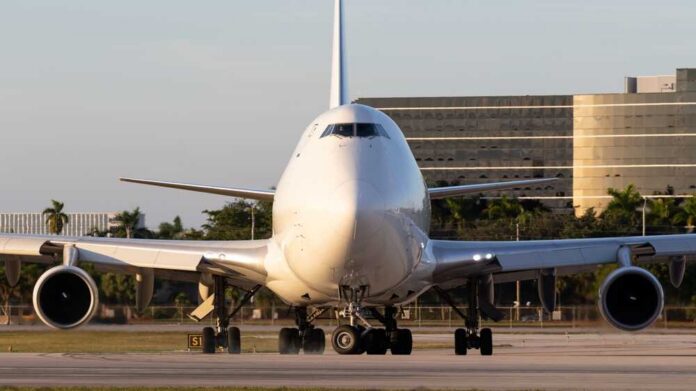
As the legendary Boeing 747 fades from our skies, its quiet exile to desert boneyards tells a bigger story about global elites, changing economics, and what gets lost when efficiency beats backbone.
Story Snapshot
- Major airlines have retired most passenger Boeing 747s, sending many to vast desert “boneyards.”[1]
- These storage sites keep some 747s ready to fly again, while others are stripped for parts or scrapped.[1][2]
- The 747 helped make global travel affordable, but newer twin‑engine jets now dominate airline strategy.[4]
- Some 747s still serve in cargo, government, and special roles, showing the design is not truly “dead.”[2][5]
How The Queen Of The Skies Was Pushed To The Desert
When Delta Air Lines flew its last Boeing 747 to Arizona, reporters noted it was the final 747 operated by a United States passenger carrier, then parked at a desert storage field.[1] That flight marked the end of regular 747 passenger service by American airlines and signaled a larger industry shift away from very large four‑engine jets. Today, only a small number of 747‑400 passenger aircraft remain in service worldwide, while hundreds sit retired or stored.
Desert boneyards in Arizona and California now hold long rows of retired jumbo jets, including many 747s from United, Delta, and other airlines.[2] Dry air and hard ground slow rust and damage, so these locations are ideal for long‑term storage.[2] Some aircraft will be parted out, with engines and systems removed to keep other jets flying, while others can be made airworthy again if an operator decides the numbers work.[1][2]
Why Airlines Walked Away From The Iconic Jumbo
In the 1970s and 1980s, the Boeing 747 changed airline economics by packing more passengers into a single flight, lowering cost per seat on busy long‑haul routes.[4][5] That scale helped make overseas travel possible for middle‑class families, not just the wealthy, and turned the jet into a symbol of American engineering strength.[4][5] But the same size that once made it efficient later became a burden when fuel prices, environmental rules, and travel patterns changed.[2]
Modern twin‑engine aircraft like the Boeing 777 and Boeing 787 can fly far with fewer engines, burn less fuel per seat, and are cheaper to maintain.[3] Airlines do not have to fill as many seats to break even, which matters when routes shift or demand drops. Public pieces explaining the retirements point to high fuel burn, higher maintenance costs, and extra inspections tied to four engines as key reasons carriers moved on.[3] For global airlines squeezed by costs and regulation, the math pushed the 747 out.
The Boneyard Is Not Always A Graveyard
The scenes from places like Pinal Airpark in Arizona can feel like a funeral for American aviation greatness, with 747s sitting wingtip to wingtip in the dust.[1][3] Yet reports note that many of Delta’s stored 747s are still kept in a condition where crews inspect them every seven days and can ready them to fly again within about three weeks.[1] Aviation writers explain that these sites act as massive parking lots, part warehouses, and sometimes as launchpads for second lives in cargo or charter roles.[2]
That mixed future means “retired” does not always equal “dead.” Video tours and photos show some 747s being scrapped into raw material, while others are preserved, restored, converted to freighters, or even turned into hotels and homes.[2][4][5] One military‑focused report notes that large aircraft stored for years have been brought back into service, proving long‑term storage can be reversible when mission needs or budgets change.[5] The same logic can apply to civilian jumbos when a niche freight or special mission demands their unique size.[2][5]
Where The 747 Still Matters In A Changed World
Even as passenger fleets move on, the Boeing 747 continues to serve in cargo and special roles where pure fuel efficiency is not the only measure that counts.[2] The 747 design includes a raised cockpit and a nose that can swing open, allowing loading of oversized freight that smaller jets cannot handle.[2][5] Cargo airlines, some governments, and special‑mission operators still rely on these features when they must move heavy or bulky loads across oceans in a single shot.[2][5]
Context from aviation analysts stresses that the real shift is from mainstream passenger work to niche and long‑life uses, not from relevance to total extinction. Boeing delivered the final 747 in 2023 after more than 1,500 were built, and experts expect certain versions, including the aircraft used as Air Force One, to remain visible for decades. For many American travelers, though, the familiar hump is gone from the gate, replaced by smaller, quieter twins that reflect a new era of global travel and global priorities.
Sources:
[1] Web – The Boeing 747 Begins Its Final Descent
[2] Web – Delta 747s’ final destination? An airplane boneyard in Arizona
[3] Web – Where Airplanes Go to Retire: The Dusty Mojave Desert Boneyard
[4] Web – Aircraft boneyard in Arizona desert – Facebook
[5] Web – Check out the retired Sabena 747-300 outside of Tucson … – Instagram