
Taiwan’s army just fired U.S.-made HIMARS rockets on the island’s west coast, and the drill exposed both real firepower and real flaws.
Quick Take
- The military held its first west-coast live-fire HIMARS drill facing the Taiwan Strait.
- Officials said the exercise tested rapid deployment, precision strike, and “shoot-and-scoot” tactics.
- Out of 36 planned rockets, 32 were fired after four launch problems.
- The public record supports the training value, but not full independent proof of combat performance.
West Coast Drill Sent a Clear Message
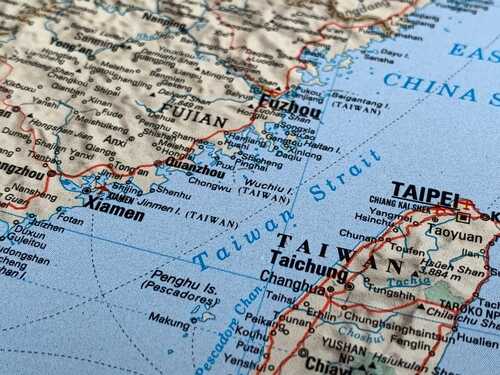
Taiwan’s military conducted the live-fire exercise in Taichung and called it a test of cross-regional precision strikes. The army said the drill was meant to show rapid deployment and battlefield reinforcement capabilities. It also marked the first time HIMARS was fired on Taiwan’s west coast, which gives the event clear signaling value toward Beijing. That said, the available reporting still leaves open what the drill proved in a real combat setting.[1]
The drill used six launchers split on both sides of the Dajia River, with each launcher carrying six reduced-range rockets. The army carried out three firing waves, for a planned total of 36 rockets, and said the impact points landed in waters about 9 kilometers offshore. Those details make the drill look more like a disciplined mobility and fire-support test than a simple publicity event. The setup also fits a “shoot-and-scoot” concept designed to reduce vulnerability after launch.[1][2]
Launch Failures Complicate the Success Story
Colonel Weng Yi-ming said 32 rockets were actually fired, not 36. He said two rockets failed to ignite on the north bank and two more misfired on the south bank, and the cause is under investigation. That matters because supporters can point to a successful training event, but critics can point to the missed launches and argue that the system was not flawless. Both readings are fair based on the public record.[1]
The reporting does not provide an independent scoring method for accuracy or a damage check for the impact area. It says the rockets landed offshore and that the drill demonstrated precision strike capability, but it does not show a third-party assessment of hit quality. It also does not prove survivability under real enemy fire. The military described “shoot-and-scoot” behavior, yet the sources do not show hostile tracking, counterbattery pressure, or measured displacement times in a contested fight.[1][2]
Why the Drill Matters Beyond the Range
This exercise fits the larger pattern of Taiwan using live-fire drills as both training and messaging. The military wants to show that it can move fast, fire hard, and keep launchers alive after firing. That is a sensible goal for a small island under pressure from the Chinese Communist regime. Still, the public record here is thin. Without a full after-action report, outside readers must rely on news accounts and broadcast summaries instead of technical proof.[1][2]
Taiwan flexes muscles it does not have
Taiwan’s military has conducted a live-fire exercise using US-supplied HIMARS, aiming them directly into the waters facing mainland China for the first time, CNN reports. pic.twitter.com/omzF1njrew
— S p r i n t e r (@SprinterPress) June 12, 2026
For conservatives watching the Pacific balance of power, the key point is simple. Taiwan is trying to harden its defenses with mobile American weapons instead of empty talk and bureaucratic weakness. The drill also shows why weapons systems matter more than slogans: a few launch failures can fuel doubt, but a mobile precision system still changes the calculation for any aggressor. The lesson is not that the drill solved the problem. The lesson is that Taiwan is preparing seriously while the threat grows.[1][2]
Sources:
[1] Web – Taiwan Tests HIMARS Missiles on Island’s West Coast
[2] Web – Taiwan conducts first live-fire drill of U.S.-supplied HIMARS