
As storms ripped across the heartland, hundreds of thousands of Midwestern families lost power while Chicago’s busy airports were brought to a standstill, exposing once again how fragile our basic infrastructure has become under years of neglect.
Story Snapshot
- Severe storms swept the Midwest, cutting power to hundreds of thousands of homes and businesses across several states.[1][2]
- Chicago’s O’Hare and Midway airports halted all flights for a time, with more than 1,000 delays and cancellations.[2][4]
- Illinois, especially Cook County, was hit hardest, with more than 260,000 customers losing electricity and reports of roof and building damage.[2][4]
- Independent weather reporting describes a long-track wind event, with gusts up to 90 miles per hour and major damage in multiple states.[1]
Storms Slam the Midwest and Darken Hundreds of Thousands of Homes
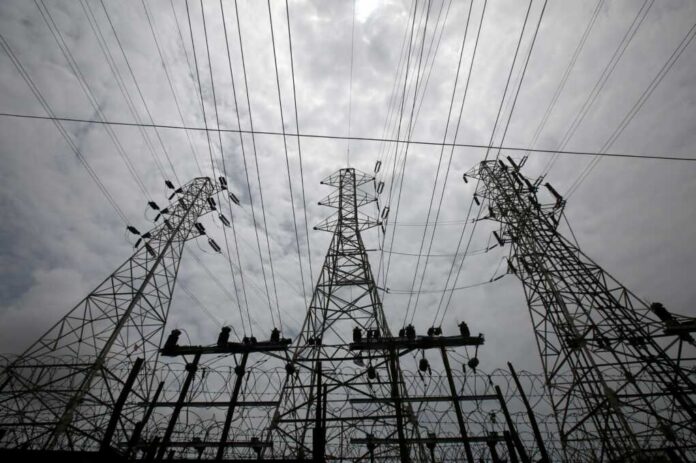
Damaging storms swept through the Midwest on Wednesday, knocking out power to hundreds of thousands of customers and leaving entire neighborhoods in the dark.[2] The Associated Press reported that severe thunderstorms rolled across Illinois, Michigan, Wisconsin, Kansas, Iowa, Indiana, and Ohio, with the strongest verified numbers in Illinois and Michigan.[2][4] In Illinois alone, more than 264,000 customers lost electricity, most of them in and around Cook County, which includes Chicago and many of its suburbs.[2][4]
Fox Weather, using data from the outage-tracking site PowerOutage.us, put the Illinois outage figure even higher at more than 270,000 customers, with over 189,000 of those in Cook County at one point in the evening.[1][7] The same report said roughly 130,000 customers were out in Michigan and over 45,000 in Wisconsin, pushing total regional outages above 400,000 as the night went on.[1] Those numbers shifted through the evening as utilities worked to restore power and new outages appeared in the storm’s path.[1][7]
Chicago Flights Halted as Thunderstorms Snarl National Travel
While families sat in the dark at home, travelers faced chaos in the air. Both of Chicago’s major airports, Chicago O’Hare International Airport and Chicago Midway International Airport, temporarily stopped all flights on Wednesday evening as thunderstorms moved over the city.[2][4] The Associated Press, citing FlightAware, reported that more than 1,000 flights into and out of Chicago were delayed or canceled during the event, rippling across the national air network.[2][4]
The halt in flights shows how one regional storm can disrupt travel for families and businesses across the country. Airlines and the Federal Aviation Administration used ground stops to keep planes from taking off into dangerous wind, lightning, and low visibility.[2][4] The early reporting does not yet break down which airlines or routes were hit hardest, and full airport operation logs from the Federal Aviation Administration would give an even clearer picture of how long each stoppage lasted and which carriers took the biggest hit.[2][4]
Wind Damage, Tornado Warnings, and a Strained Grid
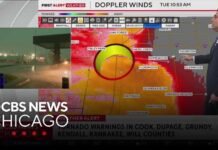
The National Weather Service issued tornado warnings across parts of Illinois, Kansas, northern Missouri, and southern Iowa as the storms moved east, warning residents to take shelter from fast-changing conditions.[2][4] Forecasters and Fox Weather described the event as part of a powerful severe weather pattern that created a long corridor of damaging winds, sometimes called a derecho, stretching hundreds of miles from Iowa through Illinois, Wisconsin, Michigan, and Indiana.[1] Wind gusts in the region reached up to 90 miles per hour, strong enough to snap trees and power poles.[1]
Severe storms and tornadoes hit the Midwest, causing mass power outages, flight disruptions, and more storms expected Thursday. https://t.co/37kdF6hL45
— WTKR News 3 (@WTKR3) June 11, 2026
On the ground, this translated into real damage. The Associated Press reported downed trees and damaged buildings, including an apartment building in the Chicago area where strong winds tore off part of the roof and forced residents to evacuate.[2][4] Fox Weather described local officials in Illinois communities such as Joliet and Seneca dealing with numerous downed lines and trees, blocked roads, and debris that made travel dangerous until crews could clear the way.[1] These reports line up with video coverage showing power lines on the ground and first responders going door to door.[2]
Why These Storms Keep Hurting Ordinary Families
This latest Midwestern storm fits a pattern many Americans are starting to recognize. Early coverage relies on wire services, weather channels, and real-time trackers like PowerOutage.us and FlightAware, which show large, fast-rising counts of outages and travel delays but do not yet include detailed engineering reports.[1][2][7] That means the broad facts are clear — severe storms knocked out power to hundreds of thousands and disrupted flights — even if every single outage and delay has not yet been traced to a specific broken wire or damaged part.[1][2][4]
For conservative families already dealing with high power bills, shaky grids, and constant travel headaches, events like this raise deeper questions. Why do storms so often knock out power for hundreds of thousands of people, when we pour billions into “green” projects but still leave basic lines and poles vulnerable?[3] Why are key hubs like Chicago so easily brought to a halt, with more than 1,000 flights delayed or canceled in a single evening’s storm?[2][4] As more official records come out, many will want to see whether leaders choose to harden real infrastructure or chase the next trendy agenda.
Sources:
[1] Web – Storms knock out power in the Midwest and disrupt Chicago flights
[2] Web – Over 400K residents without power in the Midwest after destructive …
[3] Web – Storms knock out power in the Midwest and disrupt Chicago flights
[4] Web – Live Updates: Upper Midwest and Central Plains severe weather threat
[7] YouTube – Power outages, major damage in Midwest after severe storms