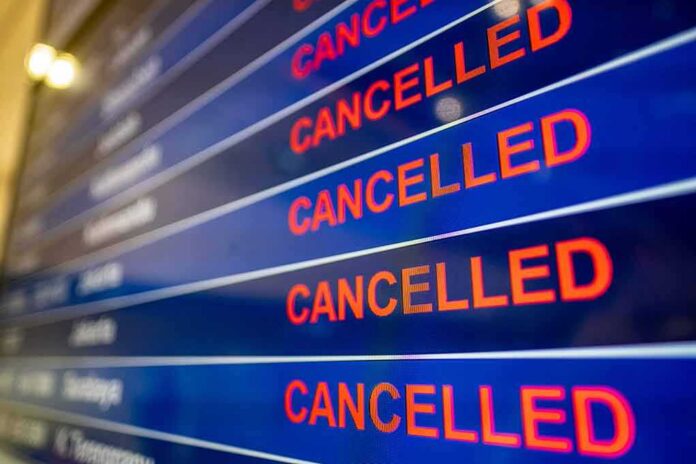
A fresh software fault in Britain’s air traffic system shut down departures, stranding travelers as operators raced to restore service.
Story Highlights
- United Kingdom air traffic provider said a software issue hit its flight data system and was fixed the same day.
- Departures resumed while airports warned delays and cancellations would continue during recovery.
- The transport secretary ruled out a cyber-attack, pointing to a technical failure, not a hostile act.
- National Air Traffic Services later traced the fault to a small coding defect and put mitigation in place.
System Failure Stalls Departures, Then Slowly Recovers
National Air Traffic Services in the United Kingdom reported a technical problem in its flight data processing system that disrupted departing flights at major airports. The company said engineers identified the fault inside its flight processing system and worked to restore normal operations. By the evening, the operator said the system was resolved and running, but warned that clearing the backlog would take time. Heathrow and other hubs said departures were restarting even as recovery continued.
National Air Traffic Services described active coordination with airports and airlines to ease restrictions and cut further delays, signaling a focused response to stabilize the network. The operator’s message aligned with on-the-ground reports that flights were resuming in stages. Travelers still faced cancellations and rolling delays while crews, gates, and aircraft cycled back into position. That gap between system restoration and full schedules is common after control network outages, which ripple through crew timing and gate availability.
Cause Identified as Software Defect, Not Cyber-Attack
Officials said the disruption stemmed from a technical error rather than a cyber-attack, narrowing the cause to a non-hostile failure inside the system. National Air Traffic Services later tied the incident to a software defect in a specific part of the flight data system, traced to a small section of code. The operator said mitigation was live while a permanent fix underwent safety testing and deployment. That sequencing allowed traffic to resume while engineers validated the longer-term patch.
Initial public statements used broad terms like “technical issue,” which left fine-grain details for later updates. Even after the system was restored, the scale of disruption remained large as airports processed backlogs and rebooked passengers. Reuters reported continued cancellations and delays after the fix, underscoring how fast a network outage can outpace buffers and how slow the return to normal can be once queues build across hubs and airlines.
Recurring Strain on a Tightly Coupled Air Network
Aviation regulators and prior reviews have shown that air traffic systems are tightly linked, so a failure in a core processing layer can trigger wide delays. In 2023, a separate United Kingdom incident involved a flight plan processing fault that took both primary and secondary channels offline, leading to large disruption and days of recovery. Independent reviewers urged stronger contingency planning and earlier airline alerts to soften the blow when rare faults occur. Today’s event fits that pattern of narrow triggers with big knock-on effects.
For American travelers and carriers, the lesson is clear. Complex national systems overseas can fail without warning, and the shock can spill into transatlantic schedules. Redundancy must work under stress, not just on paper. The United States should keep pushing for robust, tested backups and rapid communication between the Federal Aviation Administration, airports, and airlines. Strong infrastructure, clear chains of command, and honest updates respect passengers and protect commerce.
Sources:
insiderpaper.com, bbc.com, reuters.com, livemint.com, caa.co.uk