

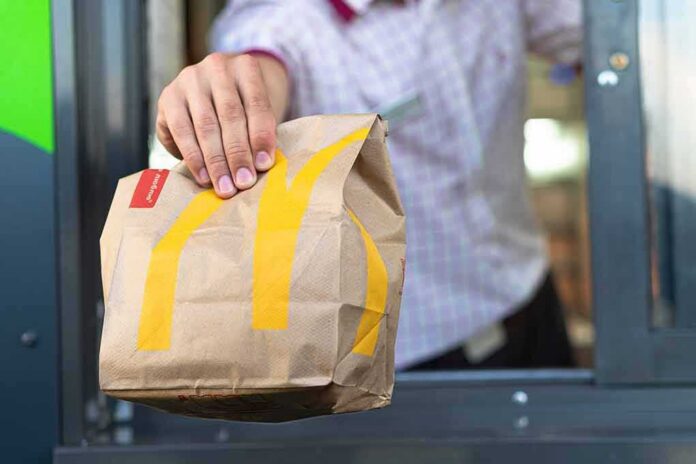
A sweeping federal lawsuit says an artificial intelligence pricing engine helped align McDonald’s menu prices across thousands of restaurants, threatening real competition for families watching every dollar.
Story Highlights
- A proposed nationwide class action filed in Chicago alleges McDonald’s used an AI-driven system to coordinate prices among franchisees.
- The complaint says the tool relied on nonpublic, store-level data to generate “optimal” prices for individual locations.
- McDonald’s denies any price fixing and says franchisees alone set final prices, calling the claims “speculative”.
- The case echoes concerns from other industries where shared data and algorithms may weaken true market competition.
What The Lawsuit Claims About McDonald’s AI Pricing Tool
Reuters reported that a consumer filed a proposed class action on October 2, 2026, in federal court in Chicago. The suit alleges McDonald’s coordinated menu prices across nearly 14,000 U.S. restaurants using an artificial intelligence system that learned from millions of daily transactions and issued location-specific price recommendations. The complaint says the engine relied on nonpublic, store-level sales data that individual franchises would not normally share with rivals, raising concerns about hidden coordination through a central platform.
The complaint’s theory rests on scale and structure, not one-off behavior. Plaintiffs say a central portal gathered sensitive information from restaurants that would otherwise compete in the same market and then pushed out “optimal” prices to those stores. They argue that such a setup can align prices in practice, even without a direct order to match a number. That approach mirrors how some antitrust cases now target algorithms as the hub that replaces open competition with quietly synced moves.
How This Could Hit Family Budgets And Real Competition
Higher menu prices hit working families most. The lawsuit says the system inflated prices but does not yet show how much came from the tool versus labor, food, rent, or recent inflation. That gap matters. Courts will want to see whether the recommendations pushed prices above what a fair market would set. Plaintiffs seek class certification, damages, and an order to stop any agreements or practices that restrict competition if the facts support their claims.
The Associated Press reported that the tool collected store-level sales data that competing franchises would not normally share, which is the key antitrust worry here. Sharing sensitive data through a common platform can soften competition, even if no one signs a price-fixing memo. If many franchisees lean on the same “optimal” price signals built from rivals’ data, the gap between stores can shrink. That can leave families with fewer bargains and less real choice.
McDonald’s Response And The Evidence Hurdles Ahead
McDonald’s rejects the price-fixing claim. The company says artificial intelligence does not set or change menu prices and that franchisees make all final pricing decisions. It describes the portal as an optional tool that offers store-specific suggestions and does not automate, coordinate, or fix prices. McDonald’s also called the allegations “speculative and uninformed,” pressing the point that recommendations are not mandates.
At this early stage, both sides face tests. Plaintiffs must link data sharing and algorithm outputs to real-world price alignment and consumer harm. They will need records that show how often franchisees followed the “optimal” prices, whether they felt pressure to comply, and how prices moved after adoption of the tool. Reports note that public documents, case numbers, and technical specifications are not yet available, which limits outside review until discovery proceeds in court.
Why This Fight Matters Beyond One Drive-Thru
This case lands in a larger debate about algorithmic pricing and fair markets. The U.S. Department of Justice sued RealPage over a similar hub-and-spoke concern in rental housing, where landlords shared nonpublic data and received price recommendations from a central platform. That action shows how enforcers view shared data plus common algorithms as a modern path to dull competition, even when no executive says “match that price” out loud.
Conservatives value open markets, clear rules, and honest competition. If a central system quietly narrows price differences that free markets create, families lose leverage. If the system is only a harmless tool, courts can sort that out. The right path is simple: force sunlight. Discovery should reveal what data flowed in, what recommendations came out, how often stores followed them, and whether anyone was pushed to comply. Facts, not spin, should decide the bill at the counter.
Sources:
thegatewaypundit.com, reuters.com, rmb.reuters.com