
Poland’s president turned his plane around mid-flight as police moved into the nation’s top court, deepening a constitutional crisis that now tests Europe and alarms allies.
Story Snapshot
- Police secured Poland’s Constitutional Tribunal after its chief was suspended amid protests.
- The government cited a law allowing immediate suspension when a judge is caught committing an offence.
- The suspended chief is accused of blocking judges chosen by the current parliament from taking cases.
- Opponents called the move a coup and said the suspending judge lacked legal authority.
Police Secure Poland’s Top Court As Leadership Fight Erupts
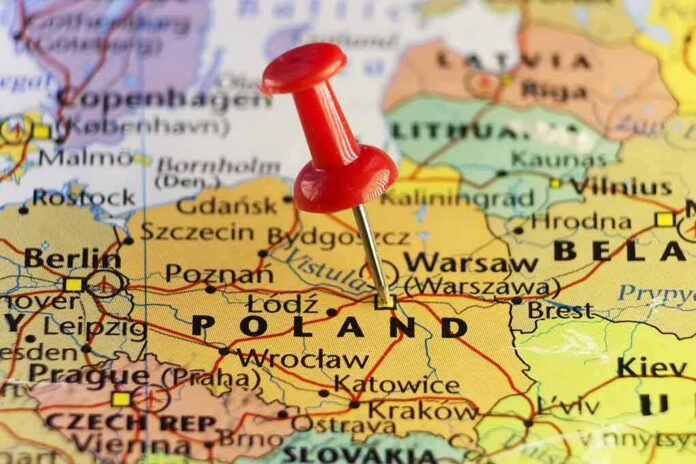
Polish police moved to secure the Constitutional Tribunal in Warsaw on October 30 after its president, Bogdan Święczkowski, was suspended for one month. Crowds gathered outside and some protesters clashed with officers as tensions rose. Reports described officers guarding entrances after rival factions claimed control of the court. The Associated Press and other outlets noted they could not independently verify all official reasons posted before the tribunal’s website went offline that evening.
Justice Ministry officials and government allies said the suspension followed months of alleged obstruction inside the court. They alleged Święczkowski blocked or delayed judges elected by the current parliamentary majority from taking part in panels and hearing cases. They also pointed to irregular case assignments that favored certain outcomes. The justice minister and prosecutor general said he would seek to lift immunity for Święczkowski and a deputy, escalating the standoff into possible criminal territory if a court agrees.
Government Cites Statutory Tool, Pledges Disciplinary Review
The notice posted to the tribunal’s site cited Article 130 of Poland’s law on common courts. That clause allows an immediate break in a judge’s duties when the judge is allegedly caught committing an offence. The post said a disciplinary court would later review the step and could uphold or revoke it after one month. The unusual use of a common-courts rule for a constitutional body drew sharp legal debate across Poland’s legal and political class.
Prime Minister Donald Tusk framed the move as part of restoring the rule of law after years of turmoil under the prior government. He said the country must repair damaged institutions and return to clear rules. Government backers argued the tribunal had been warped by political packing in earlier years, and that the public deserved a court that follows the constitution and hears cases with properly seated judges. They said decisive steps were needed, within law, to end paralysis.
Legitimacy Of The Suspending Judge And Use Of Police Face Pushback
Opposition figures, including leaders tied to the former ruling party, blasted the suspension as an unlawful takeover. The tribunal’s official account said Święczkowski and his deputy remained the lawful leadership and called the move a coup. Critics argued Anna Korwin-Piotrowska, who announced the suspension, was not a valid tribunal judge and thus lacked authority to act. They warned that deploying police around the nation’s top court looked like force replacing legal process.
News outlets recorded that President Karol Nawrocki turned his aircraft around mid-flight and returned to Poland as the crisis broke. That dramatic step underlined the gravity of the moment and signaled coming high-level talks. With rival statements, a downed court website, and conflicting legal claims, the record remained messy on key points. Reporters stressed gaps in public documents and said core allegations still awaited full and transparent legal review.
Why This Matters To American Readers
American readers should care because this fight echoes themes we know well: courts pulled into politics, police at civic institutions, and leaders using emergency-sounding tools for rapid change. Conservatives see a warning. When governments stretch legal hooks to sideline rivals, rights can erode fast. Today it is Poland’s tribunal. Tomorrow such tactics could land on speech, faith, or the right to bear arms. Strong constitutions need sunlight, due process, and records that the public can read and test.
The lesson is simple. Truth needs paper trails, not press conferences. If officials claim a judge “was caught” committing an offence, they should publish the order, evidence, and the legal memo so citizens can judge the claim. If police ring a court, leaders should show the legal basis and the limits of force. Clear laws, transparent records, and peaceful transfers of authority are the guardrails that keep liberty safe on both sides of the Atlantic.
What To Watch Next
Watch for the disciplinary court’s review after the one-month suspension window. That ruling can either steady the process or fuel more unrest. Look for the prosecutor general’s formal filing to lift immunity, which should state the alleged crimes and evidence. Track whether the tribunal publishes complete case-assignment logs and appointment records that could prove or disprove the obstruction claims. Finally, watch if police scale down their presence as calm returns, or if force becomes a new normal at the courthouse.
For conservatives, the standard is not who wins the news cycle. The standard is law, proof, and limits on state power. Poland should meet that standard with full documents and open hearings. America must do the same at home. Free nations cannot afford “trust us” government. Show the receipts, follow the constitution, and let the people see for themselves.
Sources:
en.wikipedia.org, aljazeera.com, meduza.io, bloomberg.com, yahoo.com