
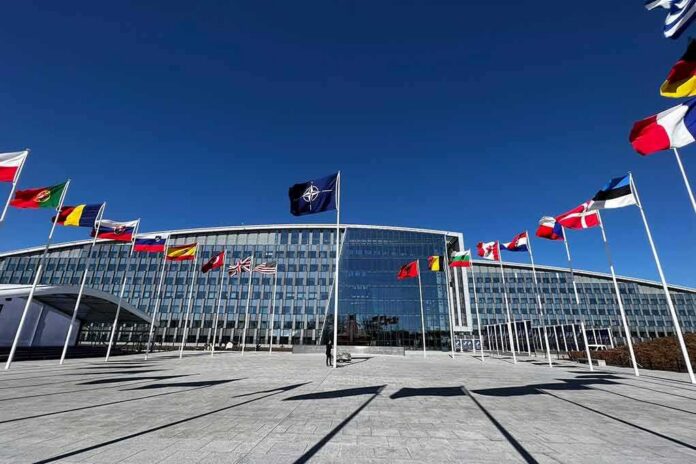
NATO keeps saying Ukraine is on an “irreversible path” to membership, while Russia repeats that Kyiv in NATO is a red line it will not accept.
Story Highlights
- NATO leaders reaffirm support for Ukraine’s future membership, pending allied agreement and conditions.
- Russia put its objections in writing in 2021, demanding NATO bar Ukraine from joining.
- Ukraine’s president says full NATO membership is the main security guarantee Kyiv seeks.
- The gap over Ukraine’s status remains the core obstacle to any durable settlement.
NATO’s Stated Path for Ukraine and the Conditions Ahead
NATO leaders said Ukraine “will become” a member as far back as 2008, but tied the process to allied consensus and reforms. In 2024, the NATO-Ukraine Council repeated that Ukraine’s path to full Euro-Atlantic integration is “irreversible,” while stressing any invitation depends on allies agreeing and conditions being met. This keeps Ukraine as a close partner but still outside the alliance’s defense shield. That status leaves risk and uncertainty for Kyiv, Moscow, and Europe.
NATO officials frame this approach as respect for Ukraine’s right to choose its own security path, free from outside control. They argue that support for Kyiv deters wider war and backs the principle that borders cannot be changed by force. Still, the alliance has avoided firm timelines. Leaders balance support for Ukraine with concerns about escalation and unity among thirty-plus capitals. The result is a signal of long-term intent without a near-term entry date.
Russia’s Documented Red Line and Why It Matters
Russia did more than complain on television. In December 2021, Moscow published draft security texts that demanded NATO deny membership to Ukraine and other former Soviet states, and roll back deployments in Eastern Europe. Those terms were sweeping and were quickly rejected in the West. Yet the documents showed the Kremlin’s position in black and white: Ukrainian NATO membership is unacceptable under any conditions. That stance remains central to Moscow’s war aims and bargaining posture.
This clash is the heart of the stalemate. NATO insists Ukraine’s future is for Ukrainians and allies to decide. Russia says Ukraine in NATO threatens its core security. Each side calls its policy defensive. Each side views the other’s moves as a threat. Analysts call this a classic security dilemma, where defense by one looks like offense to the other. That pattern has fueled friction since the first post–Cold War enlargements.
Kyiv’s Demand for Real Guarantees, Not Vague Promises
Ukrainian President Volodymyr Zelenskyy says full NATO membership is the main security guarantee his country seeks. He argues that true collective defense, like Article 5, would cut the chance of renewed Russian attack. He also says interim guarantees should stay in force until membership is secured, and any package would be put before Ukrainian society. From Kyiv’s view, promises without hard protection have not stopped attacks. Clear rules and strong forces are the minimum baseline.
That position matches a basic truth of deterrence. Vague signals invite testing. Clear commitments backed by real power can prevent miscalculation. But moving from partner status to full membership requires every ally to agree. Some allies back speed and firmness. Others weigh risks and domestic politics. Until there is consensus, Ukraine remains in between, relying on aid, training, and bilateral deals, not the alliance’s defense clause.
What This Means for the United States and Conservatives
American conservatives prize clear goals, strong borders, and peace through strength. The facts here are simple. NATO says Ukraine’s door is open but later. Russia says that door can never open. Ukraine says only full membership will make peace stick. Those positions collide at the center of European security. Any U.S. policy must judge costs, limits, and the risk of dragging Americans into another long conflict.
President Trump’s team faces a narrow path. The United States should not write blank checks, accept endless missions, or ignore our own border and debt. But the United States also cannot invite chaos by sending mixed signals. A sound approach sets firm ends, ties aid to results, expands burden sharing, and keeps U.S. forces out of direct combat. It also tests real diplomacy, while building U.S. energy strength to deprive Russia of leverage. Strength and clarity reduce risk and cost over time.
The Road to a Durable Settlement
Any settlement that lasts must face the core issue head-on: Ukraine’s security status. NATO texts keep the membership path open, with conditions. Russia rejects that outright. Kyiv wants ironclad guarantees and a rebuilt military. Bridging that gap will require pressure, incentives, and a plan that stops renewed war. Vague formulas will not do. Clear lines, enforced limits, and credible penalties for violations are essential, or the cycle will repeat.
Americans should watch three markers. First, does NATO move from “irreversible path” language to specific steps and dates. Second, does Russia shift from maximalist demands to verifiable limits. Third, does Ukraine secure real, enforceable guarantees that deter future attack. Until those pieces align, the war risk stays high, costs keep rising, and Europe’s stability hangs in the balance.
Sources:
zerohedge.com, nato.int, inquirer.com, president.gov.ua