
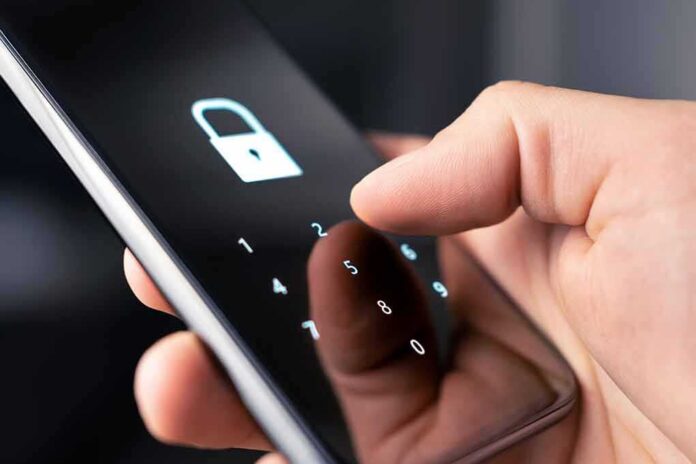
Two federal judges just slammed warrantless border phone seizures, warning that copying Americans’ entire phones without cause can trample the First and Fourth Amendments.
Story Highlights
- A federal judge found agents likely retaliated against an immigration lawyer for protected speech.
- Agents seized and copied the lawyer’s whole phone without a warrant, court records say.
- The court barred the government from accessing the copied data while the case proceeds.
- In a separate case, a judge ordered Customs and Border Protection to explain what it did with a family’s seized devices.
Judge flags likely retaliation and unconstitutional phone copying
On November 13, 2026, United States District Judge Allison D. Burroughs wrote that evidence showed immigration attorney Andrew Lattarulo “would not have been searched except for his protected speech.” The court saw signs of retaliation after he criticized federal immigration policy. Agents at Boston Logan International Airport seized his phone and made a full copy of its contents, with no warrant. That sweeping copy raised serious Fourth Amendment concerns over digital privacy, beyond a short manual look.
Reporting based on the court’s order says agents downloaded a complete image of Lattarulo’s phone. That means texts, emails, client messages, and personal data may have been captured. The American Bar Association’s coverage adds that Judge Burroughs required the government to keep the copied data but barred access to it while the case continues. That safeguard protects attorney‑client communications and free speech rights until the court decides the merits.
What the government says about border device searches
Customs and Border Protection says its border search power applies to electronic devices crossing the border. The agency’s directive distinguishes a basic manual search from an advanced search that uses external tools. The policy says advanced searches need reasonable suspicion of a law violation or a national security concern and approval from a senior manager. The agency also says searches can include copying and retaining data from a device in some cases.
This policy framework is longstanding, and courts have recognized broader leeway at the border. But the Supreme Court has also stressed that phones hold the “privacies of life.” That tension is what these new rulings highlight: a difference between a quick manual check and a full forensic copy tied to a specific person and purpose. Judge Burroughs treated the mass copying and the likely retaliatory motive as constitutional red flags, not routine border screening.
Second case: devices taken, then mailed back without a clear reason
Another case shows similar strain on rights. At Washington Dulles International Airport on October 16, 2026, Customs and Border Protection seized two iPhones and two laptops belonging to Muhammad Numaan Imam and his wife, after Imam declined to share a passcode because of confidential patient information. The devices were later mailed back without a clear explanation for the seizure. A federal judge then ordered the agency to explain what it did with the devices before returning them.
Advocates argue that the lack of an on‑the‑spot reason, paired with delayed returns, looks like “seize first, justify later.” The order to explain signals judicial doubt about process and purpose. While this account comes through advocacy filings and media reports rather than a full opinion, the discovery order itself is a firm step. A federal court wanted a record of actions taken while the devices were held, including any copying or review.
Why this matters for constitutional conservatives
These rulings warn that border power is not a blank check. When agents copy an entire phone without a warrant, they risk building a back door around the Fourth Amendment. When a critic of immigration policy gets singled out, the First Amendment is at stake, too. The court in Lattarulo’s case acted to fence off the copied data because it likely includes attorney‑client materials. That is a core shield for due process in our system.
Even if device searches affect a small share of travelers, a single full copy can expose a lifetime of messages, photos, and contacts. That power must be narrow, justified, and logged. Courts are signaling that bulk copying aimed at a known critic or professional cannot hide behind “routine” border checks. Agency policy says “use judiciously.” Judges now expect proof of that, not promises. That is a win for limited government and for the rule of law.
What comes next: tighten policy, demand transparency
The Lattarulo ruling is preliminary, not a final verdict. The government says it had reasonable suspicion tied to an investigation, but has not put the full evidence on the public record. That gap may close as litigation moves forward. For now, the court’s message is plain: do not use border power to punish speech, and do not turn a quick inspection into a fishing trip through someone’s digital life without firm grounds and proper guardrails.
Sources:
reason.com, abajournal.com, universalhub.com