

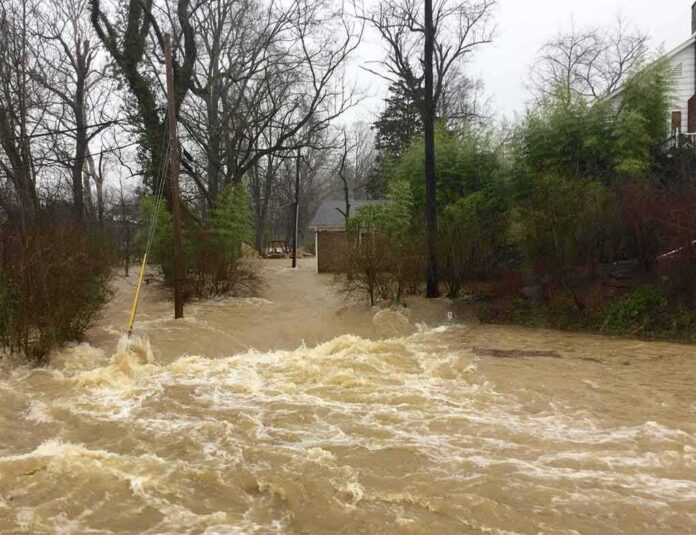
Officials and experts say years of human mismanagement turned Assam’s extreme monsoon rains into a man-made disaster.
Story Highlights
- Scientists cite deforestation, hill excavation, weak embankments, and bad drainage as major factors.
- A peer-reviewed review finds floods in Assam stem from both natural and human causes.
- BBC reports rainfall far above normal, plus upstream deforestation and aging levees worsened damage.
- Analysts warn poor river and land-use policy magnifies future flood risk unless fixed.
Heavy Rain Triggered Floods, But Human Choices Drove the Damage
Reporters in India describe extreme monsoon rain across Assam and nearby hill states. That rain pushed rivers over their banks and flooded towns. But scientists and planners say the worst damage came from human choices. They point to deforestation in the hills, hill cutting, sand and silt build-up, and old embankments that failed. Together, these factors turned a severe weather event into a far larger disaster for families and farms across Upper Assam.
The Indian Express quoted a government scientist who reviewed satellite images. He reported heavy excavation along river valley sides, likely tied to mining, which helped speed runoff and silt into the rivers. That raises riverbeds and lowers capacity, so water spills out faster. He stressed that rainfall and human actions worked together to cause the floods. That view matches years of warnings about unmanaged growth and weak floodplain rules in the Brahmaputra basin.
What Data and Reviews Say About Assam’s Flood Pattern
A 2023 peer-reviewed review summed up the drivers. It listed rainfall, climate shifts, urban growth, deforestation, bad drainage, and embankment building as major causes. It concluded that Assam’s floods come from a mix of natural and human factors, not one alone. That means policy choices matter. Stronger land and river management can lower risk even when heavy rain comes. Waiting for perfect climate fixes will not protect homes this year or next.
BBC reporting adds key numbers and context. Assam and parts of Nagaland saw rainfall that was several times higher than normal during the flood window. Experts also blamed upstream deforestation and worn-out levees for making the floods worse. When forests are cut, hills shed soil and water more quickly. Rivers then choke with silt, and embankments face higher stress. Families living near those weak points often pay the price when barriers fail.
Why Management Failures Matter to American Readers
Flood control depends on the basics: clear floodplain rules, sound levees, working drainage, and honest enforcement. Analysts in India argue those basics broke down in Assam. They cite unplanned or illegal activity, like mining and riverbed cutting, plus poor maintenance and weak zoning. That mirrors lessons Americans know from levee failures and unchecked building in risky zones. Good stewardship, not slogans, keeps people safe when the water rises.
A cloudburst or rampant mining and deforestation – what is the real cause of the unprecedented Assam floods? While the Assam CM Himanta Biswa Sarma blames a cloudburst in Nagaland, while experts point to mining and deforestation as the main causes behind the devastating floods. pic.twitter.com/el9rKZY90Z
— Peek TV (@PeekTV_in) August 13, 2026
For conservatives, the takeaway is simple. Nature brings storms. Bad policy turns storms into tragedies. The Assam record supports that view. Authorities and experts across outlets agree that human actions made the floods far worse. That does not deny the role of strong rain. It shows why leaders must fix what they control: stop illegal clearing and excavation, enforce floodplain limits, repair embankments, and restore wetlands that store water. Results beat rhetoric.
Action Steps That Cut Risk Without Growing Government Bloat
Local leaders can map and mark no-build flood zones and stick to them. Agencies can test and repair the most fragile embankments first. Police can shut down illegal mining that destabilizes hills and fills rivers with silt. Communities can restore wetlands to hold peak flows. None of this requires a blank check. It requires basic competence, clear rules, and accountability. Assam’s pain shows the cost of ignoring these simple steps year after year.
Assam’s floods were not caused by rain alone. They were made worse by choices. The record from reporters, scientists, and government voices is consistent on that point. When leaders enforce the law, protect forests, maintain levees, and keep drains clear, floods still happen—but fewer families lose everything. That is the practical path forward in Assam, and the same common-sense path we should demand at home.
Sources:
indianexpress.com, hindustantimes.com, ndtv.com, india.mongabay.com