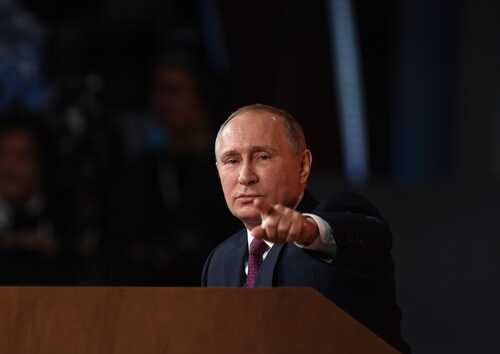
Putin’s warning that Western troops in Ukraine would be “legitimate targets” collides with Trump’s failed deadline for peace talks.
At a Glance
- Putin threatens Western troops, calling them “legitimate targets.”
- Trump’s two-week deadline for Russia talks passes without progress.
- Russia strikes U.S.-linked site and kills over 20 civilians in Kyiv.
- European leaders consider troop deployments and new security guarantees.
- Trump pushes for direct Putin-Zelenskyy summit despite unclear terms.
Putin’s Threats and Trump’s Deadline
Vladimir Putin escalated rhetoric by declaring Western soldiers in Ukraine would be attacked if deployed. He cast their presence as hostile and warned it could trigger broader war. European capitals, unsettled by Ukraine’s exposure, weigh military involvement ranging from troop rotations to expanded air defense.
Watch now: Putin says any Western troops in Ukraine would be “legitimate targets for destruction”
Trump took a hard stance at the August Alaska summit. He ordered Russia to start peace talks within two weeks or face “severe consequences.” Moscow ignored the demand and instead hit industrial sites tied to U.S. firms and unleashed a missile barrage on Kyiv. The violence left at least twenty civilians dead and exposed limits in Washington’s leverage.
The deadline’s collapse underscores the gulf between Trump’s threats and Moscow’s resolve. Russian escalation signals confidence that Western powers remain divided over costs and risks of deeper involvement.
Europe’s Calculus on Security Guarantees
In early September, Paris hosted a coalition summit with Zelenskyy and top European leaders. Talks focused on troop deployments, new defense guarantees, and public calls for firmer deterrence. France and Germany pushed for stronger commitments, while smaller states voiced caution over direct escalation with Russia.
Trump’s envoy joined the Paris discussions. The move signaled Washington wants Europe to carry more of the security burden. U.S. officials frame the talks as Europe’s chance to prove it can anchor continental defense without endless American troops.
The debate underscores a shift in posture. European forces may soon play a larger frontline role, while Washington positions itself as broker and backstop rather than battlefield leader.
The Summit Push and Fragile Diplomacy
Trump promotes direct dialogue, pressing for a one-on-one summit between Putin and Zelenskyy. He argues only face-to-face contact can cut through stalemate. But Russian demands remain vague, and Zelenskyy’s team questions whether Moscow is seeking talks in good faith.
Ukrainian officials also cite risks to Zelenskyy’s safety, given ongoing strikes across the country. Without a cease-fire, conditions for a summit look unstable. Meanwhile, Russian attacks continue, killing civilians and testing Ukraine’s defenses.
The absence of progress raises doubts about diplomacy’s near-term payoff. Each Russian strike makes Western leaders more inclined to consider forceful steps, heightening the danger of open NATO involvement.
Impact and Outlook
Ukraine absorbs the brunt of these maneuvers, facing relentless bombardment and mounting casualties. Putin’s threats and Trump’s missed deadline deepen the crisis. Europe edges closer to military commitments that could reshape the continent’s balance of power.
If European troops enter the fight, confrontation with Russia becomes more likely. Such a clash risks pulling Washington into a broader conflict, raising stakes for sovereignty, security, and American restraint abroad. For now, the world watches as diplomacy falters and escalation looms.