
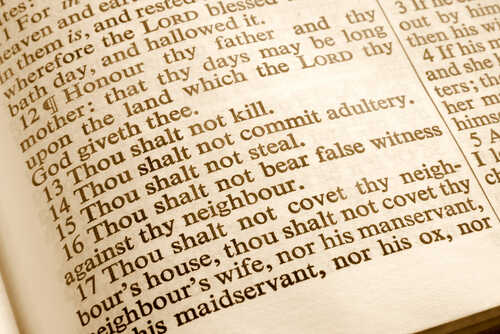
Louisiana’s bold mandate to post the Ten Commandments in every public school classroom faces relentless lawsuits from ACLU activists, threatening to erase America’s Judeo-Christian heritage from education.
Story Highlights
- Governor Jeff Landry signed HB 71 in June 2024, requiring Ten Commandments posters in all K-12 classrooms and state universities, funded solely by private donations.
- The law cites historical use in early American texts like the New England Primer (1688), distinguishing it from a 1980 Supreme Court ruling against Kentucky’s version.
- Supreme Court’s 2022 Kennedy v. Bremerton decision shifted analysis to “history and tradition,” paving the way for such displays after overturning the Lemon Test.
- Texas followed with SB 10 in 2025, proposing similar mandates, as legal battles loom with potential Supreme Court review.
- Both conservatives and liberals increasingly see federal overreach and elite interference eroding foundational principles, fueling shared frustration with government failure.
Louisiana Leads the Charge
Governor Jeff Landry signed House Bill 71 into law in June 2024. The legislation mandates display of the Ten Commandments posters, at least 11×14 inches in large font, in every public K-12 classroom, charter school, and state-funded university. Private donations fund all posters, avoiding taxpayer money. A required historical context statement references early education materials such as the New England Primer from 1688 and McGuffey Readers. The law also permits optional displays of documents like the Mayflower Compact, framing the measure as educational restoration rooted in America’s founding traditions.
Supreme Court Precedents Shift the Ground
The Supreme Court struck down a Kentucky law in 1980’s Stone v. Graham, ruling classroom postings violated the Establishment Clause under the Lemon Test, which demanded secular purpose and no excessive government entanglement with religion. In 2005, Van Orden v. Perry upheld a Ten Commandments monument on Texas Capitol grounds as passive and historical. The pivotal 2022 Kennedy v. Bremerton ruling discarded the Lemon Test, directing courts to evaluate religious displays through the lens of history and tradition. Louisiana’s law leverages this change, mimicking upheld monuments with added context.
Stakeholders Clash Over Constitutionality
Proponents like Governor Landry view HB 71 as reclaiming the Ten Commandments’ role in colonial education, including Noah Webster’s American Spelling Book. Landry stated he “can’t wait to be sued,” anticipating court tests. Critics, including the ACLU and Center for American Progress, filed lawsuits claiming the mandate promotes Christianity, alienates non-Christian students, and ignores Stone v. Graham precedent. They argue no longstanding classroom tradition exists, despite historical primers, and that even private funding constitutes government endorsement. Texas legislators introduced SB 10 in 2025, specifying a Protestant version with private funding options.
Impacts Echo Bipartisan Government Frustrations
Short-term, lawsuits delay implementation and polarize communities in diverse classrooms where non-Christians may feel excluded. Teachers must avoid religious instruction amid varying denominational versions—Protestant, Catholic, Jewish. Long-term, an upheld ruling could expand displays of other historical documents like the Quran or Mayflower Compact, challenging public education’s neutrality. Economically minimal due to private funds, the moves fuel church-state debates in Republican-led states. Amid 2026’s Trump administration, both left and right decry elite-driven federal overreach eroding individual liberty and traditional values, uniting frustration over a government prioritizing power over the American Dream.
🧐🔎
Thou Shalt Not Post the Ten Commandments in Classroomshttps://t.co/u4eGuG5hNF— Reinaldo Molares (@reyjmolares) April 26, 2026
Expert Views Highlight Divisions
Legal scholars note Bremerton’s history-based test strengthens defenses for contextual displays citing early primers. Education Next praises safeguards distinguishing it from prior failures. Critics contend it politicizes scripture, offends believers by state enforcement, and divides classrooms. Word on Fire mocks claims of “injury” from passive posters, arguing they reinforce ethics without proselytizing. Disputes persist over “longstanding tradition,” as Stone invalidated similar mandates despite colonial history. With SCOTUS review likely, the outcome may redefine religious expression in schools.
Sources:
Thou Shalt Not Display the Ten Commandments in School?
10 Reasons the Ten Commandments Should Not Be Posted in Public School Classrooms
The Ten Commandments May Appear in a Classroom Near You
Ten Commandments Legal Analysis PDF