
When war rhetoric collides with legal language, arguments stop being only about battlefield conduct and become fights over definitions, evidence standards, and moral authority; that is the terrain on which Benjamin Netanyahu’s UN speech — and his attack on New York City Mayor Zohran Mamdani — squarely sits.
The Short Version
- Netanyahu’s core claim: Israel “prevented genocide,” citing Hamas’s human-shield tactics, mass civilian warnings, and humanitarian aid as evidence against extermination intent.
- Mamdani’s core rebuttal: those are “baseless lies” that sanitize genocide; he points to an active ICC arrest warrant request and Gaza’s civilian toll.
- The institutional split is real: a UN Commission of Inquiry concluded in 2025 that Israel committed genocide, while other legal scholars argue the conduct, however grave, does not meet the Genocide Convention threshold.
- Walkouts and protests framed the speech as confrontation rather than evidentiary argument, deepening polarization rather than resolving factual disputes.
What Netanyahu Actually Argued — And Why It Matters
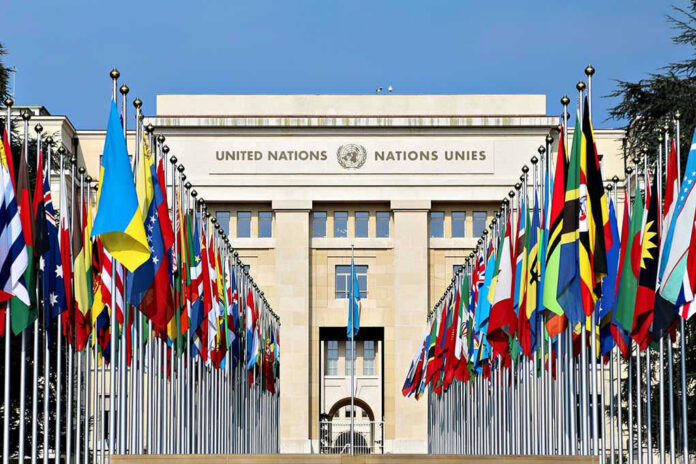
At the UN General Assembly, Netanyahu mounted a categorical defense: Israel, he said, did not commit genocide; it prevented it. His rationale rested on three pillars. First, Hamas’s embedding of military infrastructure in dense civilian areas — hospitals, schools, mosques — which transforms urban terrain into a battlespace saturated with human shields and complicates proportionality analysis under the laws of armed conflict. Second, prestrike warnings at scale — “millions” of texts, calls, and leaflets — portrayed as an operational system designed to separate civilians from targets, not as occasional courtesy. Third, sustained humanitarian flows — food tonnage and vaccination campaigns — cited to contradict any intent to destroy a people, a required element of genocide under the Convention. He wrapped those claims in moral framing: Oct. 7 as the worst slaughter of Jews since the Holocaust, and a vow to eradicate groups bent on repeating it.
For a global audience, the significance is not whether one agrees with Netanyahu’s politics; it is that he tried to move the genocide debate from accusation to mechanism. He pointed not only to outcomes but to inputs: targeting constraints, warning apparatus, and aid logistics. If correct in scale and effect, those inputs complicate a legal inference of genocidal intent; if overstated or nullified in practice, they do little work. That is where evidence — not volume — rules.
Where the Evidence Is Strong — And Where It Isn’t
Some assertions are easy to corroborate in kind, if not in degree. Hamas’s systematic co-location with civilians has been documented across conflicts and is consistent with its doctrine; disputing that requires granular refutation, not slogans. The Oct. 7 massacre and its scale are uncontested. But other claims demand auditable records. “Millions” of prestrike warnings and “2 million tons” of food are not self-proving; they need telecom broadcast logs, IDF targeting files, and crossing-manifest totals to stand as more than rhetoric. The news coverage that captured his language did not independently verify those figures; it recorded them. Likewise, invoking Col. John Spencer’s judgment that Israel has done more than any military to spare civilians is an expert testimonial, not a dataset; it is weighty as opinion but not dispositive as proof.
On the other side, Mamdani’s rebuttal leans on institutional process and outcomes: he calls the defense “baseless lies,” points to an ICC arrest action, and anchors the ethical charge to the visible devastation in Gaza and to specific civilian deaths in purported safe areas. Those are morally potent claims. Still, describing the entire defense as “baseless” is unsatisfying as analysis if it does not engage the operational particulars Netanyahu highlighted — warning architecture, corridors, and aid logistics — with counter-evidence. The best adjudicator here is not which side spoke louder, but which side’s claims survive documentation.
The Legal Frame: Genocide, Intent, and Urban War
Genocide is a term of art: the destruction, in whole or in part, of a protected group, with specific intent. Civilian death on a large scale is a necessary input in many genocide cases but not sufficient; intent is the hinge. That is why the debate has migrated from casualty counting to parsing orders, speeches, target sets, and the treatment of humanitarian lifelines. In 2025, a UN Commission of Inquiry concluded that Israel committed genocide in Gaza, citing statements by Israeli officials as evidence of intent and drawing on months of interviews and analysis. That finding shifted the conversation from activism to institutions. Yet the legal academy is not monolithic; serious scholars have argued that even grievous violations may fall short of the Convention’s threshold if they do not meet intent standards, or if military necessity and efforts at mitigation are credibly shown.
In practice, investigators will weigh precisely the items Netanyahu put forward: did warnings precede strikes, and were they feasible to act upon; did corridors function; did aid reach civilians at scale; how did targeting cells handle dual-use sites; and what do internal directives reveal about anticipated civilian harm. These are empirical questions. They will not be resolved by applause lines or walkouts.
The Politics of Personalization: From Policy Dispute to Communal Safety
Netanyahu did not confine himself to operational defense; he personalized the dispute by castigating New York City’s mayor, Zohran Mamdani, as spreading lies and endangering Jews. That move follows a well-worn playbook: translate a policy fight over Gaza into a referendum on Jewish safety in diaspora communities, thereby reframing critics as threats rather than interlocutors. Mamdani’s rejoinder — that criticism of Israeli conduct is being smeared to suppress scrutiny and that Netanyahu faces ICC action — plays the mirror image: recast the personalization as a tactic of evasion rather than engagement with facts. The consequence is predictable. The stage becomes theater; the audience divides before the evidence arrives.
The walkouts during the speech and protests outside the UN amplified the symbolism. Diplomatic dissent is a powerful cue — it tells viewers how to feel before they learn what to think. The risk is epistemic: when spectacle crowds out verification, rhetoric — on either side — gets a free ride.
Dozens of delegates walked out of the Aassembly hall as Israeli PM Benjamin Netanyahu began his UN General Assembly address. Bibi’s speech came as Israel faced growing criticism from world leaders at this year’s assembly over its genocidal war in Gaza.🇵🇸🇮🇱 pic.twitter.com/0elXwHRd6K https://t.co/VGtTbqeby7
— 惣電通・停波・アホカ・ハングレー@THE LORDS OF THE RINGS 🍉 (@FuckTokyo2021) September 25, 2026
How to Read Claims Like These: A Practical Checklist
For readers trying to cut through the noise, a few tests help. First, separate claims about mechanism from claims about motive; then ask what records exist for each. Warning systems, aid convoys, and corridor maps should leave auditable trails — telecom logs, manifests, orders. Second, treat single-expert superlatives as judgment calls until paired with method and data. Third, distinguish outcome metrics (casualty counts, displacement, infrastructure destruction) from intent inferences; the former inform the latter but do not decide it. Fourth, map legal claims to their institutional posture: a UN inquiry’s genocide finding sits differently in the evidentiary hierarchy than a podium assertion or a campaign speech, even if all deserve scrutiny. Finally, beware personalization; when a strategic argument turns into a character indictment, it often signals evidentiary fatigue, not strength.
Sources:
nytimes.com, politico.com, reuters.com, abc.net.au, cnn.com