
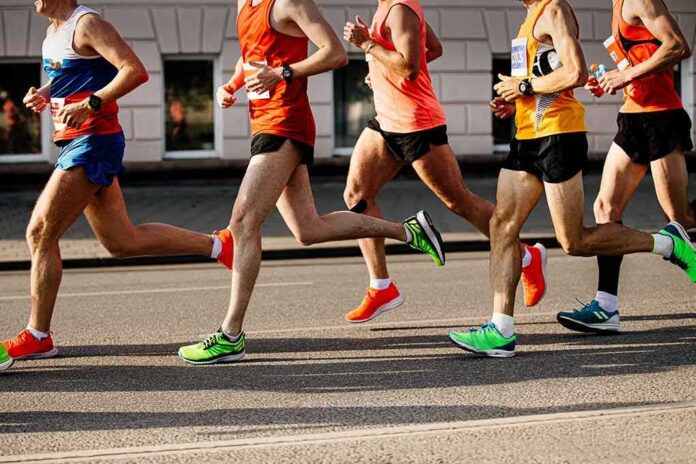
A New York City Marathon spectator says she held 24-year-old runner Rachel Apa’s hand and told her she “wasn’t alone” as bystanders started CPR near Mile 24.
Story Highlights
- A spectator says she comforted Rachel Apa after the runner collapsed near Mile 24.
- Witnesses reported bystander CPR and rapid response from race medical teams.
- The witness described holding Apa’s hand, offering prayers and reassurance.
- Officials were still reviewing the medical details of the death at last report.
Witness Account of Final Moments
Newsday reported that spectator Michaela Nicholas saw Apa collapse about 15 yards ahead of her as runners passed through Central Park late in the race. Nicholas said she rushed to Rachel’s side, held her hand, told her she was loved, and prayed with her while others began life-saving efforts. Her account places her among the first people to reach Apa after the fall and focuses on simple human comfort amid chaos.
The Pittsburgh Post-Gazette reported that Nicholas had just shouted encouragement to Apa moments before the fall. She then moved toward the downed runner and joined other Good Samaritans gathering to help. The sequence described by Nicholas underscores a common pattern at big races. People nearby step in fast, offering comfort or aid until medical teams arrive with equipment and training. That pattern appeared to unfold here within seconds.
Emergency Response on the Course
CBS Philadelphia reported that bystanders and medical staff responded quickly and started cardiopulmonary resuscitation. The outlet said runners, spectators, and trained personnel worked together as police and race medics converged. Across marathons, that combined response is typical and often decisive. Research on long-distance races shows that bystander cardiopulmonary resuscitation is common and linked with better odds of survival when it starts quickly.
Published medical studies back that picture of rapid action at races. A peer-reviewed analysis in the National Institutes of Health archive documented that bystander cardiopulmonary resuscitation occurred in all fully documented running cardiac arrests in its series. Other studies found that quick bystander cardiopulmonary resuscitation and fast defibrillation correlate with strong survival and neurological outcomes after sudden cardiac arrest in endurance events. These findings highlight why quick help from nearby people matters.
What Authorities and Family Have Said
Multiple reports said the New York City Office of the Chief Medical Examiner was reviewing the case and had not issued a final public ruling at the time. Coverage also cited Rachel’s father saying rhabdomyolysis, a rare but dangerous muscle breakdown condition, was the cause. Media outlets have explained how that condition can turn deadly when toxins from damaged muscle flood the bloodstream, though official confirmation was still pending in public reports.
CNN reported that a bystander began cardiopulmonary resuscitation and race staff used a defibrillator as paramedics moved Apa to a hospital. That account matches the broad response pattern seen along the route near Mile 24 in Central Park. It also reflects a core safety goal at mass events: get trained help and equipment to the scene in minutes while Good Samaritans bridge the gap with immediate aid and comfort.
Sources:
nypost.com, cnn.com, post-gazette.com, cbsnews.com, ajmc.com