
Global activists are floating a plan to drag a sitting American president and his team before a foreign court—even though the United States never signed up for that court’s authority.
Story Snapshot
- Left-leaning commentary has amplified talk of using the International Criminal Court (ICC) to target President Trump and senior officials in the years ahead.
- Trump’s February 2025 executive order imposed sanctions on ICC personnel, arguing the court’s claims over non-member countries are illegitimate and a threat to U.S. security.
- Human-rights groups say the sanctions endanger the “rule of law,” while the administration frames them as a sovereignty shield for Americans and key allies like Israel.
- Reporting cited by HRDAG describes “open chatter” about potential ICC scrutiny of Trump officials by 2029, but no confirmed ICC case against Trump is documented in the provided research.
The Hague push meets America’s long-running ICC red line
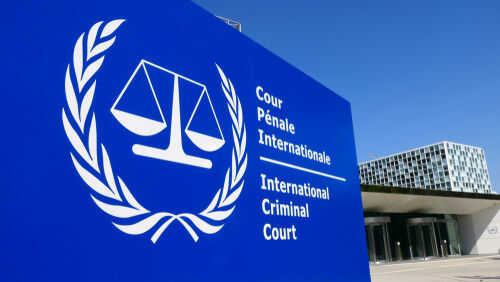
Progressive outlets and advocacy networks have promoted the idea that President Trump and members of his administration could face international prosecution at the ICC in The Hague. The core dispute is jurisdiction: the ICC was built on the Rome Statute, and the United States is not a party. That long-standing U.S. posture—protecting Americans from foreign tribunals—has repeatedly collided with ICC efforts touching Afghanistan and, more recently, Israel-related cases.
The immediate backdrop is the ICC’s November 2024 arrest warrants for Israeli Prime Minister Benjamin Netanyahu and former Defense Minister Yoav Gallant over alleged Gaza war crimes. With Israel a close U.S. ally and also not an ICC member, the warrants escalated a dispute already simmering from the ICC’s Afghanistan investigation, which has encompassed alleged conduct by U.S. personnel. The result has been a sharper U.S. posture that treats the ICC as a sovereignty threat.
What Trump’s 2025 executive order actually did
President Trump’s February 6, 2025 executive order imposed sanctions connected to the ICC, describing the court’s asserted jurisdiction over personnel from non-member states as “baseless.” The order framed the issue as a national emergency and a threat to U.S. national security and foreign policy. In practice, sanctions tools can include asset freezes and entry restrictions, aiming to deter ICC actions and complicate the court’s ability to operate against U.S. and allied officials.
By late 2025 and into early 2026, the pressure campaign broadened beyond a single executive action. HRDAG reports additional U.S. sanctions that reached ICC judges, the prosecutor, deputies, and even Palestinian non-governmental organizations tied to cooperation with ICC work. Separately, ICC officials faced other external pressure points, including cyber incidents and Russian warrants targeting ICC figures, illustrating how the court can become a geopolitical battleground when it collides with major powers.
Human-rights groups call it “rule of law”; the White House calls it national security
Human-rights organizations and ICC-aligned experts argue that sanctioning court officials undermines the independence of a tribunal designed to prosecute genocide, war crimes, and crimes against humanity. HRDAG’s January 2026 statement describes the measures as an “attack on the rule of law,” and Human Rights Watch warned in December 2025 that the court’s work and credibility are at risk. Those critiques focus on long-term damage to investigations and deterrence.
The Trump administration’s case, stated in official policy language, turns on consent and constitutional accountability: American officials answer to U.S. law and U.S. voters, not an international body the U.S. never joined. That argument resonates with conservatives who view global institutions as vehicles for backdoor control—especially when activists openly discuss future prosecutions of U.S. leaders. The central factual limitation here is timing: the “chatter” described is prospective, not a filed case.
The “2029” speculation—and what’s confirmed versus what’s conjecture
One of the most attention-grabbing details in the provided research is HRDAG’s reference to reporting that included fears of ICC scrutiny turning toward Trump, a vice president, and even a “Secretary of War” by 2029. That claim reflects political speculation about where international legal activists want the fight to go. The confirmed facts in the record are narrower: sanctions were imposed, additional names and entities were later targeted, and critics publicly condemned the policy.
For Americans focused on constitutional government, the practical takeaway is that this is less about one headline and more about a recurring pressure campaign: use international institutions to constrain U.S. policy choices—especially around war, borders, and alliances—then label resistance as lawlessness. The available research does not document an active ICC prosecution of Trump today; it documents the political and legal groundwork being argued, and the administration’s preemptive steps to block it.
Sources:
Trump administration sanctions ICC, “attack on rule of law”
International Criminal Court: Justice at Risk
Imposing Sanctions on the International Criminal Court