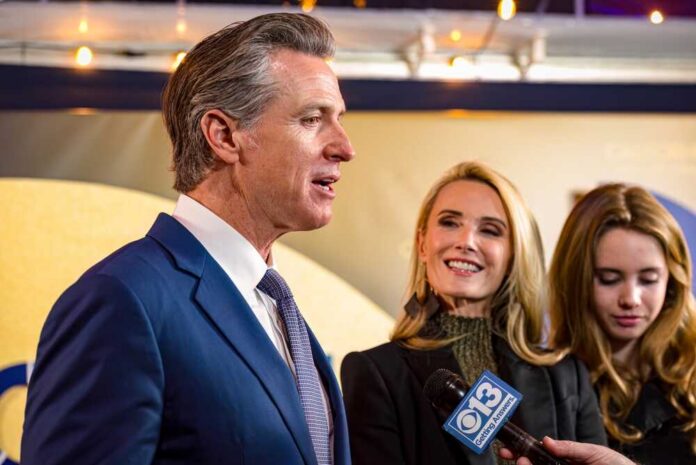
California’s First Partner Jennifer Siebel Newsom publicly labeled Jordan Peterson-style content as dangerous “alt-right extremism,” demanding tech companies be held accountable for allowing young people to access conservative viewpoints through YouTube’s algorithm—raising alarm bells about government-connected figures targeting free speech.
Story Snapshot
- Jennifer Siebel Newsom claims YouTube’s algorithm exposes her sons to “Jordan Peterson-type” content promoting hate and misogyny
- California courts recently hit Meta and Google with $381 million in verdicts for failing to protect youth online
- Governor Newsom vetoed strict AI content restrictions favored by his wife, siding with Big Tech lobby instead
- Conservative voices warn the campaign against Peterson-style content threatens constitutionally protected speech under guise of child safety
Free Speech Under Attack in California
Jennifer Siebel Newsom stated around April 1, 2026, that her sons encounter what she describes as “alt-right, extreme, Jordan Peterson-type” content on YouTube after following sports figures. She characterized this material as promoting hate, racism, and misogyny, calling for tech leaders to face consequences for allowing such content to reach young audiences. The remarks came amid California’s broader push for platform accountability following major court verdicts against Meta and Google totaling $381 million for child safety failures.
Conflicting Agendas Within Governor’s Mansion
The First Partner’s demands clash sharply with Governor Gavin Newsom’s own policy choices. While Jennifer Siebel Newsom advocates aggressive content regulation, her husband recently vetoed AB 1064, the LEAD for Kids Act, which would have restricted harmful AI companions targeting children. Instead, Newsom signed tech-friendly legislation SB 243 requiring only transparency measures, aligning with lobbying from TechNet, the Chamber of Commerce’s Innovation Alliance, and the Computer and Communications Industry Association. This split highlights tensions between family rhetoric and political reality in Sacramento.
Attorney General Rob Bonta and advocacy groups like Common Sense Media, led by Jim Steyer, supported the vetoed legislation as essential protection against treating children as “test subjects” for artificial intelligence. Tech lobbyists successfully argued that broad restrictions would harm educational tools and innovation. The veto demonstrates how Big Tech money continues influencing California policy despite public statements about accountability, leaving advocates vowing to renew their push in 2027 after this legislative defeat.
Labeling Conservative Content as Extremism
The specific targeting of Jordan Peterson represents a troubling precedent for conservatives who value intellectual diversity and free expression. Peterson, a clinical psychologist and bestselling author, discusses personal responsibility, traditional values, and critiques of radical ideology—positions mainstream among millions of Americans. Equating his perspectives with hate or extremism reveals how California’s political elite conflate conservative thought with dangerous content requiring censorship. This approach threatens First Amendment protections by empowering government-connected figures to define acceptable speech based on partisan preferences rather than objective standards.
California lawmakers cite recent verdicts as establishing a “duty of care” for platforms, with one New Mexico jury ordering Meta to pay $375 million for failing to protect youth from predators, and a California jury awarding $6 million related to mental health harms from childhood social media use. Proponents compare this moment to tobacco industry accountability, arguing tech companies profit from addictive algorithms while endangering society. However, conservatives recognize the difference between protecting children from genuine predators versus suppressing lawful political commentary that California Democrats find inconvenient or ideologically opposed.
Big Tech’s Selective Accountability Problem
The campaign against conservative content creators exposes the real agenda behind child safety rhetoric. While platforms face legitimate criticism for addictive designs and inadequate protections against exploitation, the focus on Peterson-style material reveals political targeting rather than principled concern. YouTube’s algorithm doesn’t uniquely promote conservative voices—it reflects user interests and engagement patterns. Young people seeking alternatives to progressive narratives naturally gravitate toward content challenging woke orthodoxy, feminism’s excesses, and victimhood culture that dominates schools and mainstream media.
Silicon Valley companies now face an impossible standard where they’re simultaneously criticized for insufficient content moderation and excessive censorship of conservative viewpoints. California’s regulatory push, backed by $381 million in recent court awards, positions the state to dictate acceptable online discourse for the entire nation given its concentration of 60 percent of top artificial intelligence firms. Tech companies plan appeals of these verdicts, but the momentum for expanded government control over digital platforms continues building regardless of constitutional concerns about compelled speech and viewpoint discrimination.
Sources:
Newsom Sides With Tech Lobby in AI Companion Standoff – Tech Policy Press