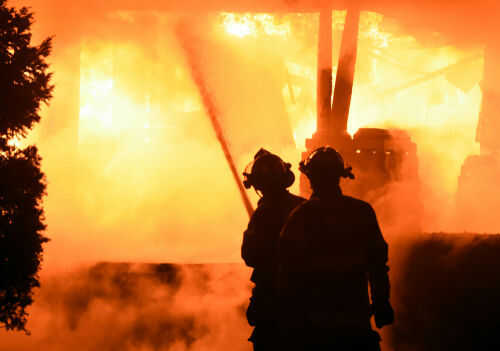
California’s Springs Fire explodes to over 4,000 acres in hours, exposing how years of failed state policies on forest management and green energy mandates leave families defenseless against nature’s fury.
Story Highlights
- Springs Fire in Moreno Valley surges from 50 acres to 4,100+ acres in a single day, fueled by dry brush, 30+ mph winds, and steep terrain.
- Mandatory evacuations displace thousands as spot fires threaten homes; one resident fights flames with a swimming pool bowl.
- Firefighters battle inaccessibility with hand crews and air tankers, achieving 45% containment by April 4 morning.
- Recurring California wildfires highlight urgent need for better brush clearance and rejection of restrictive environmental rules.
Explosive Growth Challenges Responders
The Springs Fire ignited around 11:00 a.m. on April 3, 2026, off Gilman Springs Road in Moreno Valley, Riverside County. Within 30-40 minutes, it grew from 50 acres to over 1,000 acres. By early afternoon, the blaze exploded to 1,500+ acres with 0% containment. Gusts exceeding 30 mph fanned flames through dry brush in rocky, steep foothills. Dark smoke signaled an intense fire front popping up near neighborhoods. Ground crews faced inaccessible hills, relying on air resources for initial attacks.
Evacuations and Heroic Resident Efforts
Mandatory evacuation orders forced thousands from homes as spot fires threatened Riverside County communities. Aerial helicopter footage from FOX 11 Los Angeles captured the rapid spread, showing flames encroaching on residences. One resident scooped water from a swimming pool with a bowl to battle encroaching fire, highlighting personal risks amid delayed professional response. Steep terrain prevented fire trucks from reaching key areas, forcing dependence on hand crews and tankers. The fire’s speed underscored vulnerabilities in fire-prone regions.
Containment Progress Amid Ongoing Threats
By late April 3, the fire reached 4,000+ acres. Overnight into April 4, it hit 4,176 acres at 25% containment. Morning updates on April 4 reported approximately 4,100 acres with 45% contained. Cal Fire and Riverside County Fire Department coordinated multi-agency efforts, issuing updates on acreage and progress. Broadcasters noted refueling delays for choppers but stressed persistent dangers from wind and dry fuel. Firefighters continued operations as conditions allowed overnight gains.
Expert analysis from fire officials identified wind and steep slopes as primary accelerators. Dark smoke indicated active flames, with dry vegetation fueling extreme growth from 50 to 1,500 acres in hours. Professional reporters emphasized the role of inaccessible rocky landscapes, limiting truck access and amplifying reliance on aerial drops.
Impacts and Lessons for Policy Reform
Short-term effects include widespread evacuations and home threats from spot fires near Gilman Springs Road. Long-term challenges involve brush recovery in rugged terrain, echoing the 2025 Palisades Fire. Economic costs mount from firefighting and potential property damage. Social strains hit displaced families, while political pressure builds on California resources amid recurring blazes. The incident spotlights the need for proactive brush clearance, criticizing overregulation that hampers land management and energy policies driving up costs without preventing disasters.
Conservatives watching these events see a pattern: state mismanagement leaves communities exposed. President Trump’s administration prioritizes energy independence and reduced federal overreach, contrasting California’s woes. Voters demand accountability, pushing for practical solutions like controlled burns and forest thinning over virtue-signaling green agendas that exacerbate risks. This fire serves as a wake-up call for limited government approaches to protect lives and property effectively.
Sources:
LA County Recovery: Palisades Fire context