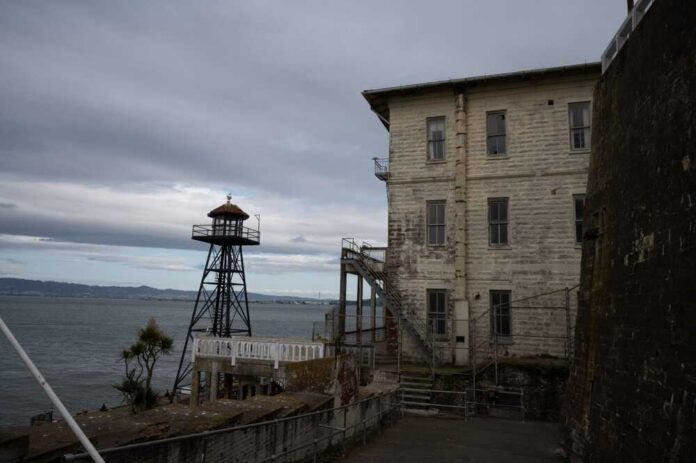
Trump’s $152 million push to revive Alcatraz as a super-max prison pits bold law-and-order resolve against California’s wasteful tourism obsession and billion-dollar taxpayer tab.
Story Highlights
- White House FY2027 budget requests $152M initial funding to reopen Alcatraz for America’s most violent offenders.
- Iconic site, closed since 1963, currently generates $60M yearly as National Park Service tourist draw.
- California Democrats like Pelosi slam plan as “stupidest initiative yet” amid estimated $2B+ total costs.
- Proposal awaits Congress approval, highlighting federal-state tensions and fiscal priorities.
Trump Announces Alcatraz Revival
On May 4, 2025, President Trump directed the Bureau of Prisons, DOJ, FBI, and DHS via Truth Social to reopen and expand Alcatraz Island. The federal penitentiary, operational from 1934 to 1963, housed notorious criminals like Al Capone before closing due to high costs and infrastructure decay. Trump frames the revival as essential for detaining ruthless offenders, symbolizing unwavering commitment to law and order. Attorney General Pam Bondi and Interior Secretary Doug Burgum toured the site in July 2025 to assess feasibility.
Budget Proposal Sparks Debate
The White House released its fiscal year 2027 budget on April 3, 2026, requesting $152 million for the first phase of transforming Alcatraz into a state-of-the-art secure prison. This funding covers initial project costs, targeting America’s most violent criminals. The plan contrasts sharply with the site’s current role under the National Park Service, which draws global tourists and generates $60 million annually. Federal priorities clash with local economic interests in San Francisco Bay.
California Opposition Mounts
Former House Speaker Nancy Pelosi labeled the initiative the “stupidest yet,” calling it a waste of taxpayer dollars. San Francisco Mayor Daniel Lurie stated in July 2025 there is no realistic plan beyond preserving tourism value. State Senator Scott Wiener decried it as an “idiotic quest” projected to cost over $2 billion, destroying a key attraction. These voices highlight Bay Area resistance amid crumbling national infrastructure needs elsewhere. Cost estimates vary, with some citing at least $250 million minimum.
Congress Holds the Keys
Congress retains final authority over funding approval, creating a pivotal checkpoint for the proposal. The Trump administration views Alcatraz’s reopening as a powerful justice symbol, expanding capacity for high-security inmates. Short-term implications include legislative delays and potential tourism disruptions; long-term effects shift the iconic landmark from revenue generator to prison, intensifying federal-state tensions with California Democrats. Taxpayers face substantial burdens versus preserved tourist income.
Fiscal and Symbolic Tradeoffs
Historical closure in 1963 stemmed from $3-5 million restoration estimates in then-dollars, excluding ongoing expenses, underscoring persistent cost challenges. Reviving The Rock advances tough-on-crime policies but risks economic loss for San Francisco’s tourism sector. Political friction escalates between Trump’s law enforcement push and local preservationists. Limited details from Bureau of Prisons on full timelines or totals leave uncertainties, with media noting congressional hurdles as decisive.
Sources:
Trump asks $152 million to rebuild Alcatraz, reopen it as federal prison
Trump seeking $152 million from Congress to reopen Alcatraz as federal prison
Alcatraz: Trump budget includes funding to reopen prison