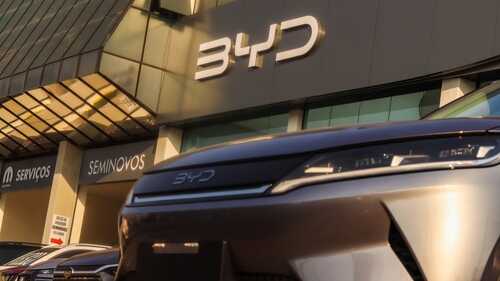
Chinese automaker BYD has overtaken Tesla in electric vehicle sales across the UK and Germany, marking a seismic shift in Europe’s largest EV markets. This breakthrough signals a major challenge to American and European automotive dominance as state-backed Chinese manufacturers leverage aggressive pricing and manufacturing advantages against Western competitors. This article examines the strategic implications for Western industrial policy, the threat to manufacturing jobs, and the growing momentum for a trade policy response within the European Union.
Story Highlights
- BYD outsold Tesla in both UK and Germany, Europe’s two largest EV markets.
- Globally, BYD delivered 2.26 million EVs in 2025 versus Tesla’s 1.64 million.
- Tesla’s EU sales dropped 28% while overall EU EV sales grew by similar magnitude.
- Chinese state subsidies enable BYD’s aggressive pricing against Western competitors.
- European manufacturing jobs face potential threat from subsidized Chinese imports.
Chinese EV Giant Claims European Territory
BYD’s breakthrough in the UK and Germany represents more than a simple market share victory. The Chinese manufacturer leveraged deep vertical integration spanning batteries, motors, and power electronics to achieve aggressive cost control that European and American competitors struggle to match. This manufacturing advantage, combined with Chinese state support through subsidies and cheap credit, enabled BYD to offer compelling value propositions that resonated with cost-conscious European consumers facing inflation pressures.
Tesla’s European struggles extend beyond simple competition. The company’s sales declined 8.6% year-over-year globally while BYD surged 28%, creating a stark contrast in market momentum. European consumers increasingly rejected Tesla’s pricing strategy and brand positioning, particularly as political backlash against Elon Musk’s controversial statements alienated traditional environmentally-conscious buyers in Germany and the UK.
🇨🇳🇪🇺 🇺🇸 #China’s BYD Outsells Tesla in Europe’s Two Biggest EV Markets – Bloomberghttps://t.co/TAS1llQ9Kq pic.twitter.com/tSRwrMxzk2
— Christophe Barraud🛢🐳 (@C_Barraud) January 6, 2026
Strategic Implications for American Industrial Competitiveness
BYD’s success exposes fundamental weaknesses in Western industrial policy that conservatives have long warned about. While Chinese manufacturers benefit from coordinated state support and massive scale economies, American companies face regulatory uncertainty and inconsistent government backing. Tesla’s German Gigafactory, designed to compete directly with Chinese imports, now struggles against competitors enjoying unfair advantages through state subsidization that distorts genuine market competition.
The shift threatens thousands of automotive jobs across Europe’s industrial heartland. German manufacturers like BMW, Mercedes-Benz, and Volkswagen face intensifying pressure from Chinese competitors who operate under different rules. If Chinese EVs continue gaining market share through artificially low prices, European manufacturing capacity could face consolidation or closure, repeating the deindustrialization patterns seen in solar panels and steel production.
Trade Policy Response Gains Momentum
European Union authorities launched anti-subsidy investigations into Chinese EV imports, recognizing the threat to fair competition. BYD’s rapid market penetration validates concerns that Chinese state backing creates an unlevel playing field where legitimate competition becomes impossible. These investigations could lead to tariffs or other trade measures designed to restore competitive balance and protect domestic manufacturing capacity.
Conservative policymakers should note how Chinese industrial strategy systematically targets key Western industries through coordinated government support, excess capacity dumping, and strategic pricing. BYD’s European success demonstrates China’s willingness to leverage state resources for geopolitical advantage, potentially creating dangerous dependencies in critical transportation infrastructure. American industrial policy must respond with similar strategic thinking to protect domestic manufacturing capabilities and economic sovereignty.
Watch the report: BYD overtakes Tesla: “They sped up their ability to bring to market new cars”
Sources:
- BYD Sold Way More EVs Than Tesla In 2025, But That’s Not As Cool As What Kia Is Doing
- BYD outsells Tesla in Europe’s two biggest EV markets
- BYD just overtook Tesla to become world’s top EV seller
- BYD Overtakes Tesla in UK and Germany EV Sales