
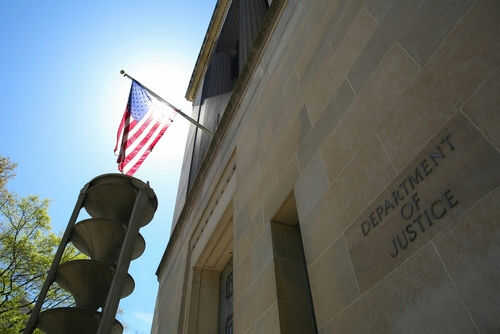
As left-leaning activists cry “weaponization” against President Trump’s Justice Department, they quietly admit they still cannot point to a single grand jury proven to be corrupted by political orders.
Story Snapshot
- Liberal groups accuse the Trump Justice Department of “weaponization,” but offer commentary, not case files or court findings.[1][5][6]
- No cited judge has ruled that a Trump-era grand jury was politically rigged or that judicial confidence has formally collapsed.[3][6]
- President Trump’s executive order to “End the Weaponization of the Federal Government” targets prior abuses, including those under Biden.[4][5]
- Critics admit grand jury secrecy and lack of internal records mean their strongest claims rest on perception, not proven misconduct.[3][5]
How The Left Framed “Weaponization” Under Trump 2.0
From the first months of Trump’s second term, progressive think tanks and advocacy groups rolled out a coordinated narrative that the Department of Justice had become a political bludgeon against the president’s enemies.[1][5] Commentaries from the Center for American Progress and similar outfits accused Trump of turning prosecutors on former officials, critics, and even prior administration figures, framing nearly every high-profile investigation as revenge.[1][2] These pieces used sweeping language about “political puppets” and “assaults on democracy,” yet leaned heavily on generalized concerns rather than trial records or sworn testimony.[1]
Behind those headlines, watchdogs built “retaliatory action trackers” cataloging arrests, investigations, and prosecutions they viewed as suspect whenever a target had criticized Trump or his policies.[4][5] Their stated goal was to help readers “tell if the Trump Department of Justice is enforcing the law or retaliating,” but the tool itself rested on circumstantial timing and public statements rather than internal case files.[5] The very structure of these trackers reinforced the impression of politicization, even when the underlying cases involved real offenses or longstanding investigations.[5]
What The Evidence Actually Shows About Grand Juries
When you drill into the record these critics rely on, a striking fact emerges: there is no case-specific proof that any federal grand jury was formally compromised by Trump’s political direction.[3][6] The Brennan Center’s detailed report, one of the strongest critiques in the file, argues that internal Justice Department controls were “systematically dismantled,” but it focuses on institutional safeguards, not named grand jury abuses.[3] Academic analysis from Notre Dame law scholars likewise describes “warring accusations” of politicization, explicitly treating the question as contested rather than settled.
Even the most aggressive commentators concede, implicitly or explicitly, that they lack grand jury transcripts, affidavits from line prosecutors, or judicial orders finding that political pressure changed charging decisions in a particular case.[3][6] Judges have criticized government lawyers for sloppy or politicized briefing language, and environmental advocates highlight one opinion faulting a Trump-era brief, but those critiques go to argument quality, not to a rigged grand jury vote.[6] For conservatives, this gap matters: the accusation that jurors themselves were turned into partisan tools is far more serious than saying a brief used campaign-style rhetoric.[6]
Trump’s Order To End Federal “Weaponization” And What It Targets
On January 20, 2025, the Trump White House issued a presidential order titled “Ending the Weaponization of the Federal Government,” aimed squarely at the prior administration’s use of federal power.[4][5] The order declares that Americans “witnessed the previous administration” conduct a “systematic campaign against its perceived political opponents,” using investigations, prosecutions, and enforcement actions as tools of punishment.[4] It directs the Attorney General to review enforcement activity over the previous four years and report back with remedial recommendations wherever actions “appear” inconsistent with neutral law enforcement.[4]
The same directive tells the Director of National Intelligence to scrutinize intelligence-community activity from the same period, again hunting for operations that looked like political targeting instead of national security work.[4] For Trump supporters frustrated by how the Biden Department of Justice treated parents at school board meetings or pro-life demonstrators, that language reflects a long‑overdue housecleaning, not new abuse.[3][4] Critics spin the order as proof that Trump “sees everything through a political lens,” yet its core premise—that federal power was misused in the past—is precisely what many conservatives experienced firsthand.[3][4]
Why The Politicization Debate Matters For Everyday Conservatives
Legal experts warning about “erosion of the rule of law” in Trump’s second term concede that disputes over Department of Justice independence are not new and often mirror whichever side currently feels targeted.[3][6] Their own analysis notes that presidents and allies routinely accuse the department of weaponization when high-profile enforcement touches political actors, and that courts ultimately must sort rhetoric from reality.[1][3][6] In this environment, Americans who watched the Biden years of selective enforcement, censorship pressure, and double standards have good reason to be skeptical when the same institutions now cry foul.[3]
For conservative readers concerned about government overreach, the key takeaway is that the loudest charges of Trump-era “grand jury corruption” rest on commentary, not documented courtroom findings.[3][6] That does not mean every decision out of Washington is wise or apolitical; it does mean the evidence presented so far stops well short of proving that ordinary citizens serving on grand juries have been turned into rubber stamps for revenge.[3] Until critics bring forward actual case records, sworn testimony, or judicial findings, their claims function more as political messaging than as legal proof—and that distinction is vital for anyone who still believes in the Constitution’s promise of equal justice.
Sources:
[1] YouTube – Trump pressures Justice Department to target political rivals
[2] Web – Trump May Have To Pay a Price for Weaponizing the DOJ
[3] Web – The Department of Justice’s Broken Accountability System
[4] Web – Tracking retaliatory use of arrests, prosecutions, and investigations …
[5] Web – Ending The Weaponization Of The Federal Government
[6] Web – Trump’s Attacks on Justice Department Independence, Then and Now