

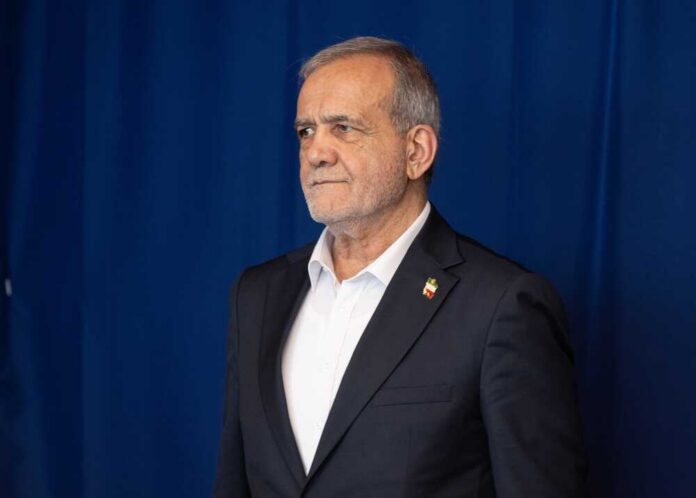
Tehran’s regime says it will switch the global internet back on—gradually—after an 87‑day blackout, raising hard questions about trust, verification, and the cost of repression [1][5][6].
Story Snapshot
- Iranian President Masoud Pezeshkian reportedly ordered a phased restoration of international internet access after nearly three months of restrictions [1][6].
- State-linked reports frame the move as enabled by “stabilizing” security conditions, yet provide no public technical evidence [1].
- Coverage indicates restoration to pre-protest or pre-January levels, not immediate full normalization [3][4].
- Prior mixed signals and internal opposition raise doubts about scope, timing, and durability [2][4].
Tehran Announces a Phased Reconnection With Few Verifiable Details
Iranian state media and regional outlets report that President Masoud Pezeshkian has approved a gradual reopening of international internet access following a prolonged blackout approaching three months [1][5][6]. Reports describe the move as technical and phased, not an overnight reversal, with some accounts framing the goal as restoring access to levels seen before January demonstrations [1][3][4]. Officials cited a “stabilizing” security picture but did not release public technical assessments, incident logs, or forensic findings to justify the timing [1].
Multiple reports echo a similar storyline: an executive-level directive routed through Iran’s Ministry of Communications to resume global connectivity, implemented in stages and subject to operational discretion [1][4]. This approach aligns with past shutdown playbooks where authorities defend restrictions as security tools and later present reopenings as dependent on threat conditions. Without independent measurements or government-released data, outside observers cannot yet verify how broad or durable the restoration will be [1][4].
Internal Friction and a Record of Reversals Undercut Confidence
Independent Iranian outlets report internal resistance from influential media and regulatory figures who opposed reopening until late in a key meeting, signaling that elite consensus remains shaky [2]. Prior statements during the blackout suggested no clear timeline for restoration, and some accounts mention brief, partial reopenings followed by renewed suspensions, a pattern that can erode public trust in official announcements [2][4]. Such mixed signals reinforce concerns that a “gradual” plan can also be a reversible one, contingent on opaque criteria and power struggles.
Reports uniformly lack the presidential decree text or a publicly archived directive that would lock in legal authority, scope, and benchmarks [1][4]. Absent that documentation, practical questions loom: which services are returning first, how regional carriers will implement routing changes, and whether virtual private networks, messaging apps, and international platforms will remain throttled. Outlets noting restoration to pre-protest baselines imply that some restrictions could persist, keeping speech and commerce under pressure even as headlines tout change [3][4].
Why This Matters to Americans: Censorship, Commerce, and Credibility
Authoritarian internet shutdowns crush free speech, hide abuses, and punish entrepreneurs who depend on digital markets. Reports that Iran set or neared an 87‑day blackout underline how censorship is wielded as a blunt instrument with heavy economic and human costs [5][6]. A phased restoration that lacks technical transparency risks serving propaganda more than people, especially when state media controls the narrative and the government withholds verifiable metrics of network reach and service availability [1][4][5].
🇮🇷Iranian President Masoud Pezeshkian has ordered the restoration of internet access in the country, according to the local news agency Fars
According to the international monitoring service NetBlocks, internet access in the country has been virtually nonexistent for
+1 pic.twitter.com/cxT15kXbD7— Avinash K S🇮🇳 (@AvinashKS14) May 26, 2026
For American readers, the lesson is twofold. First, free and open internet access is inseparable from basic liberties—when governments can flip the switch, families, faith communities, and businesses pay the price. Second, verification matters. Independent measurement of routing, latency, and platform reach is essential to confirm whether access is truly back or strategically rationed. Until Tehran releases the decree and publishes network data, prudence demands skepticism toward claims of a clean return to normalcy [1][3][4].
What to Watch Next: Proof, Pace, and Practical Access
Key tests will emerge quickly. Observers should look for the publication of a formal order, clear implementation guidelines, and measurable improvements across regions and carriers. Reports that the aim is a rollback to pre-protest levels suggest that full normalization may not be imminent, keeping citizens and small businesses in a holding pattern [3][4]. If authorities cite security to pause or reverse progress, prior patterns indicate the blackout tools remain at hand, and the public bears the uncertainty and cost [1][2][4].
Sources:
[1] YouTube – Iran Announces Gradual Restoration of International Internet Access
[2] Web – Pezeshkian orders internet restoration, IRGC media questions his …
[3] Web – Iranian president orders restoration of internet to pre-protest levels
[4] Web – Iran’s Pezeshkian Orders Restoration of Internet Access
[5] Web – Iran sets 87-day internet blackout record as president orders …
[6] Web – Iran’s president orders reopening of international internet access