
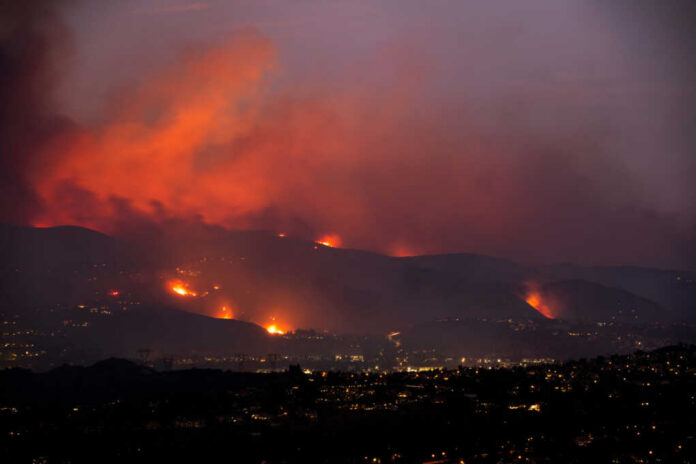
Google Maps quietly swapped in pre-fire satellite imagery for the wildfire-devastated Pacific Palisades neighborhood — and residents who lost everything are furious about being erased from the map.
Story Snapshot
- Google Maps imagery for fire-damaged areas reverted to pre-January 7, 2025 visuals, showing the neighborhood as it looked before the devastating Palisades Fire.
- Residents and community observers noticed the change and flagged it in a Google Maps support thread, calling out the platform for effectively “unburning” their destroyed neighborhood.
- No explanation from Google has been provided publicly about why the imagery reverted or whether it was a deliberate update or routine system behavior.
- Official recovery resources, including LA County’s damage maps, remain separate from consumer mapping platforms and are updated on entirely different timelines.
Neighborhood Wiped Off the Map — Again
Residents and observers tracking recovery in the Pacific Palisades and Altadena communities discovered that Google Maps had reverted its satellite imagery to conditions predating the January 7, 2025 wildfire outbreak. A Google Maps Help Community support thread titled “Imagery reverted to pre-Jan. 7, 2025 in fire damaged areas” documented the change, with users describing how the platform now displays neighborhoods as if the fires never happened. For families who lost homes, the visual erasure added insult to devastating injury.
Satellite imagery captured by independent sources had already documented the catastrophic scale of the Los Angeles wildfires, showing block after block of ash and ruin where homes once stood. That publicly available before-and-after record makes the Google Maps reversion all the more jarring — the destruction is well-documented, yet the platform’s consumer-facing map tells a different story entirely. The gap between what residents lived through and what the map displays is not subtle.
Big Tech Controls the Visual Record — With No Accountability
Google Maps holds near-total control over what imagery users see and when updates are deployed. The platform can refresh, revert, or layer map tiles without any public explanation or regulatory requirement to notify affected communities. That unchecked power becomes especially troubling in disaster zones, where accurate visual information affects insurance claims, recovery planning, and public understanding of the scale of loss. No Google statement, changelog, or technical explanation has surfaced to clarify why the Palisades-area imagery was rolled back.
The LA County Recovers portal maintains a dedicated page for the 2025 Palisades Fire, including a separate damage map allowing residents to look up inspection reports and damage assessments for individual properties. Official agencies built these tools precisely because general-purpose consumer platforms like Google Maps are not designed or optimized for disaster recovery communication. The existence of those parallel resources underscores just how inadequate — and potentially misleading — a stale consumer map layer can be for affected residents.
A Pattern of Platform Power Over Public Truth
The controversy reflects a broader and recurring problem: dominant tech platforms decide what the visual record of reality looks like, and they do so on their own schedules, with their own priorities, and without meaningful public accountability. In wildfire and disaster contexts, map imagery becomes more than a navigation tool — it becomes a proxy for public acknowledgment of loss. When a platform shows a neighborhood as intact and green while residents are still sifting through ash, the message sent to the broader public is that the damage wasn’t that serious.
Whether Google’s imagery reversion was a deliberate editorial choice or an automated tile-refresh process, the outcome is the same: fire survivors see their destruction minimized on one of the world’s most-used mapping platforms. The research does not establish Google acted with malicious intent, but intent is beside the point when the result erases a community’s documented suffering from public view. Conservatives who have long warned about Big Tech’s outsized and unaccountable influence over information have fresh evidence that the concern extends well beyond social media censorship — it reaches into the very maps Americans use to understand the world around them.
Sources:
[1] Web – Imagery reverted to pre-Jan.7, 2025 in fire damaged areas
[2] YouTube – Before-and-After Satellite Images Show Devastation From L.A. …
[3] Web – Palisades Fire – LA County Recovers
[4] Web – Pacific Palisades Wildfire Aftermath – Satellite View – Google Help
[5] Web – Palisades Fire Damage Map – LA County Recovers
[6] Web – Mapping the damage from the Eaton and Palisades fires – LA Times
[7] Web – Google Maps Shows True Devastation of California Wildfires as …