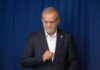


FCC Chairman Brendan Carr has threatened to revoke broadcast licenses over Iran war coverage, escalating government pressure on the press to align with administration narratives and raising constitutional concerns about First Amendment freedoms.
Story Snapshot
- FCC Chairman Carr warned broadcasters that “fake news” coverage could cost them licenses during renewals
- Threat follows President Trump’s complaint about media exaggerating damage to U.S. tanker aircraft from Iranian strikes
- Warning targets only over-the-air broadcasters, not cable or streaming platforms, exploiting regulatory loopholes
- Free speech advocates condemned the move as “authoritarian,” while stations show signs of self-censorship to protect licenses
Government Pressure Escalates Against War Coverage
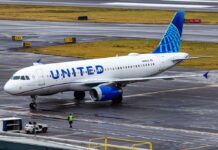
FCC Chairman Brendan Carr issued a stark warning to television broadcasters on March 14, 2026, threatening license revocation for stations airing what he termed “hoaxes and news distortions—also known as the fake news.” The social media post came hours after President Trump criticized media headlines about damage to five U.S. tanker aircraft in Saudi Arabia from Iranian strikes. Trump claimed four aircraft sustained minimal damage and returned to service, contradicting what he labeled exaggerated “Fake News” reports. Carr’s warning directly referenced Trump’s complaint, telling broadcasters they must “correct course before license renewals.”
Pattern of Regulatory Threats Under Trump Administration
This incident continues a troubling pattern of FCC pressure on broadcasters that began intensifying in 2025. In September 2025, Carr threatened ABC over Jimmy Kimmel’s comments regarding Charlie Kirk, prompting Nexstar and Sinclair to temporarily pull the show from 32 stations. That same month, CBS’s Stephen Colbert self-censored an interview due to FCC fairness concerns, posting it instead on YouTube where it garnered over nine million views. The administration has also targeted CBS’s 60 Minutes over editing decisions and investigated The View for equal-time violations. These actions reveal a coordinated effort to intimidate broadcasters into favorable coverage.
Constitutional Concerns and Regulatory Overreach
The FCC issues eight-year licenses to local stations, not national networks, requiring them to operate in the “public interest” under the Communications Act. However, the agency’s content oversight is severely limited by First Amendment protections that explicitly prohibit censorship. The Foundation for Individual Rights and Expression condemned Carr’s warning as an “outrageous authoritarian” move where “government insists press serve as state mouthpiece.” Even conservative Senator Ted Cruz previously called Carr’s actions excessive, though Trump defended his appointee. This regulatory threat undermines the constitutional framework that protects press freedom from government interference, a cornerstone principle conservatives historically champion.
The timing proves particularly concerning as it targets coverage of active U.S.-Israeli military strikes on Iran that began February 28, 2026. Defense Secretary Pete Hegseth echoed administration criticism of war reporting for “making the president look bad,” revealing the political motivation behind these regulatory threats. This differs from prior complaints about entertainment programming, now extending to hard news coverage of military operations where accurate reporting serves critical public interest. The administration appears determined to control the narrative during wartime, a dangerous precedent for government overreach.
Chilling Effect on Broadcast Journalism
Broadcasters face a difficult calculation: risk license revocation or self-censor critical coverage. Local stations relying on over-the-air licenses have shown willingness to comply quickly, as demonstrated by the rapid Kimmel show pulldowns. This creates economic pressure where protecting advertising revenue and license renewals outweighs journalistic independence. The threat affects only traditional broadcasters, not cable networks or streaming services, creating an uneven playing field where regulated media faces political pressure that unregulated platforms escape. Viewers dependent on over-the-air news may receive filtered coverage while alternative platforms remain uncensored.
As of March 15, 2026, the FCC has not responded to comment requests or initiated formal investigations, leaving the threat as a warning shot. No specific networks were named, creating uncertainty across the entire broadcast industry. Court challenges have previously blocked similar FCC power expansions, suggesting legal battles ahead if Carr proceeds. The American people deserve accurate war coverage without government intimidation, and broadcasters must resist this pressure to maintain their constitutional role as watchdogs, not state mouthpieces. This represents a fundamental test of whether press freedom survives when government officials weaponize regulatory authority against unfavorable reporting.
Sources:
FCC’s Carr threatens TV broadcast licenses over news coverage – Fortune
FCC Brendan Carr threat news networks broadcast license – CBS News
Iran war coverage: US regulator threatens broadcasters – Inquirer.net
Carr threatens broadcasters licenses after POTUS tirade over Iran war news coverage – TVNewsCheck