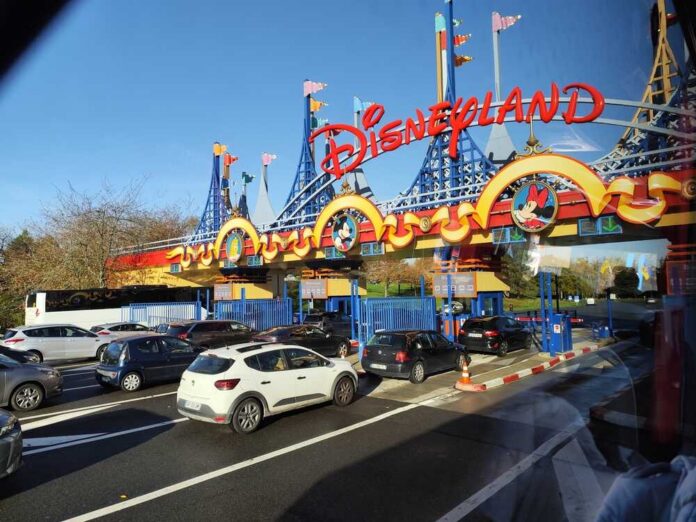
Disney’s new facial-recognition rollout at Disneyland is now facing a $5 million lawsuit over whether guests were ever clearly told what was being collected.
Quick Take
- A class action complaint alleges Disney used facial recognition at park entrances without adequate disclosure [1][2]
- The lawsuit says the biometric process could affect guests, including children, who had no meaningful notice [1][2]
- Disney says guests can use marked opt-out lanes and that retained numerical values are deleted within 30 days [2]
- The dispute centers on consent, transparency, and whether the company’s notice was enough [1][2]
What the lawsuit says about Disneyland’s biometric system
The complaint was filed in federal court in California and targets Disney’s use of facial-recognition technology at Disneyland Park and Disney California Adventure, according to reporting on the case [1][2]. The plaintiffs say the company collected highly sensitive biometric information from guests without adequately disclosing that collection. One report says the software scans faces, converts them into numerical identifiers, and matches them with ticket data [1].
Reporting on the case says the named plaintiff, Summer Christine Duffield, visited Disneyland with her minor children on May 10 before the lawsuit was filed [2]. The complaint argues that Disney did not properly tell visitors that biometric data was being gathered, and it says consumers, who “almost always include children,” had no idea the collection was happening [1][2]. That framing matters because parents expect basic disclosure before a theme park starts handling face data.
Disney’s opt-out claim and retention policy
Disneyland’s stated defense rests on two points: guests can avoid biometric processing by using lanes marked for manual ticket checks, and numerical values tied to the system are deleted within 30 days unless needed for legal or fraud-prevention purposes [1][2]. The reported opt-out language also says guests may still have their image taken in those lanes, even though biometric technology is not used on that image [2]. That detail gives Disney a public-facing choice argument, but it does not settle whether the notice was clear enough.
The company’s public explanation is likely to shape how many readers view the case before any court ruling arrives. Disneyland spokesperson Jessica Jakary said the company respects and protects guest information and disputes the claims as without merit [2]. For conservatives who are already wary of corporate surveillance, the issue is not just one amusement park policy. It is whether a private company can quietly normalize biometric collection and then call it transparent after the fact.
Why the case matters beyond one lawsuit
This dispute fits a larger pattern that should concern anyone who values limited government and individual liberty. Biometric systems are marketed as convenient and efficient, but they also create a durable record of personal data that families cannot easily recover once collected. If the allegations are accurate, the real controversy is not simply a $5 million damages demand. It is whether ordinary Americans, including parents with children in tow, were given a real chance to understand and refuse the collection.
Disneyland targeted in class-action lawsuit claiming new program is violating guests’ privacy | Nina Joudeh, New York Post
Disney has been hit with a class-action lawsuit over accusations it has quietly gathered guests’ biometric data using hotly debated facial recognition… pic.twitter.com/PpIMp5puzG
— Owen Gregorian (@OwenGregorian) May 20, 2026
At this stage, the public record in the search results is thin on the actual complaint text, so the strongest verified facts are the allegations reported by news outlets and Disney’s own denial [1][2]. That means readers should separate proof from accusation. Still, the case highlights a plain principle: when a company wants to scan faces at the gate, informed consent should not be buried under vague signage or corporate fine print. If the notices were weak, the plaintiffs may have a serious point.
Sources:
[1] Web – $5M Class Action Lawsuit Filed Against The Walt Disney Co. Over …
[2] Web – Disneyland faces $5m lawsuit over facial recognition tech | blooloop