
An Israeli drone strike that killed three Palestinians at a Gaza soup kitchen is raising fresh questions about how modern wars are turning food lines into front lines.
Story Snapshot
- Three Palestinians running or using a community kitchen in central Gaza were killed by an Israeli strike as they tried to feed desperate civilians.
- The attack fits a disturbing pattern of strikes near aid sites, including the World Central Kitchen convoy attack Israel itself called a “serious violation.”
- Reports and United Nations data show more than a thousand Palestinians have died while simply trying to get food.
- For Americans, these incidents fuel hard questions about foreign aid, endless wars, and whether our tax dollars support tactics that violate basic moral limits.
Strike On Gaza Soup Kitchen Leaves Volunteers Dead
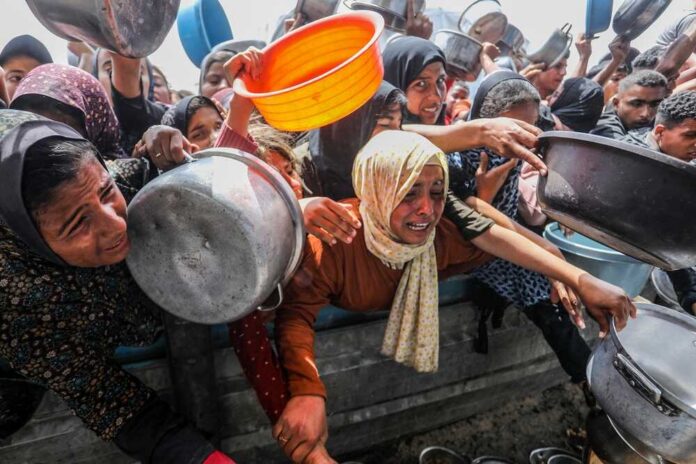
Reports from international and regional outlets state that an Israeli drone strike hit a community kitchen area in Deir al-Balah, near Al-Aqsa Hospital in central Gaza, killing three Palestinians who were working around the food operation. Separate coverage earlier described three Palestinian men from the same family, Tariq, Hamza, and Abdul Rahman Darwish, who ran a soup kitchen and distributed cooked meals to displaced people, also being killed in an Israeli strike. These accounts place civilians serving food at the center of the blast zone.
Video footage and eyewitness reporting from networks on the ground show bodies arriving at nearby hospitals after the strike, with local sources describing the dead as volunteers or staff tied to the soup kitchen effort.[2] The kitchen reportedly served displaced families whose normal food supply has collapsed under months of bombardment and tight Israeli control over aid entering Gaza.[1] While the Israeli military has not publicly detailed its specific target in this incident, the strike occurred in an area clearly associated with humanitarian activity and food distribution.
Pattern Of Strikes Near Food Lines And Aid Sites
The soup kitchen attack does not stand alone; it fits a broader pattern of Israeli strikes landing in or near food distribution points. In April 2024, Israeli drones hit a three-car convoy belonging to the charity World Central Kitchen after it had coordinated movements with the Israeli Defense Forces, killing seven aid workers from multiple nations.[3] World Central Kitchen stated the convoy was struck as it left a Deir al-Balah warehouse, despite that coordination, and later shut down its Gaza operations as supplies ran out amid the continuing blockade.[1]
Additional reporting from Western media describes another Israeli strike that hit next to a charity kitchen while Palestinians crowded to receive cooked meals, killing and wounding civilians as they waited in line. United Nations reporting estimates that since late May of the previous year, nearly one thousand four hundred Palestinians have been killed while seeking food, including hundreds near designated food distribution hubs and along routes to obtain aid. Together, these numbers indicate that food queues and aid corridors in Gaza have repeatedly become lethal spaces, not incidental one-off mistakes.
Competing Claims: Military Targeting Versus Civilian Protection
Supporters of Israel’s military operations argue that Hamas embeds fighters, weapons, and command posts among civilians, forcing Israel to strike in dense urban areas that inevitably include schools, hospitals, and aid facilities. International humanitarian law does allow attacks on genuine military objectives even when civilians are nearby, but it requires strict distinction between combatants and civilians, proportionality in expected civilian harm, and real precautions to minimize collateral damage.[3] Those standards are difficult to verify from the outside when key intelligence and targeting data remain classified.
Critics counter that the mounting civilian toll near food sites and aid operations suggests something more than unavoidable “fog of war” errors. After the World Central Kitchen convoy strike, Israel’s own internal review reportedly called the incident a “serious violation” of its procedures, acknowledging failures inside the Israeli Defense Forces rather than blaming the charity. When multiple documented incidents involve soup kitchens, food lines, and marked aid convoys, it becomes harder to accept blanket assurances that every strike was an unavoidable necessity rather than a preventable breach of basic safeguards.[1][3]
What This Means For American Conservatives Watching From Home
For many American conservatives, especially in the Trump era, these reports land in the middle of broader concerns about endless foreign entanglements, unaccountable bureaucracies, and the misuse of taxpayer dollars. Washington has sent tens of billions in military and security assistance to overseas partners over the years, often with limited transparency about how those weapons and funds are used on the ground. When a close ally repeatedly strikes areas tied to soup kitchens and food lines, Americans are entitled to ask whether our support is enabling tactics we would never accept from our own government.[3]
Conservative principles emphasize clear moral limits, strong national defense, and respect for innocent life. That combination argues for tough, fact-driven oversight: demanding full investigations, pushing for public release of targeting findings, and insisting that aid and arms come with enforceable conditions that protect civilians and humanitarian workers. As patriots who value both security and human dignity, readers can press elected officials to stop writing blank checks, restore constitutional control over war powers, and ensure that, wherever America stands, we are not paying for missiles that turn soup lines into kill zones.
Sources:
[1] Web – World Central Kitchen closes soup kitchens across Gaza due … – OPB
[2] YouTube – Gaza community kitchens targeted by Israeli air strikes