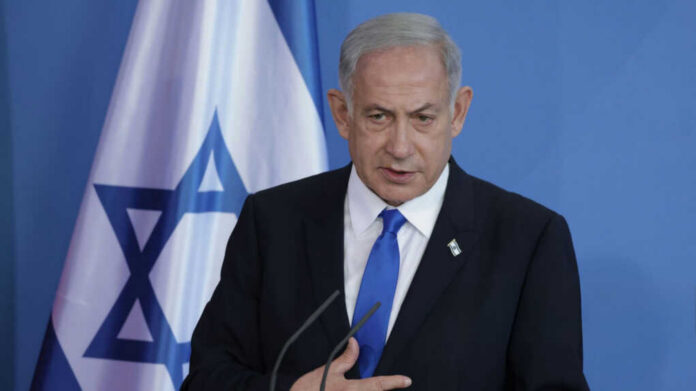
Israeli Prime Minister Benjamin Netanyahu announced on national television that Israel should eliminate its dependence on $3.8 billion in annual U.S. military aid within a decade, marking an unprecedented shift in the decades-long alliance between Washington and Jerusalem.
Story Snapshot
- Netanyahu proposes phasing out all U.S. military aid to Israel over the next ten years, starting immediately
- The announcement comes during the tenth week of a joint U.S.-Israel military offensive against Iran
- Israel currently receives $3.8 billion annually under a Memorandum of Understanding extending through 2028
- The proposal aligns with Trump’s “America First” philosophy and growing American skepticism toward foreign aid spending
Netanyahu’s Bold Declaration on 60 Minutes
Prime Minister Benjamin Netanyahu told CBS’s 60 Minutes on May 10, 2026, that Israel must “draw down to zero” its reliance on American financial support. Speaking during a critical juncture in ongoing operations against Iran, Netanyahu stated he had already discussed the proposal with President Trump and Israeli officials, though he acknowledged the idea surprised many. The Israeli leader framed the move as weaning his nation off dependency, emphasizing Israel’s economic strength with a GDP per capita of approximately $55,000 and a robust defense export industry valued at $13 billion annually.
Strategic Timing Amid Regional Conflict
Netanyahu’s announcement arrives as U.S. and Israeli forces conduct joint military operations against Iran, now entering their tenth week. The timing underscores a complex calculation: asserting Israeli independence while actively coordinating the largest joint military campaign in the alliance’s history. The current Memorandum of Understanding provides $3.3 billion in Foreign Military Financing and $500 million for missile defense systems annually through 2028. Netanyahu’s proposal would unwind this arrangement gradually, allowing Israel to transition its defense budget without immediate disruption to operational capabilities against regional threats.
Shifting American Sentiment on Foreign Aid
The proposal reflects growing American frustration with endless foreign commitments and spending. Polling data shows public support for Israel dropped from 68 percent in 2023 to approximately 49 percent in 2025, particularly among younger Americans where favorability stands at just 36 percent. For Americans who have watched their government send billions overseas while domestic infrastructure crumbles and inflation erodes paychecks, Netanyahu’s offer represents a rare acknowledgment of fiscal reality. The $3.8 billion annual commitment, while representing only 0.05 percent of the federal budget, symbolizes a broader pattern of Washington prioritizing foreign interests over American taxpayers.
Political Implications for Trump Administration
Netanyahu’s proposal hands President Trump a potential political victory aligned with his longstanding “America First” doctrine. Trump consistently pushed allies to shoulder more defense costs during his first term, famously pressuring NATO members to increase military spending. An Israeli commitment to financial independence would allow Trump to redirect nearly $4 billion annually toward domestic priorities while maintaining strategic cooperation with Jerusalem. Congressional reaction remains uncertain, with traditional bipartisan support for Israel aid fracturing as progressive Democrats question military assistance and fiscal conservatives scrutinize all foreign spending. Netanyahu appears to be bypassing potential congressional resistance by negotiating directly with the executive branch.
Questions About Implementation and Consequences
Experts expressed mixed assessments of the proposal’s viability and wisdom. Jonathan Panikoff of the Atlantic Council warned that pursuing a “strategic divorce” during active military operations against Iran carries substantial risk and tests the alliance’s foundation. Dov Waxman of UCLA noted that Israel’s economy could feasibly absorb the transition, though Israeli taxpayers would face higher costs through increased taxes or debt. The proposal could also set precedent for other American allies like Ukraine and Taiwan facing potential aid reductions. For American citizens across the political spectrum who believe Washington serves elites rather than ordinary people, Netanyahu’s announcement raises fundamental questions about whether foreign aid truly advances American interests or simply perpetuates dependency relationships that benefit defense contractors and political insiders.
Sources:
Trump’s War Partner Soft Launches Breaking From U.S. on ’60 Minutes’ – The Daily Beast
Netanyahu wants Israel “to draw down to zero the…” – CBS News
Netanyahu wants to phase out U.S. military aid | 60 Minutes – CBS News