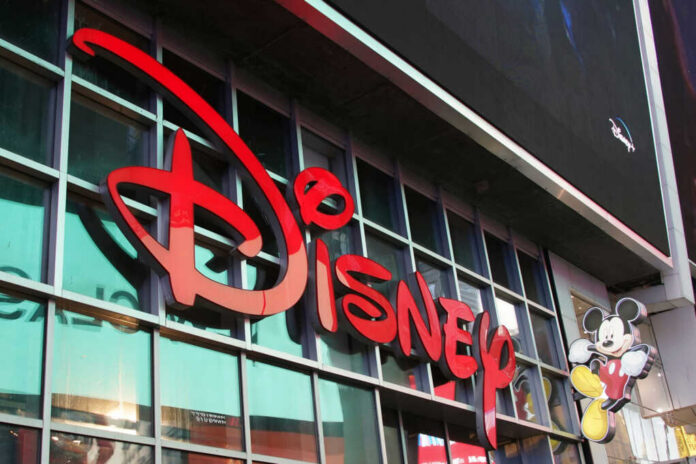
Federal agents just pulled dozens of cruise-ship crew off the gangway in handcuffs—including Disney employees—after an investigation tied to child sexual abuse material.
Quick Take
- U.S. Customs and Border Protection and Homeland Security Investigations arrested 28 crew members from five cruise ships in San Diego during “Operation Tidal Wave,” a child-exploitation investigation.
- Reports say about 10 of those detained worked for Disney Cruise Line aboard the Disney Magic, though the exact number has not been publicly confirmed by Disney.
- Authorities said visas were revoked and crew members were deported, leaving unanswered questions about how often cases like this are prosecuted in U.S. courts.
- Disney said it has “zero tolerance,” cooperated with investigators, and terminated those involved—an urgent reputational test for a brand built on family trust.
What “Operation Tidal Wave” did in San Diego—and why it hit Disney headlines
U.S. Customs and Border Protection and Homeland Security Investigations detained 28 crew members from five cruise ships docked at San Diego’s B Street Cruise Terminal in late April, according to published reports. The operation was later described as targeting child sexual exploitation material, not a routine immigration sweep. The Disney Magic was among the ships involved, and multiple outlets reported Disney Cruise Line employees were arrested while the ship was in port.
Passenger accounts and video shared in news coverage helped propel the story because it unfolded in plain sight: uniformed crew members led away in handcuffs at a family travel hub. That optics problem is especially sharp for Disney, which markets its cruises as tightly managed, child-focused vacations. The public details remain incomplete, but the government’s framing as a child-exploitation case—rather than paperwork violations—changed how the incident was understood almost overnight.
How many Disney crew were involved remains unclear, but the underlying allegation is specific
Reports differ on the precise number of Disney Cruise Line employees detained, often describing it as “about 10” while noting Disney has not provided an exact count. What appears consistent across coverage is the nature of the suspected conduct: investigators linked the arrests to receipt, possession, transportation, distribution, or viewing of child sexual abuse material. Nationality details were also reported, with many of the suspects described as Filipino, alongside at least one Portuguese and one Indonesian crew member.
Disney’s public response, as quoted in news reports, emphasized “zero tolerance,” cooperation with law enforcement, and separation from the company for those implicated. That statement matters for accountability, but it also highlights a broader reality of modern corporate operations: large brands often rely on complex staffing pipelines—especially in cruise shipping—where hiring may flow through agencies and international labor channels. That structure can dilute direct oversight unless strict screening and auditing are continuously enforced.
Deportations may remove suspects quickly—but they can also limit transparency and deterrence
Coverage indicated visas were revoked and crew members were deported, with no clear public record of U.S.-based prosecutions tied to this specific sweep. Swift removals can protect the public and reduce immediate risk, but they may also reduce what Americans learn about how networks operate, how evidence was gathered, and whether additional co-conspirators exist. When cases exit the country quickly, the public is left depending on press statements rather than court-tested facts.
This is also where the politics get tangled. Early reporting and public reaction reportedly included protests that treated the event as an “ICE raid” against seafarers, before later confirmation that the operation centered on child sexual exploitation material. That whiplash reflects a familiar pattern: immigration activism and corporate messaging can reshape narratives in real time, sometimes before key facts are established. For many voters—left and right—this fuels the belief that institutions manage perception first and clarity second.
The bigger pattern: repeated cases and a trust problem for “family brands”
This episode did not emerge in a vacuum. Prior reporting has described earlier arrests and charges involving Disney Cruise Line crew members accused of possessing child pornography in separate incidents in Florida. Those cases, alongside the San Diego sweep spanning multiple cruise lines, underline the challenge of policing digital contraband in international, high-turnover workforces. Cruise ships are effectively floating communities, and investigators increasingly rely on cyber tips and multi-agency coordination to identify offenders.
@elonmusk
Disney Lectured America About Morality While Child Porn Suspects Worked on Its Ships https://t.co/RzEoSWN15S— 2Lee (@2leeteam) May 7, 2026
The political sting for Disney is less about a single enforcement action—since the sweep involved multiple companies—and more about the contradiction it invites. Disney has spent years taking high-profile positions in America’s cultural disputes, which draws intense scrutiny from conservatives who already see corporate activism as selective and self-serving. The confirmed facts so far do not prove institutional complicity, but they do reinforce a basic, bipartisan expectation: any company selling “safe family experiences” must demonstrate rigorous screening, transparent cooperation, and verifiable safeguards.
Sources:
Cruise line workers: Disney, others caught in child sexual abuse material investigation, reports say
Disney Cruise Line crew member accused of possessing child porn