

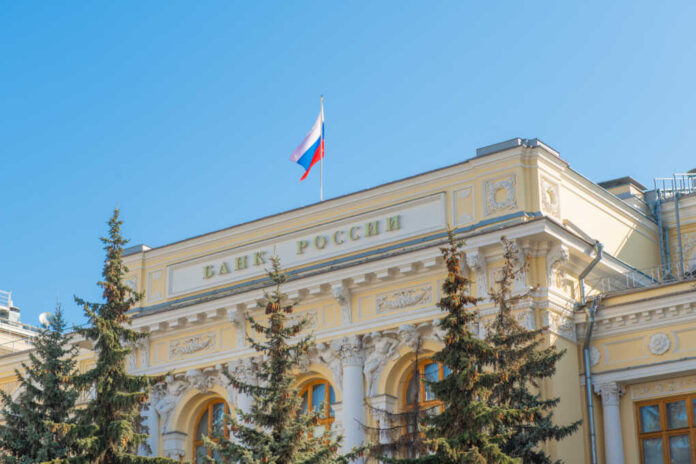
Russia is pocketing $760 million daily from oil exports while the world scrambles for energy supplies, transforming a sanctions crisis into an economic windfall that could fund its war effort for years.
Quick Take
- Russia’s oil revenues nearly doubled to $19 billion in March 2026, up from $9.75 billion in February, driven by Middle East supply disruptions and temporary US sanctions relief
- Exports surged to 7.1 million barrels per day as Urals crude prices climbed to $77 per barrel in March and exceeded $116 per barrel by early April, far outpacing Russia’s $59 per barrel budget assumption
- Projections show Russia could earn an additional $84 billion to $168 billion annually from the Iran conflict, with April revenues expected to reach $24 billion for oil and gas combined
- The US Treasury issued a 30-day sanctions waiver to stabilize global markets, allowing in-transit Russian crude delivery while Asian nations seek extension as energy costs spike
When Geopolitics Meets Market Mechanics
February 2026 looked dire for Moscow’s energy sector. Russian oil revenues had crashed to $9.75 billion, the lowest point since the Ukraine invasion began, as Western sanctions tightened and Ukrainian drone strikes hammered export terminals. Then the Middle East exploded. The US and Israel struck Iran, Tehran closed the Strait of Hormuz in retaliation, and suddenly 20 percent of global oil and liquefied natural gas flows faced disruption. Brent crude vaulted above $100 per barrel. Within weeks, Russia transformed from economic pariah to energy savior.
The timing proved almost too perfect. On March 12, the US Treasury issued a 30-day sanctions waiver allowing delivery of Russian crude and petroleum products already loaded onto ships. The move aimed to stabilize roiling global markets, but it handed Russia an unexpected lifeline. By March, exports rebounded to 7.1 million barrels per day, a gain of 320,000 barrels daily from February’s depressed levels. Revenue surged to $19 billion for the month alone.
The Price Spike That Changed Everything
Prices tell the real story. Russian Urals crude averaged $77 per barrel in March, the highest since October 2023 and a stunning 73 percent jump from February’s $44.59. By early April, Urals crested above $116 per barrel. That single metric exposes the windfall’s scale: Russia’s 2026 budget assumed $59 per barrel Urals. Reality delivered 31 percent more in March alone, with April projections doubling that advantage through crude oil taxation.
The International Energy Agency confirmed the rebound in its monthly report, calling the March surge a “sharp reversal” from February’s post-invasion low. Moscow’s mineral extraction tax on oil, the government’s primary energy revenue stream, hit approximately 700 billion rubles (roughly $9 billion) in April projections, nearly double March’s 327 billion rubles. This 10 percent year-over-year increase over April 2025 signals sustained pricing power despite ongoing Ukrainian asymmetric attacks on Russian port infrastructure.
Asia’s Desperate Scramble for Supply
Global energy markets revealed their true priorities once supply tightened. India ramped purchases to 1.9 million barrels daily, China and the Philippines joined the bidding war, and all three nations began lobbying for the sanctions waiver extension. They needed Russian barrels. Alternative suppliers couldn’t fill the Hormuz gap quickly, and price premiums made non-Russian crude prohibitively expensive for Asian refiners already squeezed by inflation. Russia’s “shadow fleet” of aging tankers suddenly became the world’s most sought-after logistics network.
This created a paradox for Western policymakers. The US Treasury faced pressure to extend the waiver beyond April 11 to prevent global recession, yet doing so directly funded Moscow’s war machine. The Kiev School of Economics Institute calculated that if the Iran conflict ends within weeks, Russia pockets an extra $84 billion annually. Should Middle East tensions persist for six more months, annual revenues could reach $386.5 billion, nearly triple pre-crisis estimates. That’s not accounting for gas revenues, which add another layer to the windfall.
Russia's Oil Revenues Surge As The World Scrambles For Supply https://t.co/2rFprPxCr0
— zerohedge (@zerohedge) May 4, 2026
Putin’s Windfall Problem
Vladimir Putin recognized the opportunity. At an April 2026 Kremlin meeting, he reportedly directed Russian oil and gas firms to deploy the windfall for debt reduction to domestic banks, essentially converting energy revenues into war funding through the financial system. The Kremlin noted “huge requests” for energy from global buyers, signaling confidence in sustained demand. Weekly export revenues reached $2.1 billion by early April, the highest four-week average since June 2022’s early Ukraine invasion period.
Yet vulnerabilities lurk beneath the surface. Ukrainian drone strikes on Ust-Luga and Primorsk terminals continue disrupting operations, offsetting some export gains. The waiver expires April 11, and extension remains uncertain. Most critically, this revenue surge depends entirely on the Iran conflict’s duration and intensity. Once Middle East tensions ease or global markets adjust, Urals prices will normalize downward, erasing the windfall as quickly as it arrived. Russia faces the classic resource-curse trap: spectacular short-term gains masking long-term structural weakness in its sanctions-constrained economy.
Sources:
Russia’s Oil Export Revenue Surged in March, IEA Says
As Russia’s Oil Revenue Surges, Putin Warns Against Squandering
Russia’s Oil Income Jumps in Month as Price Surge Boosts Budget
Russia’s Oil Revenue Doubles After Sanctions Relief Amid Iran War-Driven Price Surge