
Spirit Airlines didn’t just collapse in the marketplace—it became a live-fire test of whether politicians can spin an economic failure into a foreign-policy morality play without getting fact-checked in public.
Quick Take
- Spirit entered a second bankruptcy in under two years and then shut down nationwide after rescue talks failed.
- A proposed $500 million government-backed bailout reportedly included terms that could have left the U.S. with a huge ownership stake.
- Elizabeth Warren attacked the bailout while blaming “Donald Trump’s war with Iran” for fuel prices, triggering backlash online.
- Ted Cruz and Marjorie Taylor Greene opposed the bailout from the right, creating bipartisan hostility toward saving a repeat-failure airline.
Spirit’s Shutdown Was a Consumer Story Until Politics Touched It
Spirit’s abrupt nationwide shutdown hit like a bad weather delay that never ends: flights canceled, passengers stranded, workers facing a grim morning. Then Washington grabbed the microphone. A rescue proposal floated through the Trump administration, and suddenly the airline wasn’t only a struggling low-cost carrier—it was a referendum on taxpayer bailouts, executive accountability, and what government should do when a company runs out of runway after repeated trouble.
Elizabeth Warren Gets Wrecked by Community Notes for Trying to Spin Spirit Airlines Commentshttps://t.co/sFFrRw3oLY
— RedState (@RedState) May 2, 2026
Spirit’s underlying problems weren’t mysterious. The company carried the baggage of chronic financial strain and a brand many travelers associated with fees, discomfort, and constant nickel-and-diming. When a business model depends on razor-thin margins, fuel spikes and operational missteps hurt faster and deeper than they do at better-capitalized competitors. Bankruptcy number two in less than two years signaled that the market’s patience had run out.
The Bailout Proposal Raised a Question That Never Goes Away: What Do Taxpayers Get?
The reported $500 million rescue idea wasn’t pitched as a blank check. The structure described in coverage sounded like a government-backed lifeline that could convert into debt and warrants, potentially leaving the U.S. with an enormous ownership stake. That detail matters because it shows policymakers wrestling with a hard truth: if government steps in, it should either protect a broad national interest or negotiate like a serious investor, not like a sentimental relative.
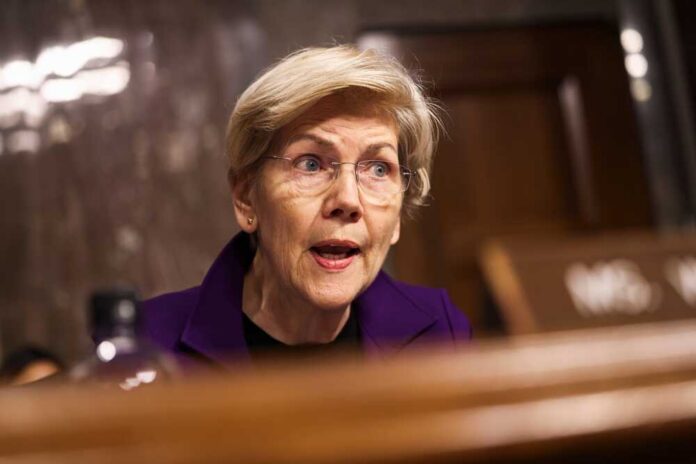
Elizabeth Warren’s entry into the fight followed her familiar theme—opposing corporate welfare and demanding accountability. She asked what the public would get out of helping Spirit and whether “failed airline executives” would face consequences. On substance, conservatives and many independents can agree with the instinct: repeated failure shouldn’t become a business strategy subsidized by families who already feel the squeeze of high prices and limited household slack.
Warren’s “Trump’s War with Iran” Claim Became the Flashpoint
Warren’s message didn’t land as a clean anti-bailout argument because she tied Spirit’s demise to “Donald Trump’s war with Iran” and “sky-high fuel prices.” That framing invited immediate scrutiny for oversimplifying a messy corporate failure into a neat partisan storyline. The research available here does not independently establish that a Trump-Iran conflict alone “did” Spirit in, and online critics seized on that gap with enthusiasm.
Social media reaction matters now because it shapes what casual voters believe happened before they read a single article. Community Notes-style corrections and quote-post dogpiles can punish weak claims within minutes, especially when the topic involves something tangible like travel costs. Warren’s critics didn’t need to prove fuel prices were irrelevant; they only had to show her certainty exceeded the confirmed facts, and that mismatch erodes trust fast.
Bipartisan Opposition Was the Quiet Reason the Rescue Died
Spirit’s bailout talk ran into a buzzsaw from both sides. Ted Cruz reportedly called the bailout a “terrible idea,” and Marjorie Taylor Greene blasted it as “America LAST.” That coalition—progressives wary of corporate handouts and conservatives opposed to propping up failed management—creates the most lethal environment for any rescue plan. Once voters smell favoritism, lawmakers tend to sprint away from the bill.
From an American conservative, common-sense perspective, the strongest anti-bailout argument is simple: government can’t be the insurer of last resort for every mismanaged company, especially one with a recent bankruptcy history. A targeted rescue might make sense when the alternative is systemic collapse, national security risk, or a broad shock to commerce. A single troubled budget carrier doesn’t obviously clear that bar, even if the human disruption feels real.
The Bigger Lesson: Bailouts Age Like Milk, Precedents Age Like Wine
Pro-bailout advocates often reach for precedent: post-9/11 airline support and the pandemic era. Those were broad-based shocks where government action aimed to bridge an entire sector through an extraordinary freeze. Spirit looked different: a specific company with a track record of strain, facing cost pressure and failed negotiations. That distinction is why the “why them?” question became unavoidable—and why ownership-conversion terms were even discussed.
The political aftertaste will linger longer than the stranded-passenger headlines. Warren tried to thread a needle: criticize a bailout while blaming a political opponent for the conditions that made it tempting. Critics saw hypocrisy or spin; supporters saw a warning about unaccountable deals. Either way, the episode reminded everyone that the internet now audits political claims in real time, and slogans don’t survive contact with operational reality.
Spirit’s collapse also foreshadows a harsher era for marginal carriers. If Washington refuses niche rescues and investors expect whiplash fuel costs, consolidation becomes the default outcome. Travelers may get fewer ultra-cheap seats, but also fewer “too broke to fly” near-death spirals. The uncomfortable trade-off is that stability often costs more upfront—while “cheap” sometimes just means the bill shows up later, in cancellations, layoffs, or politics.
Sources:
Elizabeth Warren Blames Trump’s Iran War For Doing in Spirit Airlines, Bailout $500M Criticism