

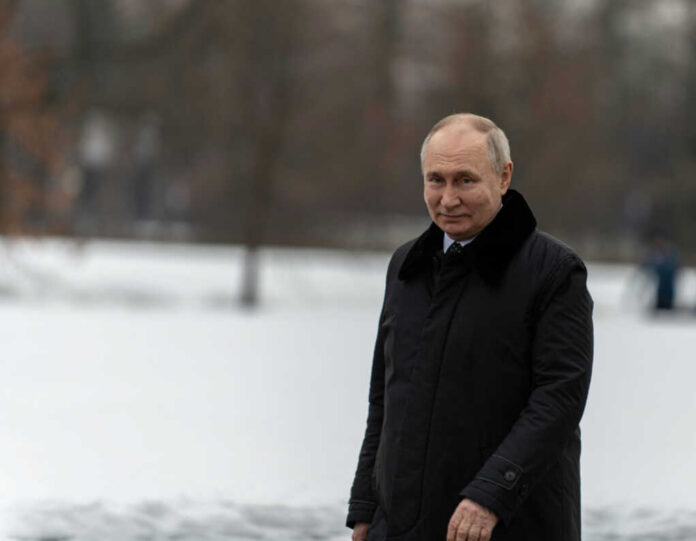
Trump’s blunt admission that Putin may be helping Iran “a little bit” is a wake-up call about how fast a Middle East war can widen—and how quickly mixed messaging can weaken U.S. leverage.
Story Snapshot
- President Trump told Fox News that Russia’s Vladimir Putin “might be helping” Iran in the current conflict, calling it a tit-for-tat reality of great-power politics.
- The comment undercut earlier public diplomacy from Trump’s envoy Steve Witkoff, who said Russians denied sharing intelligence with Iran.
- The White House position, via press secretary Karoline Leavitt, was that intelligence support to Iran would be unacceptable.
- Oil prices spiked near $120 before easing toward $90, highlighting how quickly war risk hits American wallets through energy markets.
Trump’s “A Little Bit” Comment Exposes the War’s Wider Stakes
President Donald Trump said in a Friday Fox News interview that Russian President Vladimir Putin “might be helping” Iran “a little bit” as Iran fights the United States and Israel. Trump framed the dynamic as reciprocal, arguing Putin likely assumes Washington helps Ukraine. The practical point is straightforward: if Moscow is providing any operational support—intelligence, logistics, or technology—the conflict becomes harder to contain and harder to end on U.S. terms.
Trump’s remark also put a spotlight on uncertainty the public still can’t see through: the sources cited do not specify the type or scale of Russian assistance. That matters because a limited political signal from Moscow is different from active targeting support in a shooting war. Without clarity, the administration’s deterrence messaging risks sounding conditional, even while U.S. forces and allies operate under real-world pressure.
Mixed Messaging Creates Openings for Adversaries and Confusion for Allies
Trump’s statement collided with earlier messaging attributed to Special Envoy Steve Witkoff, who said Russian officials denied sharing intelligence with Iran during diplomatic contacts that included Jared Kushner and Putin adviser Yuri Ushakov. After Trump’s interview, White House press secretary Karoline Leavitt said the U.S. warned Russia that intelligence sharing would be unacceptable. The gap between “might be helping” and “unacceptable” is the kind of daylight adversaries exploit.
From a governance perspective, disciplined communications matter because they shape credible red lines. When the public hears multiple versions of the same core fact—Russia’s role—the result is avoidable ambiguity. Even sympathetic voters who prioritize peace through strength generally want two things at once: a serious effort to end wars and a clear signal that foreign powers cannot arm America’s enemies without consequences. It indicates the messaging has not been fully aligned.
Battlefield Pressure and Diplomacy Collide Over Iran’s Uranium and War Aims
It also describes Putin proposing a deal element involving moving Iran’s enriched uranium to Russia—an idea Trump rejected. The details of the proposal and why it was rejected are not fully laid out in the available material, but the outline underscores how Moscow may try to position itself as both mediator and interested party. If Russia is simultaneously offering terms and assisting Iran, the U.S. has to treat diplomatic outreach with caution.
Iran’s own messaging, as quoted by U.S. media, suggests Tehran is preparing for a long fight and sees little room for diplomacy. One unnamed Iranian official was cited boasting that Iran holds “the screw of the global oil price” and intends to keep fighting until Trump “declares defeat.” Those claims are political statements, not independently verified battlefield assessments, but they track with Iran’s leverage over energy chokepoints and its history of using regional pressure to raise costs.
Energy Shocks and Inflation Risks Hit Working Families First
The immediate economic signal has been energy volatility. Oil reportedly surged to nearly $120 a barrel before sliding back toward roughly $90, a swing that can still hit U.S. consumers through gasoline, transport, and household goods. The IMF has warned that each 10 percent rise in energy prices can lift global inflation by almost half a percentage point. For Americans still wary after years of inflation and fiscal strain, energy spikes feel like punishment for instability abroad.
Strategically, analysts cited by the Council on Foreign Relations warn about diminishing returns from extended military effort and the accumulating costs—service member risk, strain on defensive systems, and broader readiness concerns. That warning is not an argument for retreat; it is a reminder that Washington must match objectives to resources and avoid open-ended commitments that weaken U.S. capacity to deter China and manage other threats. Clear priorities and measurable end states matter.
What’s Known, What Isn’t, and What to Watch Next
The key confirmed fact is Trump’s public acknowledgment that Putin may be helping Iran “a little bit.” The key unknown is what “helping” means in concrete terms—intelligence sharing, weapons flows, cyber support, or diplomatic cover. The next phase will likely hinge on whether the U.S. can tighten deterrence messaging while pursuing an end to hostilities that protects American interests, preserves allied security, and prevents Iran from converting battlefield chaos into long-term strategic gain.
For voters tired of globalist drift and vague mission statements, the takeaway is practical: wars widen when adversaries sense confusion. If Russia is testing boundaries, the administration’s job is to define those boundaries plainly, enforce them consistently, and keep America’s focus on security and prosperity at home. The public deserves a clear account of what the U.S. believes Russia is doing—and what Washington will do if Moscow crosses from “maybe” into measurable war support.
Sources:
Trump Gives Mixed War Messaging
Trump, Putin, Russia uranium and Iran war
Trump, Putin, Iran and Steve Witkoff