

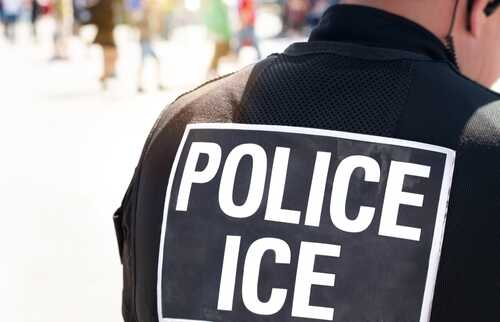
Federal immigration agents were assaulted outside a San Francisco courthouse, exposing escalating risks for federal officers in sanctuary cities.
At a Glance
- ICE agents attacked by 15–20 protesters outside a San Francisco immigration courthouse on August 20, 2025
- Activist Adrian Guerrero charged with assault and threats against a federal officer and his family
- DHS cites an 830% surge in attacks on ICE agents since January 2025
- Local sanctuary policies blamed for fostering direct confrontations with federal officers
Escalating Violence Against Federal Officers
On August 20, 2025, Immigration and Customs Enforcement (ICE) agents were surrounded and attacked by a group of 15–20 protesters outside the federal immigration courthouse at 100 Montgomery Street in San Francisco. Protesters reportedly used pepper spray, shouted threats, and engaged in physical clashes, leaving several agents injured. One ICE agent sustained a jammed finger, and government vehicles were damaged in the confrontation.
During the incident, Adrian Guerrero, a U.S. citizen and known anti-ICE activist, allegedly slashed a government vehicle’s tire and brandished a knife while threatening to harm an ICE officer’s family. Guerrero was arrested on-site and charged with assault on a federal officer and destruction of federal property. Federal officials stressed that this confrontation reflects a wider pattern, noting that reported assaults on ICE agents have surged 830% since the start of 2025.
Watch now: Agents, protesters in violent clash outside SF · YouTube
Sanctuary Policies and Federal Response
San Francisco’s sanctuary city policies, which limit cooperation with federal immigration enforcement, have fueled recurring flashpoints between local activists and federal officers. Federal officials argue that these policies embolden protesters to escalate tactics from peaceful demonstrations to direct violence against ICE personnel.
DHS Secretary Kristi Noem condemned the August 20 attack, pointing to what she described as a “1000% increase” in assaults on ICE officers since the administration resumed strict immigration enforcement earlier in 2025. She attributed the surge to hostile rhetoric from local officials and reaffirmed that ICE will continue operations in sanctuary jurisdictions despite rising risks.
In early August, an ICE office in Washington state was set on fire, adding to concerns that federal facilities and personnel are increasingly vulnerable. Federal agencies are now considering additional security measures for officers deployed in cities with strong sanctuary protections.
Legal and Political Ramifications
Guerrero’s arrest and federal charges mark a rare instance of a U.S. citizen facing prosecution for violent actions during an anti-ICE protest. He was granted bail after appearing in federal court, but the case continues to unfold and may become a test case for how federal authorities handle violence linked to protests in sanctuary jurisdictions.
Legal experts warn that the confrontation could have lasting consequences for federal-local relations. Sanctuary policies already complicate cooperation between local police and federal immigration officers. Escalating violence may further strain coordination, not only on immigration enforcement but also on other law enforcement matters requiring intergovernmental collaboration.
Meanwhile, activist groups are now under heightened scrutiny, with federal prosecutors signaling readiness to pursue stronger charges against individuals who threaten or assault federal officers. The situation underscores a national debate over where protest rights end and criminal acts begin. It also highlights the broader divide over immigration enforcement, sovereignty, and the constitutional responsibilities of federal versus local governments.
Broader Implications
The August 20 attack is being viewed as a symbolic flashpoint in the national struggle over immigration enforcement. For DHS and ICE, the incident underscores the need for stronger protective measures for officers, whom they argue are being targeted simply for carrying out federal law. For critics of ICE, the clashes reflect frustration with what they see as aggressive enforcement tactics that disproportionately affect immigrant communities.
Legal scholars caution that if the frequency and intensity of such confrontations continue, both officer safety and civil liberties could be at risk. As federal prosecutors proceed with charges, and as DHS pressures sanctuary cities to alter policies, the conflict is likely to intensify further. Whether the outcome reinforces federal authority or entrenches local resistance will help shape the future of immigration enforcement in the United States.
Sources
Reuters
Associated Press
Politico
DHS
San Francisco Chronicle