
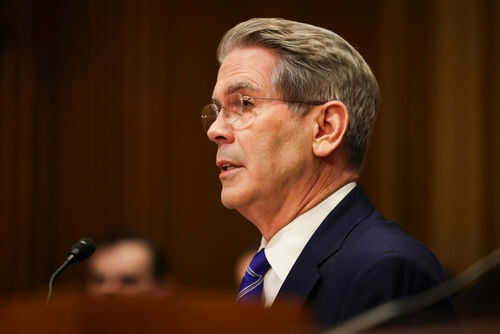
U.S. Treasury Secretary Scott Bessent declares Iran’s attacks on Gulf neighbors its “fatal mistake,” unleashing Operation Economic Fury to freeze regime assets and choke off funding for terror.
Story Snapshot
- Treasury escalates sanctions with Gulf Cooperation Council (GCC) states aiding to track and seize Iranian funds after regime’s regional aggression.
- IRGC leaders’ assets targeted; elites wire out millions as “rats fleeing the ship” amid financial collapse and protests.
- Trump’s maximum pressure campaign nears “endgame,” mirroring first-term successes but amplified by new regional alliances.
- Iran’s rial free-falls, banks fail, inflation surges, sparking deadly crackdowns killing thousands of protesters.
- Secondary sanctions threaten oil buyers like China, enforcing U.S. dollar dominance without firing a shot.
Iran’s Fatal Miscalculation Triggers U.S. Economic Siege
U.S. Treasury Secretary Scott Bessent announced escalated sanctions targeting Iran’s shadow banking networks following the regime’s military strikes on Gulf states. These attacks killed civilians and prompted Saudi Arabia and UAE to cooperate unprecedentedly with U.S. probes. Operation Economic Fury now tracks Iranian funds globally, freezes IRGC leaders’ assets, and severs oil revenue streams. Bessent likened the measures to military action, warning secondary sanctions for any facilitators. This pivot exploits Iran’s aggression, isolating the regime from former neutral neighbors. American leadership reasserts dollar hegemony, protecting allies without kinetic escalation. Conservatives applaud the precision strike against terror financiers, echoing demands for strong national security.
Timeline of Financial Collapse and Protests
Iran’s financial system crumbled in December 2025 when a major bank failed, the central bank printed money, and the rial free-fell amid surging inflation. Protests erupted nationwide. In January 2026, Bessent detailed the U.S.-induced dollar shortage during a Davos interview on January 20, as unrest intensified. February saw Bessent testify to Congress on February 5 about the currency crisis, with regime crackdowns killing between 7,000 and 30,000 protesters. President Trump ordered a maximum pressure campaign in March 2026 to sever financial lifelines. Recent April events include elite fund outflows and ongoing demonstrations, despite brutal suppressions.
Key Players and Power Shifts
Scott Bessent leads the sanctions charge, overseeing asset tracking and revealing the regime’s “fatal mistake” in recent Newsmax and White House statements. President Trump directs the strategy, threatening military action if crackdowns continue and aiming for regime-weakening “endgame.” GCC states, motivated by Iranian attacks, provide transparency on shadow banking, contrasting prior tolerance. China’s role as primary oil buyer holds trapped billions, now at risk from secondary penalties. IRGC elites prioritize self-preservation, wiring out millions as protests rage. This dynamic tips regional balance, isolating Tehran despite Beijing ties and underscoring U.S. economic leverage for global stability.
Frustrations mount across political lines as federal actions abroad highlight domestic elite accountability issues. Both conservatives wary of globalist overreach and liberals decrying inequality see parallels in self-serving leaders evading consequences, eroding trust in institutions far from America’s founding principles of liberty and limited government.
Bessent Delivers Another Powerful Blow to Iran – Reveals What May Be Their 'Fatal Mistake'https://t.co/boMB8oyQGz
— RedState (@RedState) April 16, 2026
Impacts and Path to Regime Instability
Short-term effects ravage Iran: dollar shortages halt imports, bank failures persist, and protests fuel deadly clashes with security forces. Long-term, choking oil exports—the regime’s dollar lifeline—could precipitate collapse, enabling change or forced deals short of existential threats. Iranian civilians endure hardship and deaths; Gulf states gain security from aggression. Globally, oil markets face volatility near choke points, while U.S. finance reinforces dominance. Experts note sanctions spark unrest but regime survival instincts resist concessions. Bessent’s “economic statecraft” yields street upheaval without shots fired, aligning with America First priorities for safety through strength.
Sources:
Checkmate for Tehran? US Treasury Moves to Sever Iran’s Banking Ties
PolitiFact on Iran Economic Sanctions and Currency Crisis
Jerusalem Post on Iran Developments