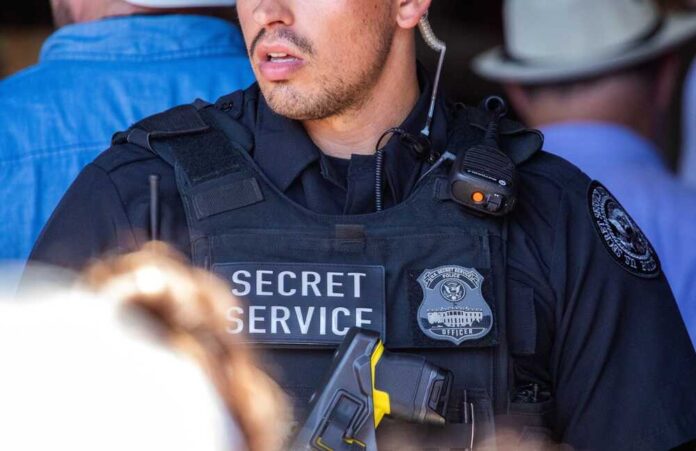
A Secret Service employee is under fire after celebrating Charlie Kirk’s assassination online, throwing the agency into turmoil.
At a Glance
- Secret Service employee Anthony Pough celebrated Charlie Kirk’s assassination in a Facebook post.
- Pough has been placed on immediate administrative leave during an internal investigation.
- Senator Marsha Blackburn and others demand his termination for agency accountability.
- The assassination of Charlie Kirk occurred on September 10 at Utah Valley University.
The Post That Shook the Service
Anthony Pough’s Facebook comment sparked instant outrage across Washington. He wrote that Kirk’s death was “karma,” linking personal disdain to a political killing. The words spread fast, amplified by screenshots and furious reactions online.
The Secret Service acted within hours, pulling Pough from duty and opening an internal review. Officials stressed that his comments did not reflect agency values, aiming to contain damage before it eroded public trust.
Watch now: Secret Service Agent CHEERS Charlie Kirk’s Death — Trump In Danger?!
Kirk, a conservative activist and founder of Turning Point USA, was assassinated during a campus event in Utah. His killing has already deepened political divides, making Pough’s reaction explosive fuel on an open fire.
Political Heat and Public Fury
The fallout was immediate and fierce. Senator Marsha Blackburn called for Pough’s firing, framing the post as proof of bias inside the agency. She argued that a man charged with guarding lives cannot publicly celebrate the death of a political figure.
Other lawmakers echoed that line, warning that trust in federal protection hinges on ironclad neutrality. The Secret Service reaffirmed its commitment to professionalism, but the damage control effort faces a hostile audience.
The post also raised broader questions about employee speech. Federal workers do not shed all rights when joining government, yet their roles demand heightened restraint. Pough’s case drags that conflict into sharp focus.
A Test for Federal Discipline
The scandal lands at a volatile moment for the agency. Political threats remain high, and any suggestion of bias undermines its credibility. By celebrating Kirk’s assassination, Pough cut against the very code he was sworn to uphold.
Observers now point to a need for tighter policies on digital conduct. Social media blurs lines between private lives and professional duty, making missteps both fast and public. For agencies that guard national leaders, that gap carries real stakes.
The Secret Service has weathered scandals before, but this one strikes at the heart of its mission. Protectors must appear above politics. When one of their own mocks a political killing, the institution itself is dragged down.
Looking Ahead
The investigation into Pough’s conduct continues, with outcomes ranging from suspension to termination. For the agency, the choice will broadcast how seriously it defends its neutrality. For Washington, the case is another front in the war over speech, loyalty, and political violence.
Whatever the result, the episode highlights the fragility of public trust in federal institutions. One employee’s words can trigger a national storm, and one agency’s response can either steady or shatter confidence.