

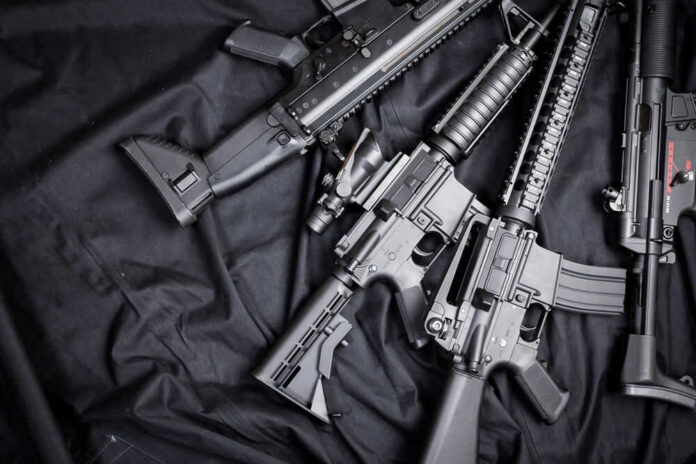
Virginia Democrats just pushed an AR-15 and magazine ban that targets law-abiding citizens while leaning on “weapons of war” talking points that don’t match how the Constitution treats common firearms.
Quick Take
- Virginia’s General Assembly passed HB217 and a companion Senate effort that would ban new sales of many semi-automatic rifles and limit magazine capacity, with enforcement tied to a July 1, 2026 effective date.
- Democratic sponsors argued the targeted rifles resemble military arms, while opponents say the bills punish “common use” firearms and invite immediate Second Amendment lawsuits.
- The legislation would grandfather current owners but restrict future purchases and tighten transfer rules, shifting the burden onto ordinary families and small businesses.
- Gov. Abigail Spanberger had not signed the bills as of mid-March 2026, but gun-rights groups were already preparing court challenges built around recent Supreme Court precedent.
What Virginia Lawmakers Actually Passed—And When It Starts
Virginia House Democrats advanced a package of gun-control bills in March 2026 that includes HB217, aimed at restricting the sale of certain semi-automatic rifles often labeled “assault-style weapons,” along with a magazine-capacity limit frequently described as 15 rounds. Reporting from multiple outlets indicated the measures moved along party lines and were sent toward the governor as the legislative session wrapped. The operational trigger date repeatedly cited is July 1, 2026, creating a clear timeline for compliance and litigation.
Even supporters acknowledge the bills are not outright confiscation because they grandfather existing owners. That “if you have it, you can keep it” structure matters legally and politically, but it still changes everyday reality: residents who do not already own a covered firearm would lose the option to buy one in the future, and dealers would face new restrictions on what can be sold. For a state with a long gun culture, that is a major policy shift with predictable backlash.
The “Weapons of War” Argument Meets the “Common Use” Test
Del. Dan Helmer, a Democratic sponsor, drew attention for describing the targeted firearms as similar to weapons he carried in Iraq and Afghanistan and arguing they should not be “trafficked” in Virginia. That rhetoric is emotionally potent, but the constitutional question is more technical: whether commonly owned rifles fall under Second Amendment protection after the Supreme Court’s modern framework. Legal analysis has emphasized that feature-based bans often struggle to show why cosmetic attributes meaningfully change the constitutional status of a firearm.
Critics, including Virginia gun-rights advocates, have been blunt that the bills invite a direct test under the Supreme Court’s recent approach, which emphasizes text, history, and tradition when judging modern gun restrictions. Observers also point to split outcomes in other jurisdictions—some bans have survived in lower courts while others have been struck down—leaving Virginia positioned as the next high-stakes battleground. That uncertainty is not speculation; it is the predictable consequence of moving a sweeping policy through a contested area of constitutional law.
Grandfathering Isn’t “Nothing”—It Reshapes Rights Over Time
Supporters frequently highlight grandfathering to argue the bills are modest, but the practical effect is to freeze lawful ownership in place and then narrow it over time through attrition. Families that come of age after the effective date, new residents who move into Virginia, and households responding to changing safety concerns would face a different set of legal options than their neighbors. Transfer rules also matter: laws that limit how firearms can be sold, gifted, or inherited can quietly become the real choke point.
The bills’ definitions also matter because they often rely on combinations of features—such as grips, barrels, or muzzle devices—to determine legality rather than focusing on how a firearm functions. That is a recurring problem cited by analysts who argue these frameworks can sweep in widely owned platforms while giving the public a misleading sense that only rare “battlefield” weapons are affected. When law-abiding owners see normal retail products reclassified as forbidden, trust erodes and compliance becomes a political fight instead of a public-safety partnership.
What Happens Next: Governor’s Desk, Court Filings, and a Buying Rush
As of mid-March 2026, the central unanswered question was whether Gov. Abigail Spanberger would sign the legislation. If she does, the next phase will likely be immediate lawsuits seeking to block enforcement before the July 1 start date. Gun-rights groups have signaled readiness to challenge the ban, and the legal playbook is familiar: argue the targeted rifles are in common use for lawful purposes and therefore cannot be broadly prohibited under the governing Supreme Court standards.
In the meantime, a policy clock like this tends to create a predictable market reaction: buyers rush to purchase what will soon be restricted, and retailers try to manage inventory and compliance questions. That dynamic is not unique to Virginia, and it is one reason critics say bans can create unintended spikes in demand while doing little to address criminals who already ignore firearm laws. The state’s next months will likely be defined by legal maneuvering, consumer behavior ahead of July 1, and a continued national debate about rights versus regulation.
Sources:
Virginia House approves gun control bills over GOP objections
Virginia assault weapons ban (March 9, 2026)
Virginia’s Impending “Assault Firearm” Ban Is Logically and Constitutionally Dubious
The details within Virginia’s bill that would ban “assault firearms”
HB217 (Virginia Legislative Information System) — Bill Text