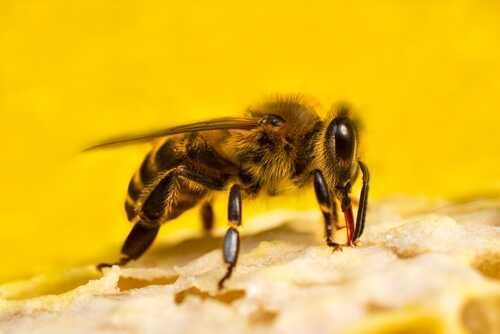
China has weaponized nature itself, engineering cyborg bees capable of remote-controlled espionage, and America may already be too late to stop it.
At a Glance
- Chinese scientists have developed remote-controlled cyborg bees, breaking new ground in surveillance technology.
- The project is backed heavily by the Chinese government with clear military and intelligence applications.
- China’s leapfrogging in cyborg technology comes as the US is outpaced in this new arms race, raising concerns about privacy, ethics, and security.
- The technology’s potential for covert surveillance and military use is already causing alarm among global security experts.
Insects With Backpacks and Battle Plans
A terrifying breakthrough at the Beijing Institute of Technology has stunned the global defense community: Chinese researchers have successfully engineered cyborg bees, surgically enhanced with microelectronic “backpacks” that allow 90% precise remote flight control. These modified bees—part biological, part machine—are being heralded in China as marvels of innovation, but their implications are chilling. Each insect is outfitted with a 74-milligram neural stimulator that hijacks the bee’s visual system, allowing operators to navigate it through complex environments with near-perfect accuracy.
Watch a report: China’s Cyborg Bees Are Here
This is not a conceptual trial or science fiction teaser. These remote-piloted insects are operational and intended for deployment in urban reconnaissance, battlefield intelligence, and counterinsurgency. While Chinese state media projects a sugar-coated narrative about disaster rescue, Macao News reveals the clear defense sponsorship behind the technology. Surveillance disguised as nature is the most insidious evolution of military tech yet—tiny, silent, nearly undetectable agents slipping past barriers both digital and physical.
A Micro-Sized Arms Race Accelerates
China is not alone in the race to militarize insects, but it’s dominating the field by sheer audacity. The U.S. Defense Advanced Research Projects Agency (DARPA) has flirted with cyber-beetles and cockroach surveillance prototypes, but they’ve been clunky and short-lived. In contrast, China’s bees are lighter, faster, and funded to scale. A June 2025 peer-reviewed breakthrough revealed the world’s smallest insect brain controller—designed by a team led by Professor Zhao Jieliang—which paves the way for mass production and field testing.
The Chinese model envisions these bees outfitted with HD cameras and airborne sensors, collecting audio, video, and chemical data without detection. The implications for military installations, corporate espionage, and even civilian life are profound. Already, security analysts are raising red flags about how this technology could breach secure facilities or conduct silent surveillance on political adversaries. Every fly on the wall might soon be something far worse.
No Ethics, No Oversight, No Limits
The ethical chasm is as deep as the technological one. China’s disregard for bioethics and privacy rights is on full display, as the regime doubles down on innovations designed explicitly for state control and surveillance. Independent watchdogs warn that without global regulatory frameworks, the world risks a future where weaponized insects are the norm—not the exception. Yet Beijing marches forward unchallenged.
Meanwhile, the U.S. is caught flat-footed, tangled in bureaucratic inertia while China races ahead with chilling determination. Critics argue that American policymakers are distracted by internal debates and underfunded programs, leaving the country vulnerable to a tidal wave of biologically integrated tech. If tiny drones can infiltrate data centers, embassies, or even private homes undetected, conventional security protocols become meaningless.
This is not a drill. It’s a strategic wake-up call. The weaponization of nature by an authoritarian regime with global ambitions isn’t just a footnote in a military briefing—it’s the future of espionage. And if America doesn’t respond with urgency and innovation, we may soon find ourselves on the wrong end of the swarm.