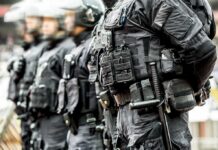

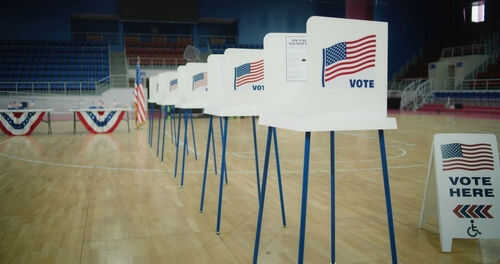
A top Justice Department official just floated bringing federal immigration agents to America’s voting booths—an idea that could collide head-on with election law and the constitutional expectation of a free, intimidation-free ballot.
Story Snapshot
- Deputy Attorney General Todd Blanche told a CPAC audience he sees no reason ICE officers shouldn’t be sent to polling places.
- Critics argue federal law generally bars government “forces” at the polls except in extreme circumstances, raising legal exposure for DOJ.
- The administration has not confirmed any actual deployment plan, and the White House previously brushed off questions without issuing a clear denial.
- Judicial pushback is already constraining parts of the administration’s broader ICE detention agenda, including rulings by Trump-appointed judges.
Blanche’s CPAC message: “Why is there objection?”
Deputy Attorney General Todd Blanche used a speech at the Conservative Political Action Conference to publicly endorse the idea of placing Immigration and Customs Enforcement officers at polling stations. Blanche framed the concept as simple logic—noncitizens cannot legally vote—so objections “don’t make any sense,” as he put it in remarks reported by multiple outlets. The comments stand out because they represent one of the highest-level endorsements yet for a tactic long debated on the right.
For conservative voters who have spent years demanding secure elections and an end to chaos at the border, the pitch may sound like enforcement meeting integrity. But the practical question is whether a federal immigration presence at polling sites would target actual illegal voting—or instead create a chilling effect on lawful voters who do not want any interaction with immigration authorities. It does not show evidence of widespread noncitizen voting, which weakens the stated rationale for a sweeping show of force.
The legal and constitutional friction point: policing the ballot box
Federal law generally restricts the presence of federal “forces” at polling places except under narrow circumstances, such as repelling enemies in extreme emergencies. That legal backdrop is why critics immediately argued Blanche’s idea crosses a bright line, even if the administration describes it as “security.” From a constitutional perspective, the right to vote is not supposed to be conditioned on whether a citizen is comfortable being questioned by armed federal agents while entering a polling location.
Conservatives who prioritize limited government should also recognize the precedent risk: once Washington normalizes federal agents at the polls for one claimed purpose, future administrations can repurpose the same playbook. The same federal power used today to “check” immigration status could be used tomorrow to pressure gun owners, religious groups, or political dissidents under a different pretext. The core issue is not whether borders should be enforced; it is whether elections should be turned into federal enforcement zones.
What we know—and what remains unconfirmed—about actual deployment plans
The proposal remains rhetorical, not operational. In February 2026, White House Press Secretary Karoline Leavitt dismissed questions about sending ICE to the polls as “silly,” but did not clearly confirm or deny that such planning was underway. That ambiguity matters for midterms, because local election officials and state attorneys general typically demand clarity long before Election Day when any law-enforcement presence is contemplated.
It also ties Blanche to a broader posture of executive-branch assertiveness. Separate reporting highlighted Blanche’s public firing of an acting U.S. attorney via an X post and his emphasis on presidential authority over certain appointments. That context fuels the concern that the administration is testing how far it can push institutional boundaries—courts, Senate prerogatives, and now possibly election administration. None of this proves an ICE-at-the-polls operation is imminent, but it explains why watchdogs are alarmed.
Courts are already pushing back on ICE detention policy
The judiciary has served as a major constraint on the administration’s immigration enforcement posture. A POLITICO analysis cited in the research described large-scale judicial rejection of ICE detention efforts, including decisions by Trump-appointed judges. That matters because a plan to place ICE at polling stations would almost certainly be litigated immediately, with challengers arguing voter intimidation and statutory violations. Even if DOJ believes it can defend the policy, the court track record signals serious headwinds.
For MAGA voters already split in 2026—frustrated by inflation and endless foreign entanglements while also demanding order at home—the smarter question is what problem this actually solves. If the goal is election integrity, states already have tools: voter rolls, ID checks where legal, signature verification, and prosecution for proven fraud. Putting immigration agents at polling places risks turning lawful voting into a confrontation, and it invites government overreach that conservatives have long warned about.
Sources:
Top Trump DOJ Goon Backs ICE Patrols at Polling Stations
Top Trump Official Asks What the Big Deal Is if ICE Goes to the Polls
The Trump-appointed judges ruling against ICE detentions