
Washington has just put 60 foreign economies on notice: stop looking the other way on forced labor or face new tariffs that could finally start leveling the playing field for American workers.
Story Snapshot
- The Trump administration proposes new tariffs of about 10–12.5% on imports from roughly 60 economies over failures to curb forced-labor trade.
- The move uses Section 301 trade law to pressure foreign governments that have not adopted or enforced bans on forced-labor imports.[1][4]
- European leaders are irked, casting the plan as protectionism, while ignoring their own weak enforcement on forced labor.[1][2]
- Existing U.S. law already blocks forced-labor goods shipment-by-shipment, but the new strategy targets foreign governments directly.[2]
New Tariffs Aim at Countries That Ignore Forced Labor
The Trump administration has proposed new tariffs of roughly 10 percent and 12.5 percent on imports from about 60 of America’s largest trading partners, after finding that their failure to curb trade in goods made with forced labor is “unreasonable” and restricts United States commerce.[1] The United States Trade Representative (USTR) announcement describes this as a follow-on step in a Section 301 unfair trade practices investigation, which concluded that these governments have not taken sufficient steps to prevent imports of forced-labor goods.[1][4]
According to reporting on the proposal, the plan would place roughly 10 percent duties on goods from major partners such as the European Union, Taiwan, and the United Kingdom, as well as neighbors like Mexico and Canada, with higher 12.5 percent duties applied to 45 other countries in the investigation.[1] The USTR says it will accept public comments on the proposed tariffs and any alternative remedies, giving businesses, workers, and advocacy groups a chance to weigh in before the final tariff schedule is set.[1]
From Blocking Bad Shipments to Pressuring Foreign Governments
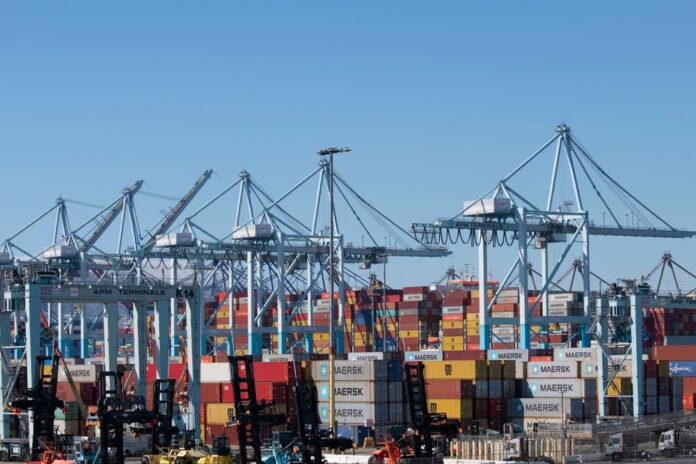
Current United States law already bans imports made in whole or in part with forced labor, and allows United States Customs and Border Protection to detain suspect shipments through tools such as Withhold Release Orders.[2][3] Analysts note that customs actions currently block an estimated $0.8 billion in goods a year on suspicion of forced labor, a tiny fraction of more than $3 trillion in annual American imports, which shows enforcement exists but is still narrow compared with overall trade flows.[2] Under this new strategy, the administration is not just stopping individual containers; it is using tariffs to confront governments that never put serious forced-labor import bans in place.[2]
A Congressional Research Service-style brief explains that Section 301 of the 1974 trade law lets administrations identify foreign “acts, policies, or practices” that are “unreasonable or discriminatory and burden or restrict United States commerce,” and then respond with tariffs or other trade measures. In these forced-labor investigations, the USTR has focused less on proving specific shipments into each partner country and more on the fact that “none of these countries has adopted and effectively enforced a forced labor import prohibition to date,” which it warns may negatively affect United States commerce and undercut law-abiding American producers.[2]
Europe Bristles While Trade-Skeptics Downplay the Stakes
Coverage of the announcement shows European and other partners bristling at the move and hinting at retaliation, framing the action as just another front in a wider tariff war rather than a response to forced labor.[1] Commentators in these pieces emphasize that markets initially focused more on technology and artificial-intelligence stocks than on the tariff risk, creating an impression among investors that this is just background noise instead of a serious reset of trade rules. That reception risks obscuring the underlying question of whether foreign governments should finally police forced labor in their own import systems.
US says it plans extra tariffs of 10% or more for most trading partners after forced labor probe https://t.co/HRoEyWqu1m pic.twitter.com/hmdrvZGJX1
— Eyewitness News (@ABC7NY) June 3, 2026
Policy analysts also warn that the public debate is being pulled toward geopolitics, including United States tensions with China and European complaints about unilateral tariffs, rather than toward hard evidence on labor abuses.[1] Critics highlight that the USTR’s public notice, as described in policy analysis, did not provide detailed shipment-by-shipment proof that the targeted economies are buying forced-labor goods, instead stressing their failure to adopt and enforce comparable bans.[2] Supporters counter that this broader approach is precisely the point: without pressure, foreign elites enjoy cheap imports while American workers and ethical producers bear the cost of competing against coerced labor.
What Conservatives Should Watch Next
Policy experts note that reliable data on forced labor are hard to obtain because these abuses are usually hidden in informal or lower-tier parts of global supply chains.[2][3] International research cited in these debates estimates tens of millions of workers in some form of forced labor worldwide, with billions in illegal profits, including in industries that feed global trade.[2][3] At the same time, American enforcement statistics suggest that the share of total trade directly tainted by forced labor is small but real, raising the question of whether prior, narrower tools have been enough to protect American workers and honest businesses.[2]
Legal and policy analysts stress that using tariffs against governments that refuse to police forced labor is a newer and stronger approach than simply blocking individual shipments, and that the Section 301 process—with investigation records, public comments, and possible hearings—will shape how durable these tariffs become. For conservatives concerned about American sovereignty, fair competition, and the dignity of work, the key tests will be whether the final tariff list is grounded in evidence, whether it pressures foreign elites instead of United States consumers, and whether it reinforces—rather than dilutes—the long-standing American ban on forced-labor imports.[2][3]
Sources:
[1] Web – US proposes new tariffs over forced labor, irking Europe
[2] Web – Importing Freedom: Using the U.S. Tariff Act to Combat Forced …
[3] YouTube – Trump Tariffs: China, UK, Europe Among US Trade Partners Targeted
[4] YouTube – European Union halts approval of U.S. trade deal after Trump tariff …