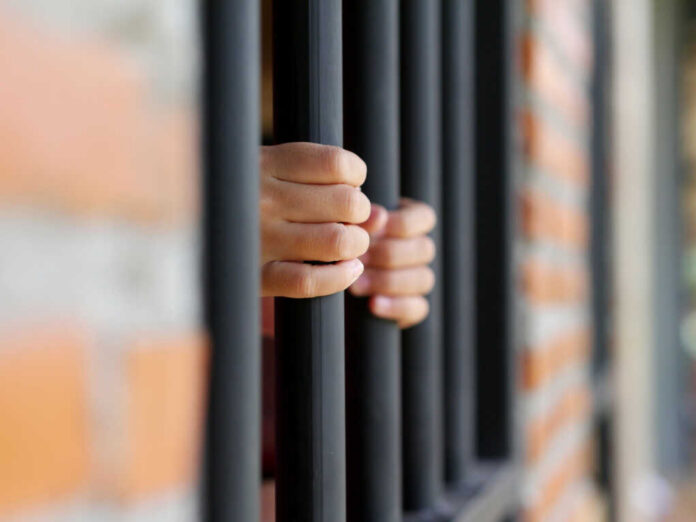
The Supreme Court is weighing whether to strip sick federal inmates of a key right to sue over denied medical care, and it could quietly weaken protections for every American against abusive federal officials.
Story Snapshot
- The Supreme Court is revisiting whether federal prisoners can sue staff who ignore serious medical needs, a right first recognized in 1980.
- The case centers on Carlson v. Green, where the Court let a family sue federal prison officials for “deliberate indifference” that led to an inmate’s death.
- The Justice Department now argues these damages claims should mostly disappear, fitting a long trend of narrowing Bivens lawsuits.
- Conservatives who care about the Constitution face a hard question: should federal officers be shielded from accountability when they violate basic rights?
What Carlson v. Green Really Said About Prisoners and Medical Care
In 1980, the Supreme Court decided Carlson v. Green, a landmark case about a federal inmate who died after prison officials ignored his serious asthma condition.[6] The Court held that the facts showed a possible violation of the Eighth Amendment ban on cruel and unusual punishment. That violation supported a damages claim directly under the Constitution, known as a Bivens action, against individual federal officials who showed “deliberate indifference” to his medical needs.[6] This ruling made clear that federal prisoners are not supposed to be left to suffer or die without any personal accountability for the officials who ignored them.
The Court in Carlson also ruled that this constitutional lawsuit could go forward even though the family might also sue the United States under the Federal Tort Claims Act.[2] The Justices stressed that Congress had never said the Tort Claims Act was the only remedy for such abuse and even treated Bivens and Tort Claims Act suits as “parallel, complementary causes of action.”[9] That meant a prisoner could pursue real damages from the individual officials who violated his rights, not just from the government as a distant entity. For many conservatives, that kind of direct personal responsibility aligns with basic principles of accountability and limited government.
How Today’s Court Is Chipping Away at That Protection
Today’s Supreme Court is far less friendly to Bivens claims than the Court that decided Carlson.[11] In recent years, the Justices have repeatedly said that recognizing new damages remedies against federal officers is a “disfavored judicial activity,” and lower courts have taken the hint. Many judges now say that almost any fact pattern that is not a near copy of Carlson is a “new context” where Bivens should not apply.[12] One federal appeals court recently rejected a prisoner’s claim for inadequate medical care, even though he pointed to Carlson, by calling his situation different enough to block a Bivens remedy.[12] This trend creates a narrow “island” of protection for inmates while shrinking relief for everyone else harmed by federal officials.
The Justice Department is pushing hard in the same direction. In the new case about whether prisoners can sue over lack of medical care, government lawyers are urging the Court to essentially overrule or gut Carlson v. Green.[8] They argue that most Eighth Amendment medical-care damages suits are no longer appropriate and should be shut down unless Congress expressly authorizes them.[9] Legal scholars note that, starting in the 1980s, the Supreme Court issued a long line of decisions refusing Bivens remedies whenever no statute clearly allowed them, signaling deep hostility to implied constitutional damages actions.[9] If the Court now cuts back even the limited medical-care right recognized in Carlson, federal officers across the system will face less personal risk when they ignore the Constitution.
Why This Fight Matters for Conservative Principles and Everyday Liberty
For a conservative reader, the stakes reach far beyond prison walls. Bivens suits, including Carlson, have functioned as the federal counterpart to lawsuits that hold state officers accountable when they violate rights.[20] Without them, many Americans would have no meaningful way to seek damages when federal agents trample the Constitution. That includes cases involving medical neglect, excessive force, or other serious abuse. When courts insist on “special factors counseling hesitation” and demand explicit statutes before allowing damages, they shift power toward unelected bureaucrats and away from citizens.[9] That kind of judicial retreat can look like government overreach in practice, even if it is wrapped in separation-of-powers language.
At the same time, the law still sets a high bar for prisoner medical claims, which should reassure those worried about frivolous suits. To win, an inmate must prove a serious medical need and show that officials knew about and ignored an excessive risk to health or safety.[17] The standard is “deliberate indifference,” not simple negligence or a bad result.[17] Courts look for proof that care was so poor that no reasonable doctor would have chosen it, or that staff interfered with access to needed treatment.[17] So when a prisoner clears that bar, it usually points to truly disturbing conduct, not mere complaints about minor discomfort.
What Comes Next If the Court Cuts Back Carlson
If the Supreme Court narrows or effectively sidelines Carlson v. Green, federal prisoners with serious medical claims will be pushed toward weaker alternatives like state tort suits or limited Federal Tort Claims Act actions.[15] In some situations, such as private federal prisons, the Court has already blocked Bivens claims and told inmates to rely only on state remedies.[15] Those state claims may offer less protection and fewer damages, and they do not directly target the federal officials who made the decisions. Legal analysts warn that this creates a “grim future” for incarcerated people seeking enforcement of their Eighth Amendment rights.[16] For conservatives who value the Constitution’s text and real-world consequences, the question is whether we want a federal system where rights exist mainly on paper, with little personal accountability when officials cross the line.
Sources:
[2] Web – CARLSON, DIRECTOR, FEDERAL BUREAU OF PRISONS, et al. v …
[6] Web – [PDF] Carlson v. Green, 446 U.S. 14 (1980). – Loc
[8] Web – Carlson v. Green – vLex Case Law
[9] Web – [PDF] Carlson v. Green: The Inference of a Constitutional Cause or …
[11] Web – Solicitor General asks Court to essentially overrule Carlson v. Green …
[12] Web – [PDF] The Demise of the Bivens Remedy is Rendering Enforcement of …
[15] Web – [PDF] Appellant, v. MICHAEL B – Fourth Circuit Court of Appeals
[16] Web – Prisons – Former federal inmate’s Bivens’ action is dismissed
[17] Web – Overview of Types of Lawsuits and the Prison Litigation Reform Act
[20] Web – [PDF] CHAPTER 23 YOUR RIGHT TO ADEQUATE MEDICAL CARE